


Close Menu
Saibumi | Uncovering Asia, One Story at a Time
    What's Hot

    Indonesia’s National Nutrition Agency Leadership Change Draws International Attention

    June 3, 2026

    Indonesia’s Biodiesel Shift: B50 Plan Put on Hold, Raising Questions for Global Palm Oil Markets

    January 14, 2026

    Elephants Help Clear Wooden Debris After Aceh Disaster

    December 27, 2025
    Facebook X (Twitter) Instagram
    Saibumi | Uncovering Asia, One Story at a TimeSaibumi | Uncovering Asia, One Story at a Time
    • About Us
    • Contact Us
    • Advertise
    Facebook X (Twitter) Instagram YouTube LinkedIn Reddit
    • Home
    • Stories

      The Global Plastic Treaty Fails Again – What Does It Mean for the Planet?

      August 27, 2025

      Puru Kambera Savanna: Tracing the Wild Horses of East Sumba

      August 25, 2025

      West Sumatra Emerges as a Leading Muslim-Friendly Travel Destination

      August 24, 2025

      Tabola Bale Song: The Viral Music Blend From Eastern Indonesia

      August 20, 2025

      Tanjung Karang Beach: An Underwater Paradise in Donggala

      August 20, 2025
    • Travel

      Know the Types of Snakes in the Wild & What to Do If You Get Bitten

      December 27, 2025

      Thailand Named the Best Food Country in the World 2025 — Beating Italy and Japan

      October 14, 2025

      Dieng Plateau Officially Designated as Indonesia’s Newest National Geopark

      September 29, 2025

      The Culture of Souvenirs: How Indonesians Strengthen Workplace Relationships Through Oleh-oleh

      September 29, 2025

      6 Best Coffee Shops in Asia – And Yes, One of Them Is in Indonesia!

      September 28, 2025
    • Culture
    • Lifestyle
      1. Food & Culture
      2. Green Living
      3. Local Life
      4. Modern Living
      5. People & Inspiration
      6. View All

      Gen Z in Indonesia and the Global “Escape Culture”: Why Many Are Saying #KaburAjaDulu

      October 20, 2025

      The Export of Indonesian Specialty Products: How Local Ingredients Are Becoming Global Brands

      October 20, 2025

      From Training to Takeoff: MKP’s Approach to Responsible Worker Preparation

      October 18, 2025

      Thailand Named the Best Food Country in the World 2025 — Beating Italy and Japan

      October 14, 2025

      List of Plants That Attract and Repel Snakes Around the House

      October 20, 2025

      Bird-Friendly Coffee in Lampung: Wild Birds Help Farmers Control Pests Naturally

      September 23, 2025

      Standing Still Like a Stick: How Tree Snakes Outsmart Predators with Vertical Sleep

      July 17, 2025

      Not a Cat, Not a Snake — Meet the Plant That Can Eat Rats

      July 12, 2025

      #KaburAjaDulu: When Young Indonesians Feel Like Escaping Is the Only Way to Survive

      October 9, 2025

      The Culture of Souvenirs: How Indonesians Strengthen Workplace Relationships Through Oleh-oleh

      September 29, 2025

      How Remote Work and Digitalization Are Transforming Indonesian Work Culture

      September 28, 2025

      Staying Healthy in Unpredictable Weather: Indonesian Habits the World Can Learn From

      September 21, 2025

      Gen Z in Indonesia and the Global “Escape Culture”: Why Many Are Saying #KaburAjaDulu

      October 20, 2025

      Indonesia’s Beauty Industry Is Having a Major Glow-Up

      July 1, 2025

      Why Indonesian Coffee Is the Next Big Thing Among Global Freelancers

      June 30, 2025

      The Culture of Souvenirs: How Indonesians Strengthen Workplace Relationships Through Oleh-oleh

      September 29, 2025

      The Indonesian Work Culture: Harmony and Gotong Royong in Action

      September 16, 2025

      Southeast Asian Solidarity: Citizens Rally Behind Indonesian Protesters Amid Police Violence

      September 6, 2025

      What Germans Can Learn from the Philosophy of Gotong Royong

      July 16, 2025

      Gen Z in Indonesia and the Global “Escape Culture”: Why Many Are Saying #KaburAjaDulu

      October 20, 2025

      #KaburAjaDulu: When Young Indonesians Feel Like Escaping Is the Only Way to Survive

      October 9, 2025

      The Indonesian Work Ethic: Why Global Teams Trust Indonesian Professionals

      October 2, 2025

      Why Indonesian Talents Are the Best Choice for Global Companies

      October 2, 2025
    • Local Business
    Subscribe
    Saibumi | Uncovering Asia, One Story at a Time
    Home » Living with Tigers: The Semende People, Forests, and the Struggle for Harmony in South Sumatra
    Featured Articles

    Living with Tigers: The Semende People, Forests, and the Struggle for Harmony in South Sumatra

    Editor DeskBy Editor DeskJuly 30, 2025Updated:July 30, 2025No Comments6 Mins Read
    Facebook Twitter Pinterest LinkedIn Tumblr Email
    Foto: Junaidi Hanafiah/Mongabay Indonesia
    Share
    Facebook Twitter LinkedIn Pinterest Email Copy Link

    For centuries, the people who dwell in and around the forests of South Sumatra have coexisted peacefully with one of the world’s most elusive and endangered predators: the Sumatran tiger (Panthera tigris sumatrae). Among these communities, the Semende people stand out with a unique cultural bond and unwritten pact with the striped guardian of the forest.

    Tucked within a serene valley bordered by the mighty slopes of Mount Patah in Muara Enim Regency, the Semende have long understood that harmony with nature is not just tradition—it’s survival. But in the last decade, this fragile balance has started to show cracks.

    The Land of Tigers and Tradition
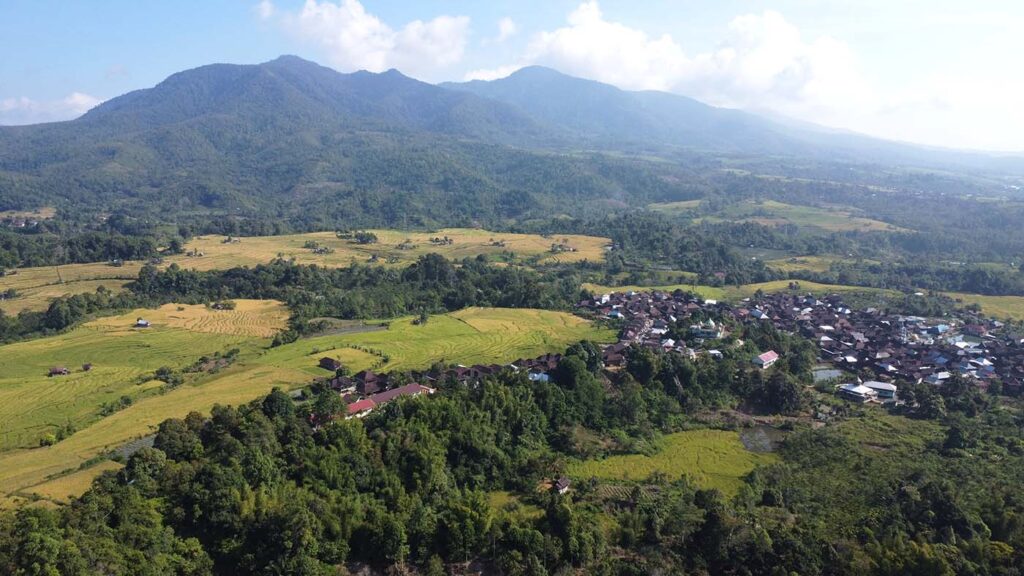
    Foto drone: Nopri Ismi/Mongabay Indonesia

    The Semende people trace their origins back to the 17th century. Their homeland, sprawling across roughly 99,802 hectares, is a diverse ecosystem teeming with wildlife. This lush terrain—where Bukit Balai, Bukit Lumut Balai, and Bukit Bepagut rise like guardians—is both home to the Semende and a sanctuary for numerous native species, especially wild cats like the elusive Sumatran tiger.

    In Semende culture, the forest is sacred, and the tiger is more than just a beast—it is a spiritual being, a protector, and in many legends, even a kin. Tales of tiger-human shapeshifters or “manusia harimau” still echo in local folklore. Importantly, no tradition of tiger hunting or blood sport exists among the Semende, a testament to their reverence for the animal.

    Hasan Zen, a 70-year-old community elder, shares, “Since the time of our ancestors, we’ve lived in harmony with the tigers. We don’t disturb them, and they don’t disturb us.”

    Rules of Respect

    From a young age, every jeme (person) Semende is taught to avoid conflict—not just with fellow humans but with all creatures of the forest. One of the foundational customs prohibits building homes near rivers or springs. The reason is simple but profound: these are places the tigers frequent—for drinking, hunting, and resting. To build there would be to invite conflict.

    SEE ALSO  Sauwandarek Village: Papua’s Hidden Paradise Where Nature and Culture Collide

    And so, when the Semende clear land for farming, they do so with a respectful ritual. They offer prayers—not out loud, but in intention. “It’s about seeking permission. It’s about making peace with every being in the forest,” Hasan explains.

    Their respect extends to the protected forests where tigers roam, such as Bukit Balai and Bukit Lumut Balai. These highland areas, designated as conservation zones by the government, are strictly off-limits for farming or any disruptive activity.

    The Unexpected Visitor

    Despite this deep-rooted harmony, something shifted in recent years. In early 2020, a Sumatran tiger descended from its forested realm and entered several villages in Semende. It began with sightings near Danau Deduhuk, followed by reports in Karya Nyata Village, Pulau Panggung, Muara Tenang, and Tanjung Agung. Eventually, the tiger was caught in a trap set by the South Sumatra Natural Resources Conservation Agency (BKSDA) in a coffee plantation in Pelakat Village.

    Inside the trap was a goat—a bait too tempting for the tiger to ignore.

    The appearance of this tiger was not just rare—it was unprecedented in recent memory. Hasan Zen admitted, “This is the first time in my life that a tiger entered our villages. We’ve always known they live in the mountains, far away from us.”

    Sadly, the incidents didn’t end with sightings. In late 2019, five people across neighboring areas were killed in separate tiger attacks. These tragic events shocked the local communities and sparked concern about the changing dynamics between humans and tigers.

    SEE ALSO  Another Foreign Hiker Falls on Mount Rinjani: Dutch Woman Rescued After Accident

    The Disappearing Forest Pathways

    According to BKSDA South Sumatra, the Semende region is part of a broader tiger habitat known as the Jambul Nanti Patah Landscape. Covering about 282,727 hectares, this landscape spans five districts and borders Bengkulu Province. It forms a part of the majestic Bukit Barisan Selatan range, a biodiversity haven comprising highland and lowland forests.

    Approximately 140,000 hectares of this area remain as natural forest—primary and secondary. The rest is increasingly being overtaken by shrubs, farms, and settlements. This fragmented landscape, while still vast, is losing the continuous forest corridors that are crucial for tiger mobility and safety.

    Alongside tigers, this forest is home to the endangered Sumatran elephant (Elephas maximus sumatranus), the critically endangered pangolin (Manis javanica), Asian tapir, wild dogs (Cuon alpinus), siamang gibbons, leaf monkeys, sun bears, sambar deer, and the elusive golden cat (Catopuma temminckii).

    But how many tigers still roam these forests? That remains unclear. Julita Pitria from BKSDA says population estimates are still being analyzed under the Sumatra-wide Tiger Survey (SWTS), a long-term monitoring effort.

    Is Geothermal Development to Blame?

    A pressing question looms over the Semende hills: Could recent geothermal energy projects be contributing to the tiger’s descent into human territory?

    The geothermal activity, located near Bukit Balai and Bukit Lumut Balai, is potentially disturbing natural habitats. Surya Darma, Chair of the Indonesia Center for Renewable Energy Studies (ICRES), acknowledges the concern. He notes that many geothermal projects sit adjacent to conservation areas, increasing the risk of habitat disruption.

    Still, Surya believes such risks can be managed with strict environmental assessments. “Projects like these must follow a thorough and transparent Environmental Impact Assessment (AMDAL). This includes meaningful community participation and concrete mitigation plans for both wildlife and water sources,” he emphasizes.

    SEE ALSO  Nasi Uduk vs Nasi Lemak: A Flavorful Face-Off You Need to Taste

    A Path Forward: Building Tiger Corridors

    Experts and conservationists agree on a key solution: wildlife corridors. These are safe passageways—such as forested strips or green bridges—that connect fragmented habitats, allowing tigers and other wildlife to roam freely without encountering human settlements.

    “Corridors are essential to prevent further conflict,” says Surya. “They help ensure that the tigers don’t feel trapped, and that humans aren’t caught off guard.”

    Besides physical infrastructure, long-term solutions must include:

    • Rigorous environmental oversight by local and national agencies
    • Strengthened community education programs
    • Inclusive conservation initiatives that empower local voices

    These steps will take time, funding, and political will. But they are necessary to preserve not just the Sumatran tiger, but the centuries-old wisdom of communities like the Semende.

    Harmony at a Crossroads

    The Semende people have long walked a delicate path between tradition and change. As the modern world expands and climate pressures mount, that balance becomes harder to maintain. Still, their story offers hope—a reminder that coexistence is not a myth, but a model worth protecting.

    In a world that often pits human needs against nature, the Semende stand as quiet custodians of a truth we desperately need to remember: The forest is not ours alone. It belongs to every being that calls it home, tiger included.
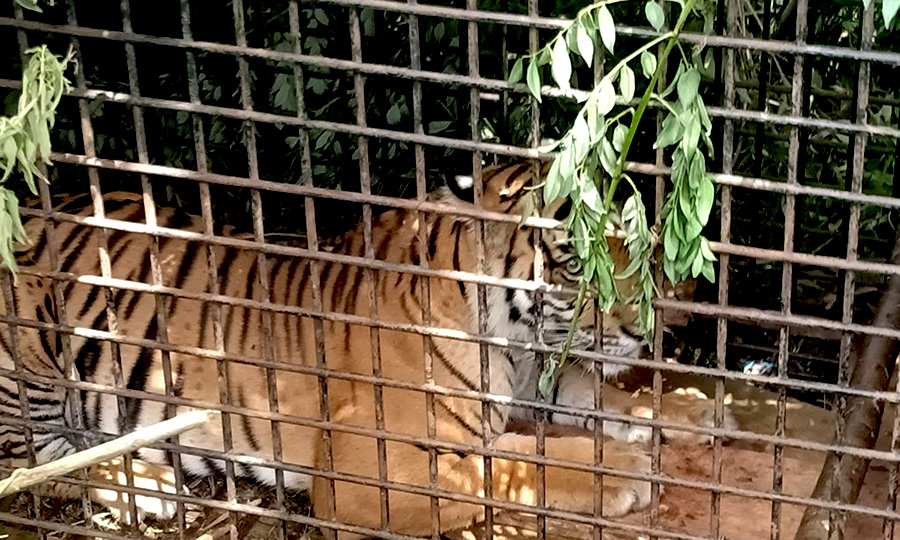
    Foto: BKSDA Sumatera Selatan

    As the sun sets over Bukit Lumut Balai, and the jungle chorus begins its nightly song, one can only hope that harmony, once fractured, can be healed. And that the tiger will once again roam, not in fear or confusion, but with the grace of an ancient pact—respected, not forgotten.

    Bukit Lumut Balai endangered species Sumatra forest protection Indonesia geothermal and wildlife harmony with nature human-wildlife conflict Indonesian indigenous wisdom Jambul Nanti Patah Semende people Semende traditions South Sumatra forest Sumatran tiger tiger conservation tiger habitat Sumatra wildlife corridor
    Share. Facebook Twitter Pinterest LinkedIn Tumblr Email
    Previous ArticleTsunami Strikes Northern Japan: What We Know So Far About the Waves Hitting Hokkaido
    Next Article When the Rain Stops: Rituals and Spiritual Beliefs During Indonesia’s Dry Season
    Editor Desk
    • Website

    Related Posts

    Economy

    Indonesia’s National Nutrition Agency Leadership Change Draws International Attention

    By Editor DeskJune 3, 2026
    Don't Miss

    Indonesia’s Biodiesel Shift: B50 Plan Put on Hold, Raising Questions for Global Palm Oil Markets

    By Editor DeskJanuary 14, 2026
    Disaster & Environment

    Elephants Help Clear Wooden Debris After Aceh Disaster

    By Editor DeskDecember 27, 2025
    Don't Miss

    Know the Types of Snakes in the Wild & What to Do If You Get Bitten

    By Editor DeskDecember 27, 2025
    Digital Life

    Gen Z in Indonesia and the Global “Escape Culture”: Why Many Are Saying #KaburAjaDulu

    By Editor DeskOctober 20, 2025
    Agriculture

    The Export of Indonesian Specialty Products: How Local Ingredients Are Becoming Global Brands

    By Editor DeskOctober 20, 2025
    Add A Comment
    Leave A Reply Cancel Reply

    Don't Miss

    Indonesia’s National Nutrition Agency Leadership Change Draws International Attention

    By Editor DeskJune 3, 2026

    Indonesia has attracted international attention following a recent leadership change at the National Nutrition Agency,…

    Indonesia’s Biodiesel Shift: B50 Plan Put on Hold, Raising Questions for Global Palm Oil Markets

    January 14, 2026

    Elephants Help Clear Wooden Debris After Aceh Disaster

    December 27, 2025

    Know the Types of Snakes in the Wild & What to Do If You Get Bitten

    December 27, 2025
    Top Posts

    Indonesia’s National Nutrition Agency Leadership Change Draws International Attention

    June 3, 2026

    Experience the Charm of Labuan Bajo’s Pinisi Boat Right Here in Lampung: Discover the Legendary Maritime Heritage of Indonesia

    June 30, 2025

    Must-Know: 5 Traditional Dances from Lampung You’ll Often Encounter

    June 30, 2025

    What to Do When You See a Snake: A Practical Guide for Everyday Life in Sumatra

    June 30, 2025
    Stay In Touch
    • Facebook
    • Twitter
    • Instagram
    • YouTube
    About Us
    About Us

    Saibumi International brings authentic stories, cultural depth, and off-the-radar destinations from Indonesia and the wider Asian region — crafted for readers who want more than surface-level travel and headlines.

    Facebook X (Twitter) YouTube Reddit
    Our Picks

    Indonesia’s National Nutrition Agency Leadership Change Draws International Attention

    June 3, 2026

    Indonesia’s Biodiesel Shift: B50 Plan Put on Hold, Raising Questions for Global Palm Oil Markets

    January 14, 2026

    Elephants Help Clear Wooden Debris After Aceh Disaster

    December 27, 2025
    Most Popular

    Indonesia’s National Nutrition Agency Leadership Change Draws International Attention

    June 3, 2026

    Experience the Charm of Labuan Bajo’s Pinisi Boat Right Here in Lampung: Discover the Legendary Maritime Heritage of Indonesia

    June 30, 2025

    Must-Know: 5 Traditional Dances from Lampung You’ll Often Encounter

    June 30, 2025
    • Home
    • About Us
    • Advertise
    • Contact Us
    © 2026 Saibumi International. SEO & Web by Dkonten Studio

    Type above and press Enter to search. Press Esc to cancel.