

Close Menu
Saibumi | Uncovering Asia, One Story at a Time
    What's Hot

    Indonesia’s National Nutrition Agency Leadership Change Draws International Attention

    June 3, 2026

    Indonesia’s Biodiesel Shift: B50 Plan Put on Hold, Raising Questions for Global Palm Oil Markets

    January 14, 2026

    Elephants Help Clear Wooden Debris After Aceh Disaster

    December 27, 2025
    Facebook X (Twitter) Instagram
    Saibumi | Uncovering Asia, One Story at a TimeSaibumi | Uncovering Asia, One Story at a Time
    • About Us
    • Contact Us
    • Advertise
    Facebook X (Twitter) Instagram YouTube LinkedIn Reddit
    • Home
    • Stories

      The Global Plastic Treaty Fails Again – What Does It Mean for the Planet?

      August 27, 2025

      Puru Kambera Savanna: Tracing the Wild Horses of East Sumba

      August 25, 2025

      West Sumatra Emerges as a Leading Muslim-Friendly Travel Destination

      August 24, 2025

      Tabola Bale Song: The Viral Music Blend From Eastern Indonesia

      August 20, 2025

      Tanjung Karang Beach: An Underwater Paradise in Donggala

      August 20, 2025
    • Travel

      Know the Types of Snakes in the Wild & What to Do If You Get Bitten

      December 27, 2025

      Thailand Named the Best Food Country in the World 2025 — Beating Italy and Japan

      October 14, 2025

      Dieng Plateau Officially Designated as Indonesia’s Newest National Geopark

      September 29, 2025

      The Culture of Souvenirs: How Indonesians Strengthen Workplace Relationships Through Oleh-oleh

      September 29, 2025

      6 Best Coffee Shops in Asia – And Yes, One of Them Is in Indonesia!

      September 28, 2025
    • Culture
    • Lifestyle
      1. Food & Culture
      2. Green Living
      3. Local Life
      4. Modern Living
      5. People & Inspiration
      6. View All

      Gen Z in Indonesia and the Global “Escape Culture”: Why Many Are Saying #KaburAjaDulu

      October 20, 2025

      The Export of Indonesian Specialty Products: How Local Ingredients Are Becoming Global Brands

      October 20, 2025

      From Training to Takeoff: MKP’s Approach to Responsible Worker Preparation

      October 18, 2025

      Thailand Named the Best Food Country in the World 2025 — Beating Italy and Japan

      October 14, 2025

      List of Plants That Attract and Repel Snakes Around the House

      October 20, 2025

      Bird-Friendly Coffee in Lampung: Wild Birds Help Farmers Control Pests Naturally

      September 23, 2025

      Standing Still Like a Stick: How Tree Snakes Outsmart Predators with Vertical Sleep

      July 17, 2025

      Not a Cat, Not a Snake — Meet the Plant That Can Eat Rats

      July 12, 2025

      #KaburAjaDulu: When Young Indonesians Feel Like Escaping Is the Only Way to Survive

      October 9, 2025

      The Culture of Souvenirs: How Indonesians Strengthen Workplace Relationships Through Oleh-oleh

      September 29, 2025

      How Remote Work and Digitalization Are Transforming Indonesian Work Culture

      September 28, 2025

      Staying Healthy in Unpredictable Weather: Indonesian Habits the World Can Learn From

      September 21, 2025

      Gen Z in Indonesia and the Global “Escape Culture”: Why Many Are Saying #KaburAjaDulu

      October 20, 2025

      Indonesia’s Beauty Industry Is Having a Major Glow-Up

      July 1, 2025

      Why Indonesian Coffee Is the Next Big Thing Among Global Freelancers

      June 30, 2025

      The Culture of Souvenirs: How Indonesians Strengthen Workplace Relationships Through Oleh-oleh

      September 29, 2025

      The Indonesian Work Culture: Harmony and Gotong Royong in Action

      September 16, 2025

      Southeast Asian Solidarity: Citizens Rally Behind Indonesian Protesters Amid Police Violence

      September 6, 2025

      What Germans Can Learn from the Philosophy of Gotong Royong

      July 16, 2025

      Gen Z in Indonesia and the Global “Escape Culture”: Why Many Are Saying #KaburAjaDulu

      October 20, 2025

      #KaburAjaDulu: When Young Indonesians Feel Like Escaping Is the Only Way to Survive

      October 9, 2025

      The Indonesian Work Ethic: Why Global Teams Trust Indonesian Professionals

      October 2, 2025

      Why Indonesian Talents Are the Best Choice for Global Companies

      October 2, 2025
    • Local Business
    Subscribe
    Saibumi | Uncovering Asia, One Story at a Time
    Home » Not a Cat, Not a Snake — Meet the Plant That Can Eat Rats
    Agriculture

    Not a Cat, Not a Snake — Meet the Plant That Can Eat Rats

    Editor DeskBy Editor DeskJuly 12, 2025No Comments6 Mins Read
    Facebook Twitter Pinterest LinkedIn Tumblr Email
    Foto oleh Yufan Jiang: https://www.pexels.com/id-id/foto/alam-kilang-tanaman-tumbuhan-9935769/
    Share
    Facebook Twitter LinkedIn Pinterest Email Copy Link

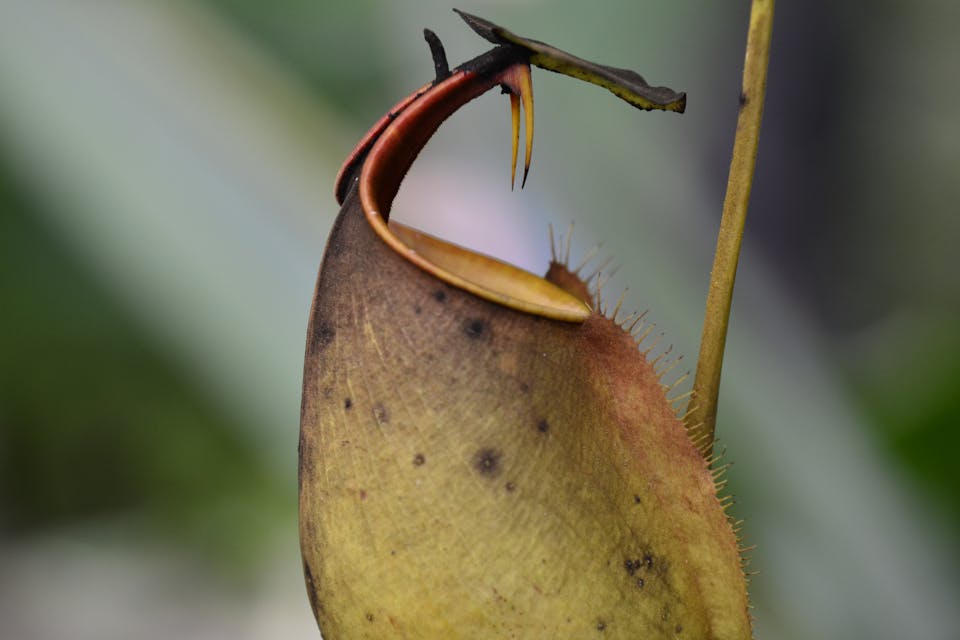
    When you think of a predator, you probably picture a tiger, a snake, or maybe even your house cat. But what if I told you one of nature’s most silent — and unexpected — hunters is actually a plant? Yes, a green, leafy, and seemingly innocent plant that doesn’t move, doesn’t bite, but has the deadly capacity to digest small mammals like rats. Welcome to the wild world of Nepenthes, also known as pitcher plants — nature’s deceptive and deadly carnivores.


    A Predator in Disguise

    At first glance, Nepenthes looks like something you’d find in a tropical garden — beautiful, exotic, with oddly shaped leaves that resemble a jug or, well, a pitcher. These pitchers aren’t just for show. They’re highly evolved traps filled with acidic liquid and digestive enzymes designed to break down organic material. Most species feed on insects. But a few rare giants — like Nepenthes rajah and Nepenthes attenboroughii — are known to trap and digest creatures much larger, including rats.

    This isn’t science fiction. Field researchers have observed it. In 2011, botanist Stewart McPherson discovered partially digested rat remains in Nepenthes rajah in Malaysian Borneo. A small mammal, likely attracted by the sweet nectar lining the pitcher’s rim, had fallen in — and never came out.


    Nepenthes Rajah & Attenboroughii: Gentle Giants With Deadly Designs
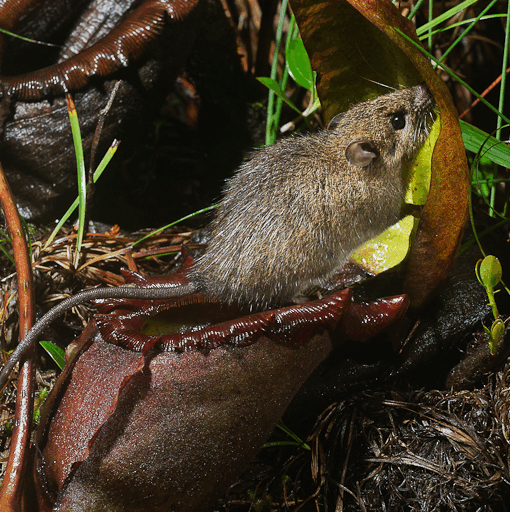
    Among the most famous rat-eating plants are two species: Nepenthes rajah and Nepenthes attenboroughii. These aren’t your average houseplants. Their pitchers can grow more than 35 cm tall and hold over two liters of digestive fluid.

    • Nepenthes rajah, found only on Mount Kinabalu and Mount Tambuyukon in Sabah, Malaysia, is often dubbed the “king” of pitcher plants. With its massive size and impressive trapping abilities, it’s a superstar of the carnivorous plant world.
    • Nepenthes attenboroughii, discovered in 2007 on Mount Victoria in the Philippines, was named in honor of naturalist Sir David Attenborough. Like its cousin, it has large pitchers capable of trapping not just bugs, but frogs, lizards, and yes — rats.
    SEE ALSO  Tragic Loss: One-Week-Old Sumatran Tiger Cub Dies at Bukittinggi Zoo Due to Malnutrition and Stress

    These plants don’t chase. They don’t coil around their prey. They simply wait. With glossy, slippery rims and sweet-smelling nectar, they lure their victims. A single wrong step — and down the pitcher they go.


    How Do These Plants Actually Eat Rats?

    Here’s the scary-cool part: Nepenthes uses a passive yet deadly mechanism to trap its prey. First, they secrete sweet nectar around the mouth of the pitcher. This sugary bait attracts hungry animals like forest rats or insects. Some species even produce a rotting-fruit-like smell, mimicking the scent of decaying food to lure scavengers.

    The edge of the pitcher is a death trap. It’s waxy, slick, and sloped — perfect for making small feet slip. Once a rat falls in, it’s nearly impossible to climb back up. The inner walls are too smooth, and the depth too great. Eventually, the animal drowns in the acidic pool at the bottom.
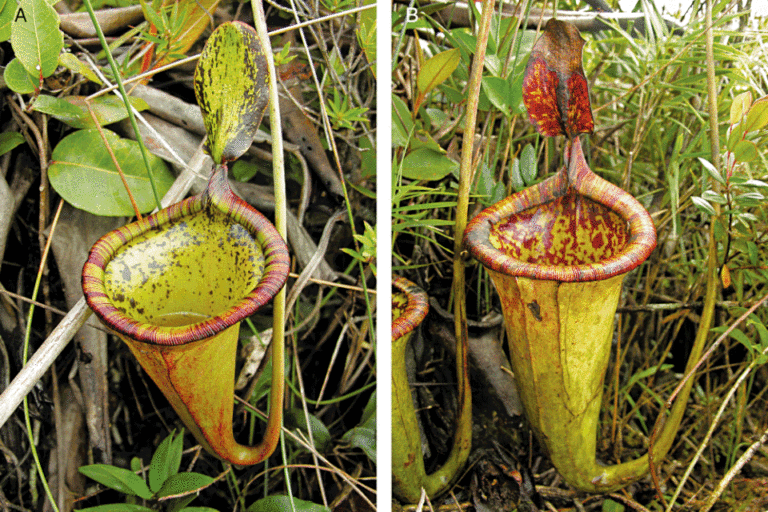
    But it doesn’t end there. The real work begins after death. Enzymes like nepenthesin begin breaking down soft tissues, releasing nutrients such as nitrogen and phosphorus. These minerals are then absorbed by the plant to supplement the poor, nutrient-depleted soils of their native habitats. It’s a slow but effective digestive process that can take several days.

    SEE ALSO  Dieng Plateau Officially Designated as Indonesia’s Newest National Geopark

    Not Just Killers — Also Strategic Survivors

    Interestingly, not all encounters between rats and pitcher plants end in doom. Some species of rats in Borneo — like Rattus baluensis — have been observed licking nectar from the mouths of Nepenthes rajah pitchers without falling in. Researchers believe this represents a form of mutualism: rats get sugar, while the plant gets nitrogen from their droppings.

    Still, when the conditions are right — slippery edge, tired or thirsty animal, or a sudden rain — accidents happen. And the pitcher wins.


    Are These Plants in Indonesia Too?
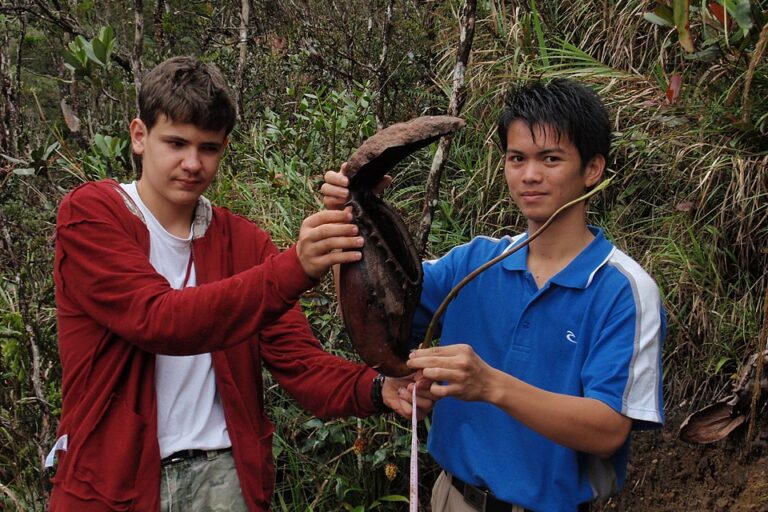
    Foto : Mangobay Indonesia

    Absolutely. Indonesia is a hotspot for Nepenthes diversity, with over 30 species found across Sumatra, Kalimantan, Sulawesi, Papua, and the Maluku islands. Some local giants like Nepenthes truncata and Nepenthes rafflesiana gigantea boast pitchers large enough to trap frogs or even small reptiles.

    However, there are no confirmed scientific reports of Indonesian species eating rats — yet. That doesn’t mean it’s not possible. Many regions of Indonesian rainforest remain unexplored. Who knows what secrets are still out there, hidden in the misty highlands or deep jungle valleys?

    Given the right environmental pressure — poor soil, competition for nutrients, isolation — it’s entirely feasible that some Indonesian Nepenthes species may have evolved similarly extreme predatory tactics. More field studies are needed to unlock those mysteries.


    Why These Carnivorous Plants Matter

    Aside from the shock factor, Nepenthes plays a vital role in their ecosystems. Their ability to digest meat isn’t just a party trick — it’s a brilliant evolutionary response to life in nitrogen-poor environments. By feeding on insects and small animals, they can thrive where other plants struggle.

    SEE ALSO  Australia Bans Social Media for Children Under 16 Starting December 2025

    And it’s not just about the kill. These plants are part of a complex web of life, forming partnerships with insects, mammals, and even microbes. Some frogs lay their eggs inside the pitchers. Certain mosquito species breed there. Others live off the detritus of trapped prey. Every part of the pitcher becomes a tiny ecosystem.


    The Threat They Face

    Sadly, these fascinating plants are also under threat. Habitat destruction, illegal collection for trade, and climate change are pushing some species to the brink of extinction. Nepenthes attenboroughii is already listed as Critically Endangered by the IUCN. Its entire population exists on a single mountaintop in the Philippines.

    In Indonesia, the illegal trade of pitcher plants is also a growing concern. Rare and visually striking species are often collected and sold online, sometimes before scientists have had a chance to properly study them. It’s a race between discovery and destruction.


    When Plants Bite Back

    In a world where we often overlook plants as static and defenseless, Nepenthes reminds us that life finds wild, creative, and sometimes terrifying ways to adapt. These quiet, colorful assassins don’t need teeth, claws, or venom. Their power lies in patience, chemistry, and evolution.

    So next time you’re trekking through the highlands of Borneo or the jungles of Sulawesi, keep an eye out. That pretty little pitcher plant by your feet? It might just be waiting for dinner.

    carnivorous plants endangered species exotic plants Indonesian flora nature facts Nepenthes attenboroughii Nepenthes rajah pitcher plant plant evolution plant predators rainforest biodiversity rare plants rat-eating plant unique plants
    Share. Facebook Twitter Pinterest LinkedIn Tumblr Email
    Previous ArticleBrazilian Tourist Fell on Mount Rinjani — Here Are Must-Know Tips Before Your First Hike
    Next Article Kampung Pitu: The Mysterious Village of Seven Families Hidden in Yogyakarta’s Highlands
    Editor Desk
    • Website

    Related Posts

    Economy

    Indonesia’s National Nutrition Agency Leadership Change Draws International Attention

    By Editor DeskJune 3, 2026
    Don't Miss

    Indonesia’s Biodiesel Shift: B50 Plan Put on Hold, Raising Questions for Global Palm Oil Markets

    By Editor DeskJanuary 14, 2026
    Disaster & Environment

    Elephants Help Clear Wooden Debris After Aceh Disaster

    By Editor DeskDecember 27, 2025
    Don't Miss

    Know the Types of Snakes in the Wild & What to Do If You Get Bitten

    By Editor DeskDecember 27, 2025
    Digital Life

    Gen Z in Indonesia and the Global “Escape Culture”: Why Many Are Saying #KaburAjaDulu

    By Editor DeskOctober 20, 2025
    Agriculture

    The Export of Indonesian Specialty Products: How Local Ingredients Are Becoming Global Brands

    By Editor DeskOctober 20, 2025
    Add A Comment
    Leave A Reply Cancel Reply

    Don't Miss

    Indonesia’s National Nutrition Agency Leadership Change Draws International Attention

    By Editor DeskJune 3, 2026

    Indonesia has attracted international attention following a recent leadership change at the National Nutrition Agency,…

    Indonesia’s Biodiesel Shift: B50 Plan Put on Hold, Raising Questions for Global Palm Oil Markets

    January 14, 2026

    Elephants Help Clear Wooden Debris After Aceh Disaster

    December 27, 2025

    Know the Types of Snakes in the Wild & What to Do If You Get Bitten

    December 27, 2025
    Top Posts

    Indonesia’s National Nutrition Agency Leadership Change Draws International Attention

    June 3, 2026

    Experience the Charm of Labuan Bajo’s Pinisi Boat Right Here in Lampung: Discover the Legendary Maritime Heritage of Indonesia

    June 30, 2025

    Must-Know: 5 Traditional Dances from Lampung You’ll Often Encounter

    June 30, 2025

    What to Do When You See a Snake: A Practical Guide for Everyday Life in Sumatra

    June 30, 2025
    Stay In Touch
    • Facebook
    • Twitter
    • Instagram
    • YouTube
    About Us
    About Us

    Saibumi International brings authentic stories, cultural depth, and off-the-radar destinations from Indonesia and the wider Asian region — crafted for readers who want more than surface-level travel and headlines.

    Facebook X (Twitter) YouTube Reddit
    Our Picks

    Indonesia’s National Nutrition Agency Leadership Change Draws International Attention

    June 3, 2026

    Indonesia’s Biodiesel Shift: B50 Plan Put on Hold, Raising Questions for Global Palm Oil Markets

    January 14, 2026

    Elephants Help Clear Wooden Debris After Aceh Disaster

    December 27, 2025
    Most Popular

    Indonesia’s National Nutrition Agency Leadership Change Draws International Attention

    June 3, 2026

    Experience the Charm of Labuan Bajo’s Pinisi Boat Right Here in Lampung: Discover the Legendary Maritime Heritage of Indonesia

    June 30, 2025

    Must-Know: 5 Traditional Dances from Lampung You’ll Often Encounter

    June 30, 2025
    • Home
    • About Us
    • Advertise
    • Contact Us
    © 2026 Saibumi International. SEO & Web by Dkonten Studio

    Type above and press Enter to search. Press Esc to cancel.