

Close Menu
Saibumi | Uncovering Asia, One Story at a Time
    What's Hot

    Indonesia’s National Nutrition Agency Leadership Change Draws International Attention

    June 3, 2026

    Indonesia’s Biodiesel Shift: B50 Plan Put on Hold, Raising Questions for Global Palm Oil Markets

    January 14, 2026

    Elephants Help Clear Wooden Debris After Aceh Disaster

    December 27, 2025
    Facebook X (Twitter) Instagram
    Saibumi | Uncovering Asia, One Story at a TimeSaibumi | Uncovering Asia, One Story at a Time
    • About Us
    • Contact Us
    • Advertise
    Facebook X (Twitter) Instagram YouTube LinkedIn Reddit
    • Home
    • Stories

      The Global Plastic Treaty Fails Again – What Does It Mean for the Planet?

      August 27, 2025

      Puru Kambera Savanna: Tracing the Wild Horses of East Sumba

      August 25, 2025

      West Sumatra Emerges as a Leading Muslim-Friendly Travel Destination

      August 24, 2025

      Tabola Bale Song: The Viral Music Blend From Eastern Indonesia

      August 20, 2025

      Tanjung Karang Beach: An Underwater Paradise in Donggala

      August 20, 2025
    • Travel

      Know the Types of Snakes in the Wild & What to Do If You Get Bitten

      December 27, 2025

      Thailand Named the Best Food Country in the World 2025 — Beating Italy and Japan

      October 14, 2025

      Dieng Plateau Officially Designated as Indonesia’s Newest National Geopark

      September 29, 2025

      The Culture of Souvenirs: How Indonesians Strengthen Workplace Relationships Through Oleh-oleh

      September 29, 2025

      6 Best Coffee Shops in Asia – And Yes, One of Them Is in Indonesia!

      September 28, 2025
    • Culture
    • Lifestyle
      1. Food & Culture
      2. Green Living
      3. Local Life
      4. Modern Living
      5. People & Inspiration
      6. View All

      Gen Z in Indonesia and the Global “Escape Culture”: Why Many Are Saying #KaburAjaDulu

      October 20, 2025

      The Export of Indonesian Specialty Products: How Local Ingredients Are Becoming Global Brands

      October 20, 2025

      From Training to Takeoff: MKP’s Approach to Responsible Worker Preparation

      October 18, 2025

      Thailand Named the Best Food Country in the World 2025 — Beating Italy and Japan

      October 14, 2025

      List of Plants That Attract and Repel Snakes Around the House

      October 20, 2025

      Bird-Friendly Coffee in Lampung: Wild Birds Help Farmers Control Pests Naturally

      September 23, 2025

      Standing Still Like a Stick: How Tree Snakes Outsmart Predators with Vertical Sleep

      July 17, 2025

      Not a Cat, Not a Snake — Meet the Plant That Can Eat Rats

      July 12, 2025

      #KaburAjaDulu: When Young Indonesians Feel Like Escaping Is the Only Way to Survive

      October 9, 2025

      The Culture of Souvenirs: How Indonesians Strengthen Workplace Relationships Through Oleh-oleh

      September 29, 2025

      How Remote Work and Digitalization Are Transforming Indonesian Work Culture

      September 28, 2025

      Staying Healthy in Unpredictable Weather: Indonesian Habits the World Can Learn From

      September 21, 2025

      Gen Z in Indonesia and the Global “Escape Culture”: Why Many Are Saying #KaburAjaDulu

      October 20, 2025

      Indonesia’s Beauty Industry Is Having a Major Glow-Up

      July 1, 2025

      Why Indonesian Coffee Is the Next Big Thing Among Global Freelancers

      June 30, 2025

      The Culture of Souvenirs: How Indonesians Strengthen Workplace Relationships Through Oleh-oleh

      September 29, 2025

      The Indonesian Work Culture: Harmony and Gotong Royong in Action

      September 16, 2025

      Southeast Asian Solidarity: Citizens Rally Behind Indonesian Protesters Amid Police Violence

      September 6, 2025

      What Germans Can Learn from the Philosophy of Gotong Royong

      July 16, 2025

      Gen Z in Indonesia and the Global “Escape Culture”: Why Many Are Saying #KaburAjaDulu

      October 20, 2025

      #KaburAjaDulu: When Young Indonesians Feel Like Escaping Is the Only Way to Survive

      October 9, 2025

      The Indonesian Work Ethic: Why Global Teams Trust Indonesian Professionals

      October 2, 2025

      Why Indonesian Talents Are the Best Choice for Global Companies

      October 2, 2025
    • Local Business
    Subscribe
    Saibumi | Uncovering Asia, One Story at a Time
    Home » When the Ocean Reminds Us: A Tsunami in Russia Echoes the Ghost of Aceh
    Disaster & Environment

    When the Ocean Reminds Us: A Tsunami in Russia Echoes the Ghost of Aceh

    Editor DeskBy Editor DeskJuly 30, 2025No Comments7 Mins Read
    Facebook Twitter Pinterest LinkedIn Tumblr Email
    Ilustrasi
    Share
    Facebook Twitter LinkedIn Pinterest Email Copy Link

    On a quiet morning in July 2025, an unusual seismic event off the coast of Russia triggered a tsunami warning that sent ripples—both literal and metaphorical—across the globe. Waves, initially small and unthreatening, reached parts of the Far Eastern Russian coast. Although the damage was minimal, the psychological tremor it caused went much deeper, especially for those who still carry the scars of one of the deadliest natural disasters in modern history—the 2004 Indian Ocean tsunami.

    This sudden reminder of nature’s immense power felt eerily familiar, even to people thousands of miles away. The event triggered a collective memory that transported many back to a different time and place—Banda Aceh, Indonesia, on that tragic December morning more than two decades ago. The comparison between these two events may seem dramatic at first, but it’s within that drama we find valuable lessons, lingering questions, and uncomfortable truths.

    Different Shores, Same Ocean

    Russia and Indonesia might appear worlds apart culturally, geographically, and climatically. But both share a vulnerability that few think about until it’s too late: proximity to the Pacific “Ring of Fire.” This geological horseshoe of tectonic instability is responsible for a significant portion of the world’s earthquakes and volcanic eruptions. For Aceh, it was the Indian Ocean’s subduction zone that gave way; for Russia’s Far East, it’s often the Kuril-Kamchatka Trench that sparks concern.

    While the 2025 Russian tsunami was much smaller in scale, the tectonic mechanics at play bear a striking resemblance to those that unleashed devastation in 2004. Both are part of a global puzzle of moving plates and shifting earth, and both serve as stark reminders that the ocean, majestic and serene as it may appear, holds a latent fury.

    The Day the World Stopped: Remembering Aceh 2004

    It was the day after Christmas when a 9.1-magnitude earthquake rocked the seabed off the coast of Sumatra. Within minutes, a series of massive waves crashed into the coasts of Indonesia, Sri Lanka, Thailand, India, and even reached the eastern shores of Africa. The death toll soared past 230,000. Indonesia suffered the greatest loss, with Aceh province bearing the brunt.

    SEE ALSO  No Other Land Wins Best Documentary at the 97th Academy Awards: A Story That Moved the World

    But numbers alone cannot capture the heartbreak, the chaos, or the surreal silence that followed. People were swept away in moments. Entire villages disappeared. Survivors recall the horrifying sound of water crashing, the sight of loved ones pulled from their grasp, and the days and weeks of anguish that followed.

    That tsunami wasn’t just a natural disaster; it was a spiritual, emotional, and cultural rupture. Aceh, with its strong Islamic traditions, saw a complex interplay between grief and faith, trauma and resilience. The world responded with aid, yes, but also with a new awareness: the realization that we were all more connected—and more vulnerable—than we liked to admit.

    What Has Changed Since Then?

    In the immediate aftermath of the 2004 tsunami, countries around the Indian Ocean scrambled to implement early warning systems. The Indian Ocean Tsunami Warning and Mitigation System (IOTWS) was established, promising to alert coastal communities with enough time to escape should another tsunami threaten.

    But two decades on, we have to ask: Are we truly safer? Are communities along the coastlines of Indonesia, Russia, Japan, and even the Americas more prepared?

    In some ways, yes. Technology has improved. Sensors, satellites, and ocean buoys provide quicker data. Governments conduct drills. Coastal cities have built evacuation routes and tsunami-safe zones. But in other ways, complacency has crept in. Warning systems don’t always work as intended. Education campaigns often fail to reach rural or marginalized populations. And as climate change continues to alter weather patterns and sea levels, our models may not fully account for what’s ahead.

    Trauma Travels Across Oceans

    SEE ALSO  Kampung Pitu: The Mysterious Village of Seven Families Hidden in Yogyakarta’s Highlands

    When news broke of a tsunami in Russia, it didn’t take long for the digital world to draw connections. Social media platforms lit up with messages of concern, recollections of Aceh, and even renewed calls for disaster preparedness.

    For those who survived 2004, or lost loved ones to it, the event stirred memories long buried. Even for those born after, images and stories passed down from parents or community elders made the Russian tsunami feel oddly personal. Trauma, it turns out, can travel far—across generations, across languages, across oceans.

    Disaster doesn’t only destroy infrastructure; it etches itself into our collective consciousness. The sight of water retreating unnaturally fast from the shoreline, the rumble underfoot, the panic in the air—these are signs people in coastal communities now recognize, often with a fear that sits just beneath the surface.

    Nature Repeats, But Do We Learn?
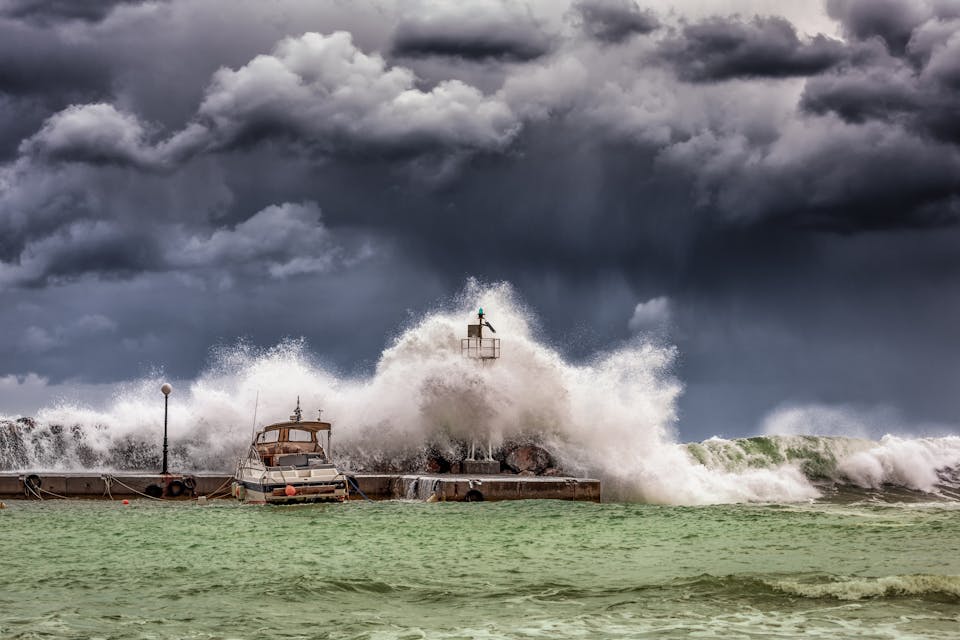
    Ilustrasi | Foto oleh GEORGE DESIPRIS dari Pexels: https://www.pexels.com/id-id/foto/ombak-besar-di-bawah-langit-berawan-753619/

    Perhaps the most sobering realization is that we still find ourselves surprised by tsunamis. Despite the advances in science, despite the memory of Aceh, it often takes a fresh event—like the Russian tsunami—to jolt us into awareness again. Why is that?

    Part of it is human nature. We are creatures of the moment. When the sea is calm and the sun is shining, it’s hard to imagine that the same ocean could turn deadly. The illusion of safety is powerful. And yet, nature doesn’t operate on our emotional timelines.

    The Russian tsunami of 2025 may not be remembered in history books as a major disaster. But it should be remembered as a warning—a gentle but firm reminder that the ocean’s temperament can change in an instant. And that our job is not to predict the unpredictable, but to prepare for it anyway.

    The Spiritual and Cultural Echo

    In Aceh, the 2004 tsunami was interpreted through both scientific and spiritual lenses. Some saw it as divine punishment, others as a test of faith. Ceremonies were held. Mass graves became pilgrimage sites. Survivors rebuilt not only their homes but their spiritual understanding of the world.

    SEE ALSO  Indonesia’s Sacred Temples: A Spiritual and Architectural Marvel

    This blend of science and spirituality isn’t unique to Indonesia. In parts of Russia and the indigenous cultures of the Far East, nature holds sacred value. Earthquakes, storms, and tsunamis aren’t just random acts—they’re messages, omens, reminders of humility.

    That duality—between data and devotion, preparedness and prayer—is perhaps what makes the human response to disaster so deeply complex and deeply human.

    Preparing for the Next Wave

    So where do we go from here? If the tsunami in Russia was a whisper, and Aceh a scream, what will the next message be?

    Preparedness isn’t just about installing alarms and painting evacuation signs. It’s about culture. It’s about education that begins in kindergarten. It’s about stories that get passed down so that no child ever grows up thinking the ocean is only beautiful. It’s about respecting nature’s power without fearing it, and about building systems that work for all, not just the privileged.

    We owe it to those lost in Aceh to never forget. And we owe it to ourselves to recognize every seismic jolt—not just as an isolated event—but as part of a global story, one that includes Russia, Indonesia, and every coastline in between.

    Final Reflections: When the Ocean Speaks

    The ocean has no memory, but we do. And when the waves rise unexpectedly in one part of the world, they echo through time and space, stirring memories, igniting fears, and—if we allow them—teaching us resilience.

    The tsunami in Russia was not the end of a story, but a new chapter in an old book. One we should all read more carefully.

    Because when the ocean speaks, it’s up to us to listen.

    aceh indonesia aceh tsunami 2004 climate and tsunamis collective memory of disaster global disaster awareness indonesia tsunami history international disaster response natural disaster preparedness ocean warning system pacific tectonic plates Ring of Fire seismic activity tsunami early warning tsunami memory tsunami russia 2025 tsunami spiritual impact tsunami trauma
    Share. Facebook Twitter Pinterest LinkedIn Tumblr Email
    Previous ArticleWhen the Rain Stops: Rituals and Spiritual Beliefs During Indonesia’s Dry Season
    Next Article When Earth Shakes and Oceans Roar: The Global Ripple of Russia’s 8.8 Quake
    Editor Desk
    • Website

    Related Posts

    Economy

    Indonesia’s National Nutrition Agency Leadership Change Draws International Attention

    By Editor DeskJune 3, 2026
    Don't Miss

    Indonesia’s Biodiesel Shift: B50 Plan Put on Hold, Raising Questions for Global Palm Oil Markets

    By Editor DeskJanuary 14, 2026
    Disaster & Environment

    Elephants Help Clear Wooden Debris After Aceh Disaster

    By Editor DeskDecember 27, 2025
    Don't Miss

    Know the Types of Snakes in the Wild & What to Do If You Get Bitten

    By Editor DeskDecember 27, 2025
    Digital Life

    Gen Z in Indonesia and the Global “Escape Culture”: Why Many Are Saying #KaburAjaDulu

    By Editor DeskOctober 20, 2025
    Agriculture

    The Export of Indonesian Specialty Products: How Local Ingredients Are Becoming Global Brands

    By Editor DeskOctober 20, 2025
    Add A Comment
    Leave A Reply Cancel Reply

    Don't Miss

    Indonesia’s National Nutrition Agency Leadership Change Draws International Attention

    By Editor DeskJune 3, 2026

    Indonesia has attracted international attention following a recent leadership change at the National Nutrition Agency,…

    Indonesia’s Biodiesel Shift: B50 Plan Put on Hold, Raising Questions for Global Palm Oil Markets

    January 14, 2026

    Elephants Help Clear Wooden Debris After Aceh Disaster

    December 27, 2025

    Know the Types of Snakes in the Wild & What to Do If You Get Bitten

    December 27, 2025
    Top Posts

    Indonesia’s National Nutrition Agency Leadership Change Draws International Attention

    June 3, 2026

    Experience the Charm of Labuan Bajo’s Pinisi Boat Right Here in Lampung: Discover the Legendary Maritime Heritage of Indonesia

    June 30, 2025

    Must-Know: 5 Traditional Dances from Lampung You’ll Often Encounter

    June 30, 2025

    What to Do When You See a Snake: A Practical Guide for Everyday Life in Sumatra

    June 30, 2025
    Stay In Touch
    • Facebook
    • Twitter
    • Instagram
    • YouTube
    About Us
    About Us

    Saibumi International brings authentic stories, cultural depth, and off-the-radar destinations from Indonesia and the wider Asian region — crafted for readers who want more than surface-level travel and headlines.

    Facebook X (Twitter) YouTube Reddit
    Our Picks

    Indonesia’s National Nutrition Agency Leadership Change Draws International Attention

    June 3, 2026

    Indonesia’s Biodiesel Shift: B50 Plan Put on Hold, Raising Questions for Global Palm Oil Markets

    January 14, 2026

    Elephants Help Clear Wooden Debris After Aceh Disaster

    December 27, 2025
    Most Popular

    Indonesia’s National Nutrition Agency Leadership Change Draws International Attention

    June 3, 2026

    Experience the Charm of Labuan Bajo’s Pinisi Boat Right Here in Lampung: Discover the Legendary Maritime Heritage of Indonesia

    June 30, 2025

    Must-Know: 5 Traditional Dances from Lampung You’ll Often Encounter

    June 30, 2025
    • Home
    • About Us
    • Advertise
    • Contact Us
    © 2026 Saibumi International. SEO & Web by Dkonten Studio

    Type above and press Enter to search. Press Esc to cancel.