



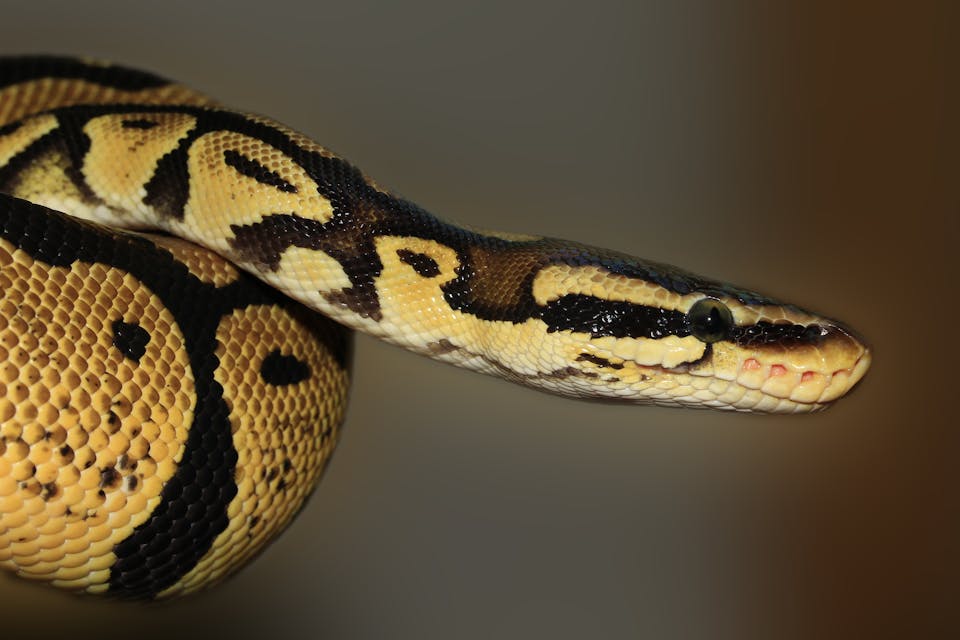
A shocking wildlife encounter took place recently in a quiet village in Kampar Regency, Riau Province, Sumatra, when residents discovered a massive python measuring approximately 7 meters in length. The snake, estimated to be around 20 years old, was found in a plantation area in Simpang Kubu Village shortly after it had devoured a large animal.
The discovery sparked immediate concern among villagers. However, instead of resorting to violence or fear-driven action, the community acted responsibly and reported the incident to local authorities — a move that helped ensure the safe relocation of one of Indonesia’s most impressive reptiles.
Python Found After Consuming Large Prey
According to Hartono, Acting Head of Region II at the Natural Resources Conservation Agency (BKSDA) Riau, the python was discovered in a weakened state. Its movement was slow, and its midsection was visibly enlarged — clear signs that the snake had just finished feeding.
“It’s likely that the python had just swallowed a wild animal, most probably a pig, given the size and bulge of its stomach,” Hartono explained during a statement from the BKSDA office in Pekanbaru.
The snake was found in a plantation near local farmlands, an area where wildlife occasionally comes into contact with human activity due to habitat encroachment and limited food availability in the forests.
Community Alerts Authorities
Once the villagers confirmed the snake was not aggressive, they contacted BKSDA Riau for assistance. The response was swift, and wildlife officials arrived on the scene to assess the animal’s condition.
A physical examination revealed that the reticulated python was healthy and showed no injuries. Importantly, it still displayed natural wild behavior, which indicated that it would be suitable for release back into a conservation area.
“After our assessment, we confirmed that the python’s health was stable and its wild instincts remained strong,” Hartono stated. “We decided to release the animal back into protected forest land, far from human settlements.”
Python Released Into Conservation Forest
Following protocol, the BKSDA team transported the snake to a designated conservation area within their jurisdiction. The release site was chosen carefully to ensure both the safety of the animal and the people living nearby.
The snake was set free into a dense forest habitat, allowing it to return to its natural role in the ecosystem. Wildlife officials emphasized the importance of this action, noting that large snakes like this python play a key role in controlling pest populations and maintaining ecological balance.
The exact location of the release has not been disclosed for safety reasons.
Another Giant Python Found in Pelalawan
Interestingly, the Kampar python wasn’t the only giant snake discovered in the region. On the same day, BKSDA Riau also received a second report from villagers in Pelalawan Regency, where a similar-sized python — measuring approximately 7 to 8 meters — had also been captured.
That snake, like the one in Kampar, was healthy and in good condition, and it was also released into a protected area.
“We released two pythons today, both away from human activity zones,” Hartono said. “The relocation process went smoothly, and we believe both animals will adapt well to their new environment.”
Wildlife and Human Coexistence in Sumatra
The presence of large reptiles such as reticulated pythons near villages highlights the ongoing challenge of human-wildlife coexistence in regions like Sumatra. As forest areas are converted into plantations and residential zones, the natural habitats of animals are reduced, forcing them closer to human territories.
These interactions can be dangerous if not handled properly. Fortunately, in this case, the villagers of Simpang Kubu acted with care and responsibility, making it possible for the animal to be safely relocated instead of harmed.
Wildlife authorities continue to encourage communities in Sumatra and other regions of Indonesia to report wild animal sightings to the relevant agencies. Quick action and communication can prevent unnecessary conflict and promote sustainable conservation.
Importance of Reticulated Pythons in the Ecosystem
The reticulated python (Malayopython reticulatus) is one of the longest snake species in the world and is native to Southeast Asia, including Indonesia. These snakes are non-venomous constrictors, meaning they kill prey by wrapping around them and suffocating them before swallowing whole.
Although intimidating in size, reticulated pythons are generally not aggressive toward humans unless provoked or cornered. They usually prey on rodents, birds, and small mammals, helping maintain balance in the food chain.
In rural areas, their presence can even be beneficial by reducing pest populations that damage crops. However, when they appear near homes or livestock, they must be handled with caution and expertise.
Officials Urge Continued Public Cooperation
BKSDA Riau thanked the villagers of Simpang Kubu and Pelalawan for their cooperation. Their quick decision to involve wildlife authorities allowed for a successful rescue and relocation effort that benefited both the animals and the people.
“This is a great example of how communities and conservationists can work together,” Hartono said. “We hope more people will follow their example by reporting wildlife encounters rather than taking drastic action.”
He added that while encounters with large snakes may be frightening, they are not always dangerous if handled calmly and correctly.
Respecting Nature’s Giants
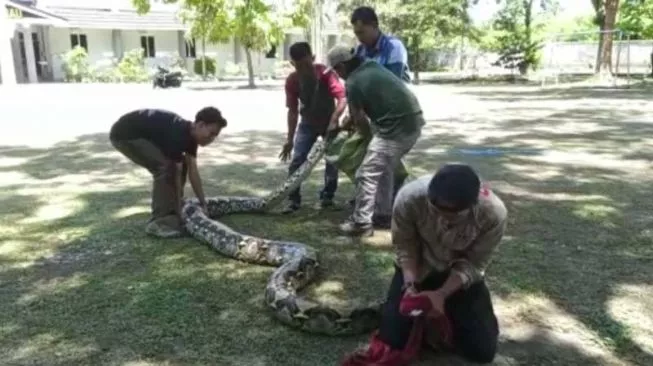
The case of the 7-meter python in Kampar serves as a powerful reminder of Indonesia’s rich but vulnerable biodiversity. As development continues across Sumatra, protecting wildlife through education, awareness, and cooperation is more important than ever.
This successful rescue and release show that even the most intimidating creatures deserve a place in the ecosystem — and that harmony between people and wildlife is possible when handled with care and respect.
