



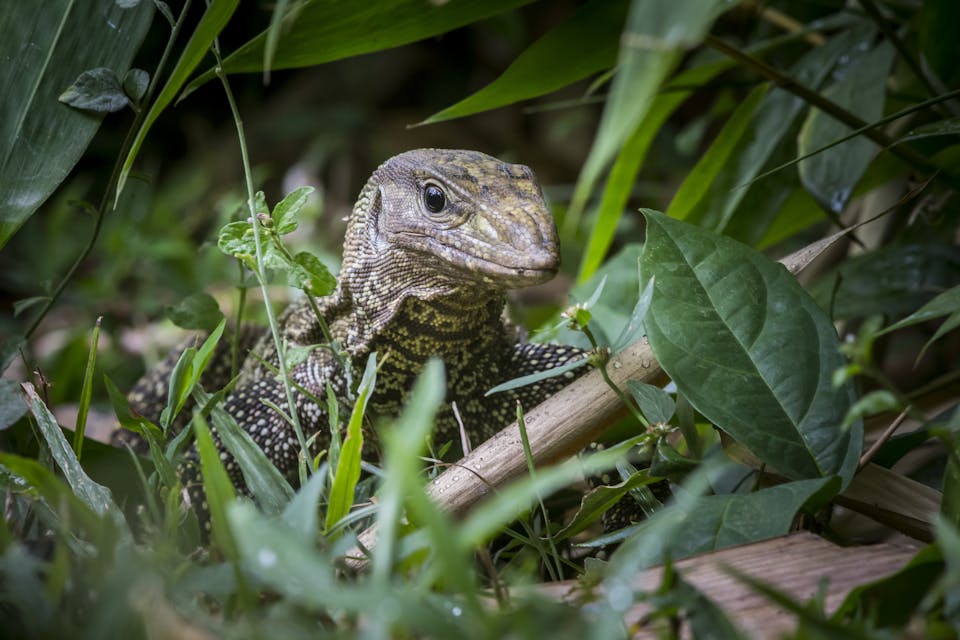
If you’ve ever lived near a river, swamp, or fishpond in Indonesia, chances are you’ve crossed paths with a monitor lizard, locally known as biawak. These large reptiles might seem intimidating at first sight — with their long bodies, forked tongues, and dinosaur-like movement — but the truth is, they’re not the monsters people often think they are.
Monitor lizards, especially the species known as the water monitor (Varanus salvator), are surprisingly common in many parts of the country. You’ll find them sunbathing on rocks, swimming gracefully through irrigation canals, or sometimes quietly resting under homes built on stilts. While such encounters might catch you off guard, understanding these creatures can turn fear into fascination — and panic into preparedness.
Let’s explore what you need to know about monitor lizards: how they behave, why they’re often seen near human settlements, and what the smartest thing to do is when you find one nearby.
The water monitor is one of the largest lizards in the world. Some adults grow over 3 meters in length and weigh more than 25 kilograms. Despite their size, they are elusive and solitary animals. They typically live near freshwater sources like rivers, marshes, and rice fields, where food is abundant and hiding spots are easy to find. These reptiles are semi-aquatic, which means they move easily between land and water. Their strong limbs and long, flat tails make them agile swimmers.
Water monitors are most active during the day. Early in the morning, they begin to move around, foraging for food — which includes fish, amphibians, birds, insects, and even dead animals. Their diet is broad because they are carnivores and opportunistic feeders. Their incredible sense of smell, supported by their forked tongue and Jacobson’s organ, helps them detect food from a distance.
By midday, especially on sunny days, monitor lizards can often be seen basking on rocks or tree trunks. Sunbathing helps regulate their body temperature, since they are cold-blooded animals. This behavior is one of the most visible signs of their presence. If you see a large lizard lying still under the sun, it’s very likely not hunting or stalking — it’s just warming up.
While their natural habitat is near water, many people are surprised to find monitor lizards venturing into residential areas. There are several reasons for this. Urban expansion has slowly crept into their natural ranges, reducing the distance between human homes and wild habitats. In addition, food waste, livestock pens, and fishponds create unintended attractants. Monitor lizards are intelligent and curious creatures — if they sense a meal, they will investigate.
Young monitors, especially, are more likely to wander into human spaces. Smaller in size and more adaptable, they can squeeze into rooftops, hide under wooden floors, or even climb trees near houses. In traditional rural homes, where space and structure are often open or elevated, it’s not unheard of for locals to discover a biawak inside the house. While this is unnerving, the lizard rarely means harm.
Despite their appearance, monitor lizards are generally not aggressive toward humans. They prefer flight over fight. If they sense danger, their first instinct is to retreat. However, like any wild animal, they will defend themselves if cornered or threatened. Their defense mechanisms include a powerful tail whip, sharp claws, and a strong bite. That’s why it’s crucial never to provoke or try to catch one.
So, what should you actually do when you see a monitor lizard?

First and foremost, stay calm. There’s no need to shout or run. The lizard likely already senses you and is calculating its escape route. Keep a safe distance and avoid making any sudden movements. In most cases, if you back away and leave the lizard alone, it will soon retreat into cover. It is not interested in chasing or attacking you.
If the lizard is inside your home or refuses to leave your yard, the best action is to call a local animal control service or wildlife officer. Trained professionals know how to handle large reptiles safely. Do not try to trap or move the animal yourself, especially if you don’t have the tools or knowledge to do it correctly. This not only puts the animal at risk but could lead to unnecessary injury on your part.
In areas where monitor lizards are commonly seen, residents often take preventive measures to discourage them from coming too close. This includes securing trash bins, not leaving food scraps outside, and blocking access to crawl spaces under the house. Livestock like chickens or ducks should be kept in enclosures, and fishponds can be protected using nets or fencing.
Still, it’s important to remember that monitor lizards are protected in some regions. They are a vital part of the ecosystem — helping control rodent populations and cleaning up animal carcasses that might otherwise spread disease. Killing or harming them is not only unethical but may be illegal, depending on local wildlife laws.
There is also a cultural element to how biawak are perceived. In some parts of Indonesia, the meat and skin of monitor lizards are considered valuable. This has led to some degree of hunting and illegal trade. However, many conservationists and biologists argue that these animals should be preserved in the wild, where their ecological role is irreplaceable.
Perhaps the most important takeaway is that living near monitor lizards doesn’t have to be dangerous. With awareness and simple precautions, peaceful coexistence is absolutely possible. Just like monkeys in Bali or sea turtles in Sulawesi, monitor lizards are part of the natural fabric of the Indonesian environment. Their presence is not a sign of danger — it’s a sign of a healthy ecosystem.
In conclusion, seeing a monitor lizard might be surprising, but it doesn’t need to be scary. With the right knowledge, you can safely share space with these fascinating reptiles. Treat them with respect, give them space, and they’ll likely go their own way without any issue. After all, you’re not just witnessing a wild animal — you’re getting a glimpse into the ancient, untamed world that still exists right outside your door.
