



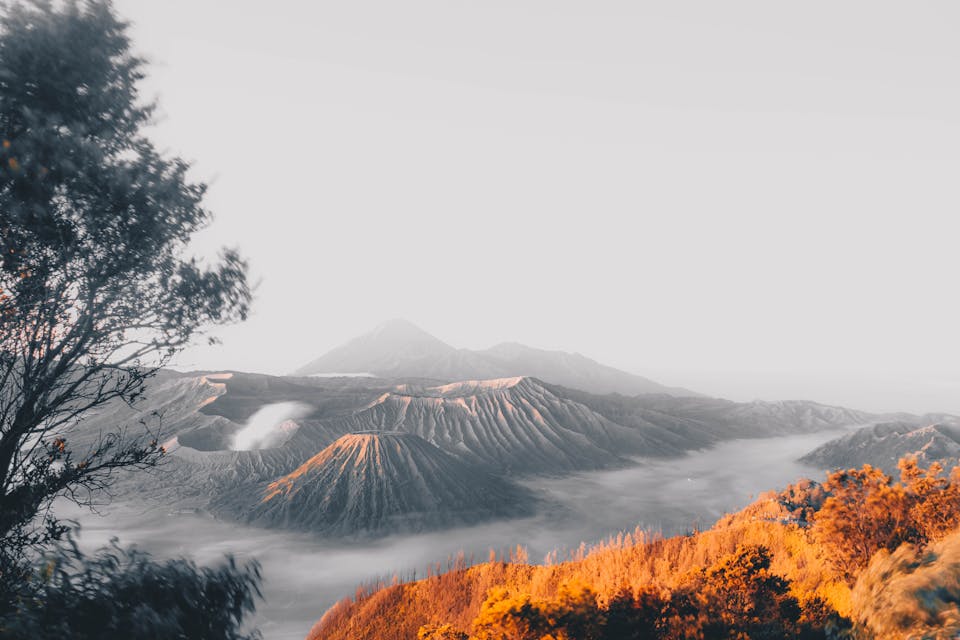
Indonesia, an archipelago of over 17,000 islands, isn’t just about pristine beaches, exotic wildlife, or colorful cultures. It’s also the land where the Earth speaks—loudly. With more active volcanoes than any other country in the world, Indonesia has earned the nickname “The Volcano Nation.” From lava-spewing giants to tranquil crater lakes high above the clouds, Indonesia’s volcanic landscape is a living, breathing geological wonder.
But it’s not just geologists who are obsessed. Hikers, photographers, adventure travelers, and nature lovers all around the world are drawn to this fiery terrain. And it’s not hard to see why: volcanoes here are not only scientific marvels, but also offer some of the most breathtaking views and adrenaline-pumping experiences you can find on Earth.
So, why exactly are people so captivated by Indonesia’s volcanoes? Let’s dive into the fire and find out.
The Pacific Ring of Fire: Indonesia’s Explosive Address
Indonesia sits smack dab on the Pacific Ring of Fire, a horseshoe-shaped region in the Pacific Ocean known for its intense seismic activity. This ring is home to around 75% of the world’s active volcanoes—and Indonesia boasts over 130 of them.
The country’s strategic tectonic location is the main reason it has so many volcanoes. Here, the Indo-Australian Plate is sliding beneath the Eurasian Plate, creating subduction zones that fuel volcanic eruptions and earthquakes.
While this makes Indonesia vulnerable to natural disasters, it also makes it a playground for volcanologists and earth scientists who want to study plate tectonics, magma chambers, and eruption cycles up close.
A Living Laboratory for Geologists
For geologists, Indonesia offers a real-time education in volcanology. You can witness all kinds of volcanic activity here—effusive eruptions, explosive ones, stratovolcanoes, calderas, lava domes, and even underwater volcanoes.
Volcanoes like:
- Mount Merapi, one of the most active and closely monitored volcanoes in the world
- Mount Sinabung, which unexpectedly awakened in 2010 after centuries of dormancy
- Mount Tambora, whose 1815 eruption caused the infamous “Year Without a Summer”
- Krakatoa (Krakatau), known for its cataclysmic 1883 eruption heard over 3,000 miles away
Each volcano offers new insights into Earth’s inner workings. No two eruptions are the same, and each geological event leaves behind clues that help scientists predict future eruptions and better understand the evolution of our planet.
Bucket-List Destinations for Nature Lovers
If you’re not a scientist but simply someone who loves dramatic landscapes and the raw beauty of nature, Indonesian volcanoes are a dream come true.
1. Mount Bromo – The Surreal Sunrise
Bromo is probably Indonesia’s most Instagrammed volcano—and for good reason. Watching the sunrise over the vast Tengger caldera, with Mount Bromo puffing smoke into the early morning light, is an almost spiritual experience. It’s not an especially tough climb, making it accessible to almost everyone, from families to solo travelers.
2. Mount Rinjani – The Trekker’s Paradise
Lombok’s crown jewel, Mount Rinjani, is a tough but rewarding trek. At the summit, you’ll witness a caldera lake known as Segara Anak, and even a “volcano within a volcano” called Barujari. The journey tests your stamina, but the view from 3,726 meters above sea level is worth every sore muscle.
3. Kawah Ijen – The Electric Blue Fire
Here’s something that looks straight out of a sci-fi movie. At night, Kawah Ijen in East Java glows with blue flames, thanks to burning sulfuric gases. By day, it reveals a stunning turquoise crater lake—the largest highly acidic lake in the world. Combine that with the sight of local miners carrying heavy loads of sulfur on their backs, and you’ve got an unforgettable, haunting experience.
4. Mount Agung and Mount Batur – Sacred Volcanoes of Bali
Bali isn’t just about beaches and beach clubs. The island is anchored by Mount Agung, considered sacred by the Balinese people. Nearby, Mount Batur offers a popular sunrise trek that rewards climbers with panoramic views of the surrounding landscape.
Culture and Myth: Volcanoes in Indonesian Belief Systems
For Indonesians, volcanoes are more than just mountains—they are living spirits. Many local communities believe that volcanoes are guardians of the land, and eruptions are seen as signs from the gods or ancestors.
In Java and Bali, for instance, offerings are made to appease the spirits of the mountains. The famous Kasada ceremony at Mount Bromo involves Tenggerese people throwing food and livestock into the volcano’s crater as a form of gratitude and supplication.
This blend of spirituality and natural phenomena adds a cultural depth to every hike, reminding travelers that they’re treading on sacred ground.
Danger and Resilience: Life Around Volcanoes
Despite the risks, millions of Indonesians live on or near volcanoes. Why? Because volcanic soil is incredibly fertile, perfect for agriculture. Rice, tea, coffee, and spices thrive in these mineral-rich lands.
Communities have also learned to adapt to the volatility. There are sophisticated monitoring systems, evacuation drills, and community-based disaster responses that help people coexist with nature’s unpredictable moods.
And this resilience is part of what makes traveling in Indonesia so inspiring—you don’t just see volcanoes; you see how life flourishes around them.
A Hotspot for Eco-Tourism and Adventure Travel
Indonesia’s volcanoes are becoming a hotspot for eco-conscious travel. Tour operators now offer sustainable treks, local homestays, and community-based tours that let you experience volcanoes without leaving a harmful footprint.
Some unique experiences include:
- Camping near crater lakes
- Hot spring soaks fed by volcanic heat
- Paragliding off volcanic slopes
- Photography tours focused on eruptions or sulfur mining
These adventures attract a new wave of travelers who crave authentic, off-the-beaten-path experiences that connect them to nature and local people.
Why You Should Add Indonesia’s Volcanoes to Your Travel Bucket List
Whether you’re a geology nerd, a thrill-seeker, or someone just looking to see the sunrise from above the clouds, Indonesia’s volcanoes offer something magical.
Here’s what sets them apart:
- ✅ Diversity: From smoking cones to crater lakes, no two volcanoes are the same
- ✅ Accessibility: Many are reachable within a day or two from major tourist cities
- ✅ Affordability: Compared to other countries, Indonesia offers high-value adventures
- ✅ Culture: Volcanic treks are often laced with unique traditions and rituals
- ✅ Impact: Your travel can directly support local communities and conservation
Final Thoughts: The Fiery Heart of the Archipelago
Indonesia’s volcanoes are not just natural features—they’re storytellers. They speak of Earth’s power, people’s resilience, and the delicate balance between destruction and creation.
In a world where travel is increasingly about deeper connections and authentic encounters, Indonesia’s volcanoes offer a rare chance to witness nature in its rawest form—alive, majestic, and constantly changing.
So pack your boots, charge your camera, and prepare your soul. The Volcano Nation is calling.
