
Close Menu
Saibumi | Uncovering Asia, One Story at a Time
    What's Hot

    Indonesia’s National Nutrition Agency Leadership Change Draws International Attention

    June 3, 2026

    Indonesia’s Biodiesel Shift: B50 Plan Put on Hold, Raising Questions for Global Palm Oil Markets

    January 14, 2026

    Elephants Help Clear Wooden Debris After Aceh Disaster

    December 27, 2025
    Facebook X (Twitter) Instagram
    Saibumi | Uncovering Asia, One Story at a TimeSaibumi | Uncovering Asia, One Story at a Time
    • About Us
    • Contact Us
    • Advertise
    Facebook X (Twitter) Instagram YouTube LinkedIn Reddit
    • Home
    • Stories

      The Global Plastic Treaty Fails Again – What Does It Mean for the Planet?

      August 27, 2025

      Puru Kambera Savanna: Tracing the Wild Horses of East Sumba

      August 25, 2025

      West Sumatra Emerges as a Leading Muslim-Friendly Travel Destination

      August 24, 2025

      Tabola Bale Song: The Viral Music Blend From Eastern Indonesia

      August 20, 2025

      Tanjung Karang Beach: An Underwater Paradise in Donggala

      August 20, 2025
    • Travel

      Know the Types of Snakes in the Wild & What to Do If You Get Bitten

      December 27, 2025

      Thailand Named the Best Food Country in the World 2025 — Beating Italy and Japan

      October 14, 2025

      Dieng Plateau Officially Designated as Indonesia’s Newest National Geopark

      September 29, 2025

      The Culture of Souvenirs: How Indonesians Strengthen Workplace Relationships Through Oleh-oleh

      September 29, 2025

      6 Best Coffee Shops in Asia – And Yes, One of Them Is in Indonesia!

      September 28, 2025
    • Culture
    • Lifestyle
      1. Food & Culture
      2. Green Living
      3. Local Life
      4. Modern Living
      5. People & Inspiration
      6. View All

      Gen Z in Indonesia and the Global “Escape Culture”: Why Many Are Saying #KaburAjaDulu

      October 20, 2025

      The Export of Indonesian Specialty Products: How Local Ingredients Are Becoming Global Brands

      October 20, 2025

      From Training to Takeoff: MKP’s Approach to Responsible Worker Preparation

      October 18, 2025

      Thailand Named the Best Food Country in the World 2025 — Beating Italy and Japan

      October 14, 2025

      List of Plants That Attract and Repel Snakes Around the House

      October 20, 2025

      Bird-Friendly Coffee in Lampung: Wild Birds Help Farmers Control Pests Naturally

      September 23, 2025

      Standing Still Like a Stick: How Tree Snakes Outsmart Predators with Vertical Sleep

      July 17, 2025

      Not a Cat, Not a Snake — Meet the Plant That Can Eat Rats

      July 12, 2025

      #KaburAjaDulu: When Young Indonesians Feel Like Escaping Is the Only Way to Survive

      October 9, 2025

      The Culture of Souvenirs: How Indonesians Strengthen Workplace Relationships Through Oleh-oleh

      September 29, 2025

      How Remote Work and Digitalization Are Transforming Indonesian Work Culture

      September 28, 2025

      Staying Healthy in Unpredictable Weather: Indonesian Habits the World Can Learn From

      September 21, 2025

      Gen Z in Indonesia and the Global “Escape Culture”: Why Many Are Saying #KaburAjaDulu

      October 20, 2025

      Indonesia’s Beauty Industry Is Having a Major Glow-Up

      July 1, 2025

      Why Indonesian Coffee Is the Next Big Thing Among Global Freelancers

      June 30, 2025

      The Culture of Souvenirs: How Indonesians Strengthen Workplace Relationships Through Oleh-oleh

      September 29, 2025

      The Indonesian Work Culture: Harmony and Gotong Royong in Action

      September 16, 2025

      Southeast Asian Solidarity: Citizens Rally Behind Indonesian Protesters Amid Police Violence

      September 6, 2025

      What Germans Can Learn from the Philosophy of Gotong Royong

      July 16, 2025

      Gen Z in Indonesia and the Global “Escape Culture”: Why Many Are Saying #KaburAjaDulu

      October 20, 2025

      #KaburAjaDulu: When Young Indonesians Feel Like Escaping Is the Only Way to Survive

      October 9, 2025

      The Indonesian Work Ethic: Why Global Teams Trust Indonesian Professionals

      October 2, 2025

      Why Indonesian Talents Are the Best Choice for Global Companies

      October 2, 2025
    • Local Business
    Subscribe
    Saibumi | Uncovering Asia, One Story at a Time
    Home » Indonesia: The World’s Largest Island Democracy
    Culture

    Indonesia: The World’s Largest Island Democracy

    Editor DeskBy Editor DeskAugust 8, 2025No Comments7 Mins Read
    Facebook Twitter Pinterest LinkedIn Tumblr Email
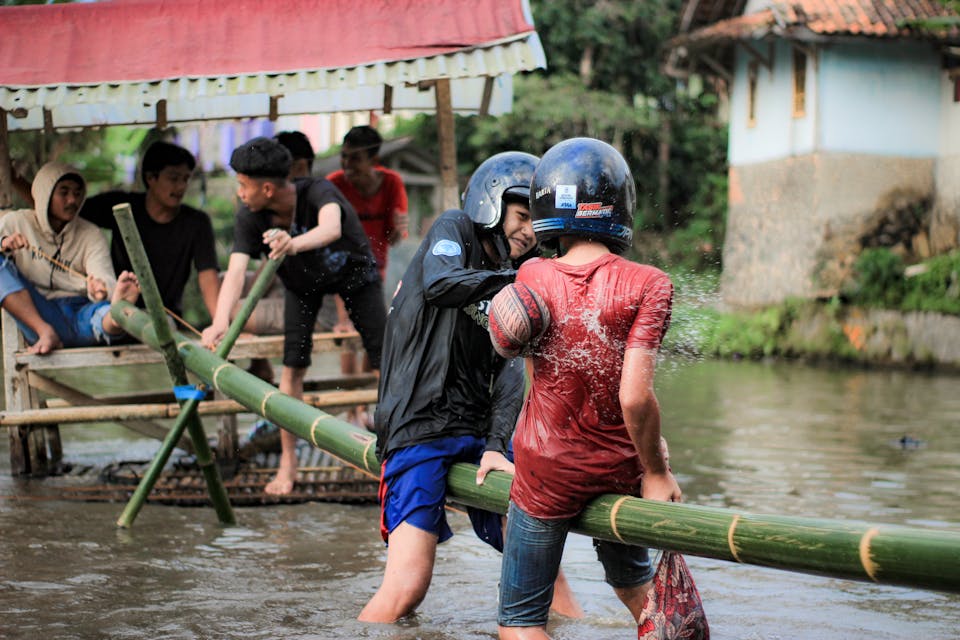
    Foto oleh firman fatthul: https://www.pexels.com/id-id/foto/orang-orang-masyarakat-rakyat-manusia-13368621/
    Share
    Facebook Twitter LinkedIn Pinterest Email Copy Link

    When people think of Indonesia, their minds often jump to images of Bali’s golden beaches, Komodo dragons, or the world’s most aromatic coffee. But beneath the postcards and travel blogs lies a deeper truth—Indonesia is not only a tropical wonderland but also the world’s third-largest democracy, right after India and the United States.

    With over 270 million people, spread across more than 17,000 islands, Indonesia’s democratic story is unlike any other. It’s a narrative woven through centuries of kingdoms, colonial rule, independence struggles, and a modern transformation into a vibrant, if sometimes noisy, democratic society. For visitors from abroad, understanding this democratic spirit adds a whole new layer to experiencing the country.


    From Kingdoms to the Ballot Box

    Democracy didn’t simply appear in Indonesia overnight. The archipelago has a long history of governance—stretching back to ancient kingdoms like Srivijaya and Majapahit—where power was often centralised in royal courts. Centuries of Dutch colonial rule followed, shaping infrastructure, trade, and administration but offering little in terms of political freedom.

    Everything changed in 1945, when Indonesia declared independence. The early years were turbulent, marked by debates over what kind of nation Indonesia should be. Should it be a federation? A centralised republic? A religious state? A secular one? These debates weren’t just theoretical—they were existential.

    By the late 20th century, after decades under an authoritarian regime, Indonesia began a historic shift known as Reformasi (Reformation). In 1998, amid economic crisis and public protests, the old order fell, and democratic reforms took root. The nation adopted direct presidential elections, decentralised political power to local governments, and embraced freedom of the press.


    The Largest Direct Elections in the World

    When Indonesians head to the polls, the world takes notice. Imagine over 190 million registered voters casting their ballots on a single day, across thousands of islands—some accessible only by boat or small plane. Ballot boxes travel by foot, horse, motorbike, and sometimes canoe to reach remote communities.

    Indonesia’s elections are a logistical marvel and a testament to the nation’s commitment to democracy. From the bustling streets of Jakarta to the rice paddies of Bali, every vote counts the same. And unlike in some countries where results take weeks, Indonesia’s election commission works tirelessly to deliver outcomes in just days, despite the vast geography.

    SEE ALSO  Want to Export Ginger to Europe? Here’s Your Market Map and Top Importers

    Freedom of Speech and a Diverse Media Landscape

    One of the most visible signs of Indonesia’s democratic nature is its free press. Newspapers, online portals, television channels, and radio stations operate independently, often challenging government narratives and holding public officials accountable.

    Social media plays an equally powerful role. Platforms like Instagram, TikTok, and Twitter (or X) are spaces where young Indonesians debate policies, share political memes, and even mobilise grassroots movements. Political leaders are not just elected—they are constantly scrutinised in the digital public square.

    Of course, freedom of speech comes with challenges. Fake news and polarising rhetoric can sometimes dominate conversations, especially during election seasons. But the fact that debates happen openly, and that people feel empowered to speak, is proof of a democratic culture that values public participation.


    Unity in Diversity: Democracy Across 17,000 Islands

    Indonesia’s national motto, Bhinneka Tunggal Ika (“Unity in Diversity”), perfectly captures the challenge and beauty of democracy here. The country is home to more than 300 ethnic groups and over 700 languages. Religion is equally diverse—while Islam is the majority faith, Indonesia officially recognises six religions, and people of different beliefs often live side by side.

    Democracy in such a plural society requires constant negotiation and compromise. Policies must consider the needs of communities from the highlands of Papua to the fishing villages of Sulawesi. This inclusiveness is baked into the political system: regional elections allow local leaders to address local concerns, while the national parliament represents the nation’s collective voice.


    A Youth-Driven Democracy

    One of the most striking features of Indonesia’s political landscape is its young population. More than half of Indonesians are under 35, meaning that the future of the country is literally in the hands of its youth.

    SEE ALSO  Tabola Bale Song: The Viral Music Blend From Eastern Indonesia

    Young voters are increasingly shaping election outcomes. They demand transparency, environmental action, digital economy growth, and policies that reflect a global perspective. They are also active in civil society—forming NGOs, student movements, and online communities that push for change outside formal politics.

    This youthful energy keeps Indonesia’s democracy dynamic. It ensures that debates are not only about the past but also about what kind of nation Indonesia wants to become.


    Challenges on the Democratic Road

    Indonesia’s democratic journey hasn’t been without bumps. Corruption remains a persistent problem, as does money politics during elections. Certain laws—especially those related to defamation or blasphemy—have sparked debates about how to balance freedom with social harmony.

    The vast geography also poses a challenge for equal representation. Some remote communities still struggle with access to information, making it harder for them to participate fully in the democratic process.

    Yet these challenges are openly discussed, not hidden away. Civil society groups, independent journalists, and even ordinary citizens play watchdog roles, keeping the system accountable. The willingness to address these issues in public forums is, in itself, a sign of a functioning democracy.


    Democracy and Everyday Life

    For visitors, democracy in Indonesia isn’t something you only see in parliament buildings—it’s woven into daily interactions. In a Jakarta coffee shop, you might overhear heated debates about fuel prices or education reforms. In a Yogyakarta art gallery, an exhibition might critique political policies through street art. Even in rural markets, you’ll find conversations about local leaders and development projects.

    This openness is part of what makes Indonesia fascinating to outsiders. People are engaged with the issues that affect them, and they aren’t shy about sharing their opinions.


    Indonesia on the Global Stage

    Indonesia’s democratic credentials have boosted its role internationally. As a member of the G20 and the world’s largest Muslim-majority democracy, Indonesia often serves as a bridge between developed and developing nations. It advocates for global cooperation on issues like climate change, sustainable development, and fair trade.

    SEE ALSO  Social Media Doesn’t Reflect Indonesians as a Whole

    Its democratic system also strengthens its soft power. Cultural diplomacy—through music, cuisine, film, and sports—has helped the world see Indonesia not just as an exotic travel destination but as a modern nation with a voice in global affairs.


    Why Democracy Matters for Indonesia’s Future

    Democracy is not just a political system for Indonesia—it’s a survival strategy. In a country as vast and diverse as this, only a system that allows everyone a voice can hold it together. Without representation, regional tensions could easily undermine national unity.

    By giving people the power to choose their leaders and shape their policies, democracy ensures that Indonesia’s future is built by consensus rather than coercion. This doesn’t mean decisions are always perfect, but it does mean they are made through dialogue and compromise.


    A Living, Breathing Democracy

    Indonesia’s democracy is not frozen in time—it evolves with each election, protest, and policy debate. It’s a living, breathing organism that adapts to challenges, absorbs new ideas, and reflects the aspirations of its people.

    For international visitors, recognising Indonesia as a democracy changes how you see the country. It’s not just a place of natural wonders and cultural treasures; it’s a nation of citizens actively shaping their destiny. From the crowded streets of Surabaya to the tranquil shores of Lombok, democracy is at work—in conversations, in communities, and in the choices people make every five years at the ballot box.


    The Final Word

    Indonesia’s journey from colonial rule to a modern democracy is a story worth telling, especially to the world. It proves that democracy can thrive in diverse, complex societies, and that political freedom and cultural richness can go hand in hand.

    So the next time you think of Indonesia, picture not only its temples and turquoise waters, but also the ballot boxes arriving by boat in remote villages, the spirited political debates in cafés, and the millions of voices that together form the heartbeat of the world’s largest island democracy.

    democracy and diversity democracy in Southeast Asia democratic system in Indonesia democratic values in Indonesia human rights in Indonesia Indonesia democracy Indonesia elections Indonesia global politics Indonesia political history Indonesian civil society Indonesian government Indonesian politics political freedom in Indonesia
    Share. Facebook Twitter Pinterest LinkedIn Tumblr Email
    Previous ArticleFrom Orchards to Overseas Markets: How Indonesia’s Mango Export Journey Offers Lessons for Asia’s Mango Producers
    Next Article From Coins to Freedom: How Prita Mulyasari’s Case Echoes Indonesia’s Fight for True Independence
    Editor Desk
    • Website

    Related Posts

    Economy

    Indonesia’s National Nutrition Agency Leadership Change Draws International Attention

    By Editor DeskJune 3, 2026
    Don't Miss

    Indonesia’s Biodiesel Shift: B50 Plan Put on Hold, Raising Questions for Global Palm Oil Markets

    By Editor DeskJanuary 14, 2026
    Disaster & Environment

    Elephants Help Clear Wooden Debris After Aceh Disaster

    By Editor DeskDecember 27, 2025
    Don't Miss

    Know the Types of Snakes in the Wild & What to Do If You Get Bitten

    By Editor DeskDecember 27, 2025
    Digital Life

    Gen Z in Indonesia and the Global “Escape Culture”: Why Many Are Saying #KaburAjaDulu

    By Editor DeskOctober 20, 2025
    Agriculture

    The Export of Indonesian Specialty Products: How Local Ingredients Are Becoming Global Brands

    By Editor DeskOctober 20, 2025
    Add A Comment
    Leave A Reply Cancel Reply

    Don't Miss

    Indonesia’s National Nutrition Agency Leadership Change Draws International Attention

    By Editor DeskJune 3, 2026

    Indonesia has attracted international attention following a recent leadership change at the National Nutrition Agency,…

    Indonesia’s Biodiesel Shift: B50 Plan Put on Hold, Raising Questions for Global Palm Oil Markets

    January 14, 2026

    Elephants Help Clear Wooden Debris After Aceh Disaster

    December 27, 2025

    Know the Types of Snakes in the Wild & What to Do If You Get Bitten

    December 27, 2025
    Top Posts

    Indonesia’s National Nutrition Agency Leadership Change Draws International Attention

    June 3, 2026

    Experience the Charm of Labuan Bajo’s Pinisi Boat Right Here in Lampung: Discover the Legendary Maritime Heritage of Indonesia

    June 30, 2025

    Must-Know: 5 Traditional Dances from Lampung You’ll Often Encounter

    June 30, 2025

    What to Do When You See a Snake: A Practical Guide for Everyday Life in Sumatra

    June 30, 2025
    Stay In Touch
    • Facebook
    • Twitter
    • Instagram
    • YouTube
    About Us
    About Us

    Saibumi International brings authentic stories, cultural depth, and off-the-radar destinations from Indonesia and the wider Asian region — crafted for readers who want more than surface-level travel and headlines.

    Facebook X (Twitter) YouTube Reddit
    Our Picks

    Indonesia’s National Nutrition Agency Leadership Change Draws International Attention

    June 3, 2026

    Indonesia’s Biodiesel Shift: B50 Plan Put on Hold, Raising Questions for Global Palm Oil Markets

    January 14, 2026

    Elephants Help Clear Wooden Debris After Aceh Disaster

    December 27, 2025
    Most Popular

    Indonesia’s National Nutrition Agency Leadership Change Draws International Attention

    June 3, 2026

    Experience the Charm of Labuan Bajo’s Pinisi Boat Right Here in Lampung: Discover the Legendary Maritime Heritage of Indonesia

    June 30, 2025

    Must-Know: 5 Traditional Dances from Lampung You’ll Often Encounter

    June 30, 2025
    • Home
    • About Us
    • Advertise
    • Contact Us
    © 2026 Saibumi International. SEO & Web by Dkonten Studio

    Type above and press Enter to search. Press Esc to cancel.