


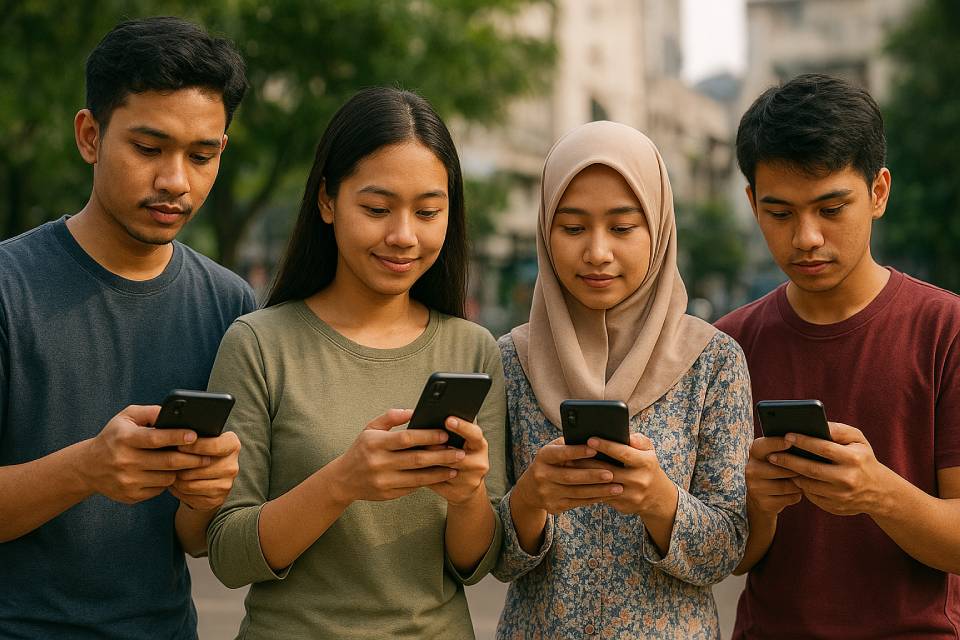
In today’s digital age, social media often feels like the loudest microphone in the room. It shapes opinions, drives conversations, and sometimes even creates the illusion that what we see online is the reality of an entire society. For Indonesia, a country with more than 270 million people spread across thousands of islands, that illusion can be misleading. While social media paints one picture of Indonesians, it rarely tells the whole story.
This raises an important truth: social media does not reflect Indonesians as a whole. The reasons go deeper than simply saying “online life is different from real life.” It’s about bias, inequality, and the way digital platforms amplify certain voices while silencing others. To understand Indonesia, one has to look beyond the timeline, the viral hashtags, and the curated aesthetics of social media feeds.
The Mirage of Representation
When you scroll through Instagram, TikTok, or Twitter in Indonesia, you might see snapshots of urban youth, flashy lifestyles, heated debates about politics, or viral dance trends. It’s tempting to assume that this is Indonesia: a nation of hyper-connected, outspoken digital natives. But the reality is much more complex.
Most social media content comes from urban areas like Jakarta, Bandung, Surabaya, or Bali. These cities have better internet access, more digital-savvy populations, and a higher likelihood of creating content that travels. But what about rural areas? What about communities in Kalimantan, Papua, or Sulawesi, where internet penetration is still limited or inconsistent? Their voices rarely reach the trending pages, leaving a distorted picture of who Indonesians truly are.
This digital mirage creates a dangerous assumption—that the loudest voices represent the majority. In fact, they often don’t.
The Digital Divide
Indonesia faces a real digital divide. Internet penetration in big cities may be high, but millions of Indonesians remain offline or have limited access. According to recent surveys, while more than 200 million Indonesians are connected to the internet, millions still aren’t, especially in remote or underdeveloped regions.
That divide means that the version of Indonesia we see online reflects the connected minority, not the entire nation. People with stable Wi-Fi, smartphones, and time to create content naturally dominate the conversation. Meanwhile, those in villages, farming communities, or remote islands may rely on basic phones or limited connectivity, if they have it at all.
This gap leads to an imbalanced narrative. The Indonesia of social media looks young, urban, trendy, and loud. The Indonesia beyond social media is also rural, traditional, diverse, and filled with stories that never go viral.
Bias in What Gets Amplified
Social media platforms don’t just show us content—they curate it. Algorithms are designed to maximize engagement, which means controversial, emotional, or entertaining content gets pushed forward. For Indonesians, this often means viral debates, clickbait, and performative trends rise to the top, overshadowing more nuanced or positive cultural values.
Take tolerance and gotong royong—the spirit of mutual help that has defined Indonesian society for centuries. These values are deeply embedded in villages, families, and local communities. Yet, on social media, what often trends are divisive narratives, political clashes, or influencer dramas. It’s not that tolerance and cooperation don’t exist—it’s that they don’t always make for viral content.
The result? Outsiders scrolling through Indonesian Twitter or TikTok might assume that Indonesians are endlessly polarized, loud, or obsessed with shallow trends. But walk into an Indonesian neighborhood during a community project or a traditional ceremony, and you’ll see another reality: cooperation, kindness, and cultural richness.
When Online Narratives Clash with National Identity
Indonesia’s national identity is rooted in Pancasila—values like unity, democracy, justice, and mutual respect. Social media, however, often highlights the opposite. Heated debates fueled by disinformation, intolerance, or trolling sometimes paint Indonesians as divided and hostile.
But here’s the contradiction: offline, most Indonesians still value harmony. Daily life is built on compromise and cooperation, whether it’s neighbors sharing food, communities working together on local projects, or families teaching respect across generations.
The tension between these two versions of Indonesia—online and offline—shows how misleading social media can be. If you only look at Twitter fights or viral TikToks, you might think Indonesians are losing their sense of unity. Yet, in the physical world, that unity is still alive and well, though quieter and less sensational than what algorithms reward.
Why It Matters
Some might argue: “So what? Everyone knows social media is just a highlight reel.” But in Indonesia, this misrepresentation matters because it influences how the world perceives the country—and even how Indonesians perceive themselves.
For international audiences, social media might be their only window into Indonesia. A viral video, a trending hashtag, or a controversial post can easily shape stereotypes. Without context, people abroad may think Indonesia is only about certain cultural quirks, political dramas, or tourism hotspots, ignoring the complexity of its people and traditions.
For Indonesians themselves, the danger is internalization. When young people constantly consume content that emphasizes polarization, materialism, or cynicism, they may start to believe this is the dominant culture, even when their offline lives tell a different story. Over time, this can weaken the confidence in traditional values like tolerance and collective responsibility.
Social Media as a Partial Mirror
To be fair, social media does reflect parts of Indonesian society. It captures creativity, humor, activism, and resilience. Indonesian netizens are famous for their wit, their meme culture, and their ability to mobilize for causes. From crowdfunding for medical needs to organizing disaster relief, social media has enabled powerful collective action.
But it remains just that—a part of the story, not the whole picture. It’s a mirror, but a cracked one, showing fragments rather than the entire reflection. The challenge lies in reminding ourselves that the Indonesia of Instagram or Twitter is not the Indonesia you experience when you travel across provinces, talk to farmers, artisans, fishermen, or elders in rural villages.
Beyond the Screens
So, how do we bridge this gap? The answer lies not in abandoning social media but in balancing it with real-world engagement. Indonesians—and anyone observing the country—need to remember that digital narratives should be weighed against offline realities.
Traveling across Indonesia, you’ll see layers of culture and identity that never trend online. In Bali, ceremonies that blend Hindu rituals with modern tourism coexist with everyday life. In Java, communities gather for gotong royong, fixing roads or cleaning neighborhoods together. In Sumatra, traditional dances and storytelling pass from generation to generation, often unnoticed by TikTok or YouTube.
These lived experiences are just as much “Indonesia” as the latest viral video. And they remind us that the nation’s identity is broader, deeper, and more resilient than social media can ever portray.
Rethinking the Narrative
If social media doesn’t reflect Indonesians as a whole, then it’s up to individuals, communities, and even content creators to rethink the narrative. Highlighting stories of cooperation, tolerance, and cultural pride may not always go viral, but they provide a counterbalance to the louder, more divisive content online.
For global audiences, the key is to look beyond the algorithm. Don’t take trending hashtags at face value. Dig deeper into Indonesian literature, films, documentaries, and personal encounters. For Indonesians, the challenge is to use social media not just as a stage for trends but as a platform to showcase the nation’s full diversity and values.
Conclusion: A Nation Larger Than Its Timeline
Indonesia is far bigger than its social media presence. With its vast geography, cultural richness, and traditions rooted in cooperation and resilience, the country cannot be defined by the snippets we see online.
Yes, social media is powerful—it influences perceptions and shapes narratives. But it is also selective, biased, and limited. To truly understand Indonesia, one must step beyond the screen and into the daily lives of its people.
So the next time a viral post claims to define Indonesians, remember: what you see online is just a slice of the story. The real Indonesia lives in its communities, in its values, and in the quiet strength of its people—a richness too vast for any algorithm to capture.
