

Close Menu
Saibumi | Uncovering Asia, One Story at a Time
    What's Hot

    Indonesia’s National Nutrition Agency Leadership Change Draws International Attention

    June 3, 2026

    Indonesia’s Biodiesel Shift: B50 Plan Put on Hold, Raising Questions for Global Palm Oil Markets

    January 14, 2026

    Elephants Help Clear Wooden Debris After Aceh Disaster

    December 27, 2025
    Facebook X (Twitter) Instagram
    Saibumi | Uncovering Asia, One Story at a TimeSaibumi | Uncovering Asia, One Story at a Time
    • About Us
    • Contact Us
    • Advertise
    Facebook X (Twitter) Instagram YouTube LinkedIn Reddit
    • Home
    • Stories

      The Global Plastic Treaty Fails Again – What Does It Mean for the Planet?

      August 27, 2025

      Puru Kambera Savanna: Tracing the Wild Horses of East Sumba

      August 25, 2025

      West Sumatra Emerges as a Leading Muslim-Friendly Travel Destination

      August 24, 2025

      Tabola Bale Song: The Viral Music Blend From Eastern Indonesia

      August 20, 2025

      Tanjung Karang Beach: An Underwater Paradise in Donggala

      August 20, 2025
    • Travel

      Know the Types of Snakes in the Wild & What to Do If You Get Bitten

      December 27, 2025

      Thailand Named the Best Food Country in the World 2025 — Beating Italy and Japan

      October 14, 2025

      Dieng Plateau Officially Designated as Indonesia’s Newest National Geopark

      September 29, 2025

      The Culture of Souvenirs: How Indonesians Strengthen Workplace Relationships Through Oleh-oleh

      September 29, 2025

      6 Best Coffee Shops in Asia – And Yes, One of Them Is in Indonesia!

      September 28, 2025
    • Culture
    • Lifestyle
      1. Food & Culture
      2. Green Living
      3. Local Life
      4. Modern Living
      5. People & Inspiration
      6. View All

      Gen Z in Indonesia and the Global “Escape Culture”: Why Many Are Saying #KaburAjaDulu

      October 20, 2025

      The Export of Indonesian Specialty Products: How Local Ingredients Are Becoming Global Brands

      October 20, 2025

      From Training to Takeoff: MKP’s Approach to Responsible Worker Preparation

      October 18, 2025

      Thailand Named the Best Food Country in the World 2025 — Beating Italy and Japan

      October 14, 2025

      List of Plants That Attract and Repel Snakes Around the House

      October 20, 2025

      Bird-Friendly Coffee in Lampung: Wild Birds Help Farmers Control Pests Naturally

      September 23, 2025

      Standing Still Like a Stick: How Tree Snakes Outsmart Predators with Vertical Sleep

      July 17, 2025

      Not a Cat, Not a Snake — Meet the Plant That Can Eat Rats

      July 12, 2025

      #KaburAjaDulu: When Young Indonesians Feel Like Escaping Is the Only Way to Survive

      October 9, 2025

      The Culture of Souvenirs: How Indonesians Strengthen Workplace Relationships Through Oleh-oleh

      September 29, 2025

      How Remote Work and Digitalization Are Transforming Indonesian Work Culture

      September 28, 2025

      Staying Healthy in Unpredictable Weather: Indonesian Habits the World Can Learn From

      September 21, 2025

      Gen Z in Indonesia and the Global “Escape Culture”: Why Many Are Saying #KaburAjaDulu

      October 20, 2025

      Indonesia’s Beauty Industry Is Having a Major Glow-Up

      July 1, 2025

      Why Indonesian Coffee Is the Next Big Thing Among Global Freelancers

      June 30, 2025

      The Culture of Souvenirs: How Indonesians Strengthen Workplace Relationships Through Oleh-oleh

      September 29, 2025

      The Indonesian Work Culture: Harmony and Gotong Royong in Action

      September 16, 2025

      Southeast Asian Solidarity: Citizens Rally Behind Indonesian Protesters Amid Police Violence

      September 6, 2025

      What Germans Can Learn from the Philosophy of Gotong Royong

      July 16, 2025

      Gen Z in Indonesia and the Global “Escape Culture”: Why Many Are Saying #KaburAjaDulu

      October 20, 2025

      #KaburAjaDulu: When Young Indonesians Feel Like Escaping Is the Only Way to Survive

      October 9, 2025

      The Indonesian Work Ethic: Why Global Teams Trust Indonesian Professionals

      October 2, 2025

      Why Indonesian Talents Are the Best Choice for Global Companies

      October 2, 2025
    • Local Business
    Subscribe
    Saibumi | Uncovering Asia, One Story at a Time
    Home » Global Media Spotlight on Indonesia Protests: How the Death of Affan Became a Worldwide Issue
    Breaking News

    Global Media Spotlight on Indonesia Protests: How the Death of Affan Became a Worldwide Issue

    Editor DeskBy Editor DeskAugust 30, 2025Updated:August 30, 2025No Comments8 Mins Read
    Facebook Twitter Pinterest LinkedIn Tumblr Email
    Protesters gather in front of the Jakarta Metropolitan Police Headquarters (Polda Metro Jaya) on Friday, August 29, 2025. ANTARA PHOTO/Dhemas Reviyanto/rwa.
    Share
    Facebook Twitter LinkedIn Pinterest Email Copy Link

    A Tragedy That Changed the Narrative

    On August 28, 2025, the streets of Jakarta were once again filled with demonstrators demanding reform. What had been building for weeks reached a breaking point when a 21-year-old ride-hailing driver named Affan Kurniawan lost his life. Affan was not a political activist, nor was he a student organizer. He was simply a young man trying to deliver food orders to make ends meet. Caught in the wrong place at the wrong time, he was struck and killed by a tactical vehicle belonging to the Indonesian police’s Mobile Brigade (Brimob).

    His death was not an isolated tragedy—it became the spark that ignited a nationwide wave of anger. For Indonesians, it symbolized the growing frustration with inequality, heavy-handed security forces, and politicians who appeared increasingly disconnected from the people. For the world, it became the story that brought Indonesia’s domestic struggles into sharp international focus.

    From Jakarta Streets to Global Headlines

    The immediate aftermath of Affan’s death saw demonstrations escalate. Crowds swelled around the parliament complex in Jakarta, and what began as demands against lawmakers’ privileges and economic hardships quickly transformed into a broader critique of the government’s legitimacy. The anger was palpable: a young man’s life had been taken not by accident alone, but by what many perceived as systemic negligence and repression.

    International media quickly picked up on the story. Al Jazeera, Associated Press, Reuters, The Guardian, Financial Times, and BBC all ran reports, not merely on the protest itself, but on what Affan’s death represented. The framing was consistent: this was not just about a singular accident, but a political moment that exposed cracks in Indonesia’s governance.

    Al Jazeera, reporting from Jakarta, captured the human tragedy. They emphasized that Affan was delivering food when chaos unfolded, painting a picture of an ordinary citizen crushed by extraordinary circumstances. Their coverage highlighted how his death gave new energy to protests that had already been simmering over low wages, high taxes, and the perception that lawmakers granted themselves excessive benefits while ordinary people struggled to get by. Within days, protests had spread beyond Jakarta to Surabaya, Yogyakarta, and other cities.

    SEE ALSO  Not Sharks: Meet the Most Dangerous Sea Creature in the World

    The Financial Times took a different angle, focusing on the market consequences. Their story emphasized how President Prabowo Subianto was suddenly facing one of the greatest tests of his leadership. The Indonesian rupiah slipped, the Jakarta stock exchange tumbled, and investors grew increasingly wary. For global readers, the coverage painted Affan’s death not only as a human tragedy, but also as a political and economic turning point.
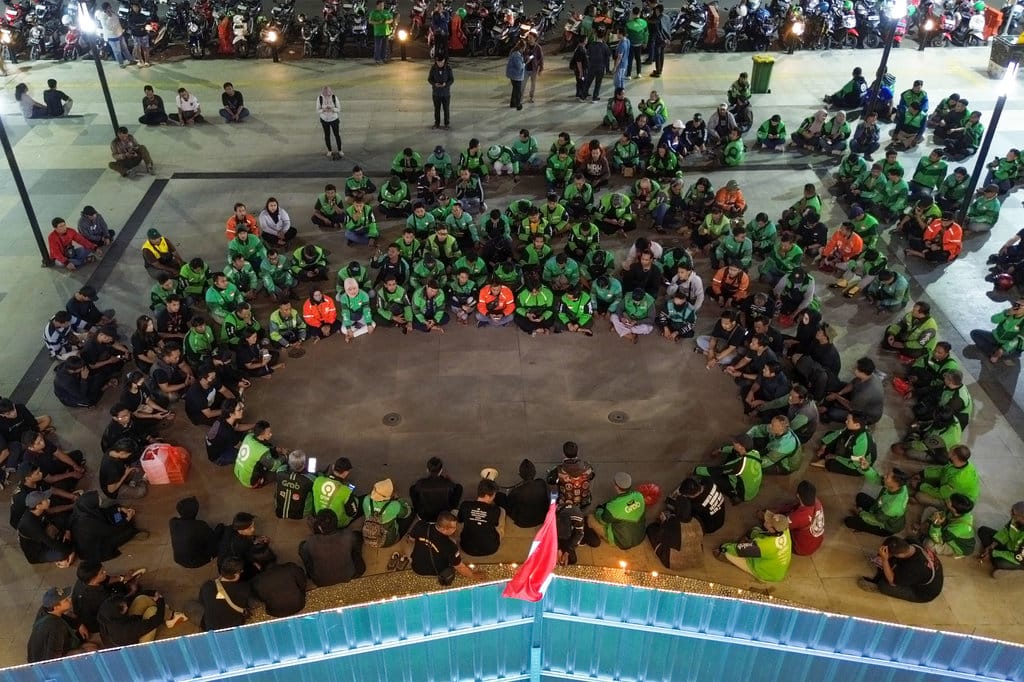
    An aerial photo shows online motorcycle taxi drivers praying together during a solidarity action at the Sidoarjo City Police Headquarters yard, East Java, Friday, August 29, 2025. ANTARA PHOTO/Umarul Faruq/rwa.

    Meanwhile, the Associated Press (AP) used stark visuals to show the heavy-handed response from security forces—tear gas, water cannons, and riot shields clashing with students and workers. Their narrative tied Affan’s death directly to long-standing frustrations with police brutality. Reuters, in its own coverage, highlighted how students and civil society groups vowed to continue demonstrations until accountability was secured, linking economic hardship with political anger.

    The Guardian and BBC offered their own perspectives. The Guardian emphasized scenes of confrontation at police headquarters and the parliament complex, capturing the symbolism of protesters taking their anger directly to state institutions. The BBC, on the other hand, delved into the background of the unrest, explaining to its global audience the economic and social grievances that had been building in Indonesia for years.

    The Human Face of Protest

    What made Affan’s death resonate so strongly was the contrast between who he was and what he came to represent. He was not a politician, not a radical, and not even someone looking to make a statement in the streets. He was one of millions of young Indonesians relying on gig economy jobs to survive, navigating the precarious world of food delivery in a city notorious for its traffic chaos and social inequality.

    Affan’s story underscored the reality that many Indonesians face: working long hours for low pay, paying taxes that feel burdensome, and watching as elected officials debate allowances and privileges for themselves. For many, his death was proof that the system is skewed against ordinary citizens.

    In that sense, Affan became a symbol. Protesters carried his name on banners. Social media flooded with his image and story, transforming him from an anonymous worker into the face of a movement. His death became shorthand for the frustrations of a generation that feels caught between economic hardship and political disillusionment.

    SEE ALSO  From Coins to Freedom: How Prita Mulyasari’s Case Echoes Indonesia’s Fight for True Independence

    Political and Economic Fallout

    The tragedy quickly moved from being a domestic issue to an international concern. President Prabowo Subianto, who had long cultivated an image of strength and order, suddenly found himself in a defensive position. His calls for calm were met with skepticism, especially as images of violence and repression spread online and across news networks. His promise of a transparent investigation into Affan’s death was welcomed by some but doubted by many.

    Markets reflected this uncertainty. The Indonesian rupiah weakened by nearly one percent in the days following the incident, while the Jakarta Composite Index dropped more than two percent. For a country that has prided itself on economic stability, this was a worrying signal. Investors began questioning whether Indonesia’s political system could weather the storm of public anger.

    Beyond markets, the protests signaled something deeper: a legitimacy crisis. The fact that Affan’s death could so rapidly escalate into nationwide demonstrations showed that dissatisfaction had been brewing for a long time. High living costs, youth unemployment, and distrust of institutions had created a powder keg. Affan’s story was the match that lit it.

    International Reactions and Security Concerns

    Foreign governments, too, began to respond. The United States Embassy in Jakarta issued a security alert on August 29, warning its citizens to avoid protest hotspots such as the parliament complex and Brimob headquarters. This was not only a precaution for American nationals, but also a sign that the unrest in Indonesia was being taken seriously abroad.

    International human rights organizations also began voicing concern. Reports of police brutality, excessive use of force, and lack of accountability added pressure on Jakarta. The world’s perception of Indonesia—often hailed as a democratic success story in Southeast Asia—was suddenly under strain. The question was no longer just about one young man’s death, but about the trajectory of the country itself.

    Affan as a Symbol of Democracy Under Pressure

    At its core, the tragedy of Affan Kurniawan is about more than a fatal accident. It is about how one life can illuminate the fractures in a nation’s democracy. His story resonated not only because of the injustice of his death, but because it connected with wider frustrations: the sense that ordinary people are being left behind, that the political elite is insulated from hardship, and that security forces are accountable to no one.

    SEE ALSO  Indonesian Local Products for Export: A Rising Trend in Global Trade

    His death became a rallying cry for reform. Protesters demanded accountability not only for the police officers involved, but also for lawmakers and institutions that had lost touch with the people they serve. In this sense, Affan became more than a victim—he became a symbol of a democracy being tested under pressure.

    The Bigger Picture: Indonesia at a Crossroads

    The events following August 28, 2025, highlight Indonesia’s precarious balance. On the one hand, it remains one of the largest democracies in the world, with vibrant civil society and a tradition of protest. On the other, the repeated clashes between demonstrators and security forces reveal the fragility of its democratic institutions.

    For the global audience, Indonesia’s protests are not just a local story. They are a reminder that democratic backsliding, economic inequality, and state repression are challenges faced across the world. The death of a young ride-hailing driver in Jakarta resonates with people in London, New York, or Nairobi because it speaks to universal themes: injustice, inequality, and the fight for dignity.

    Conclusion: From Local Tragedy to Global Spotlight
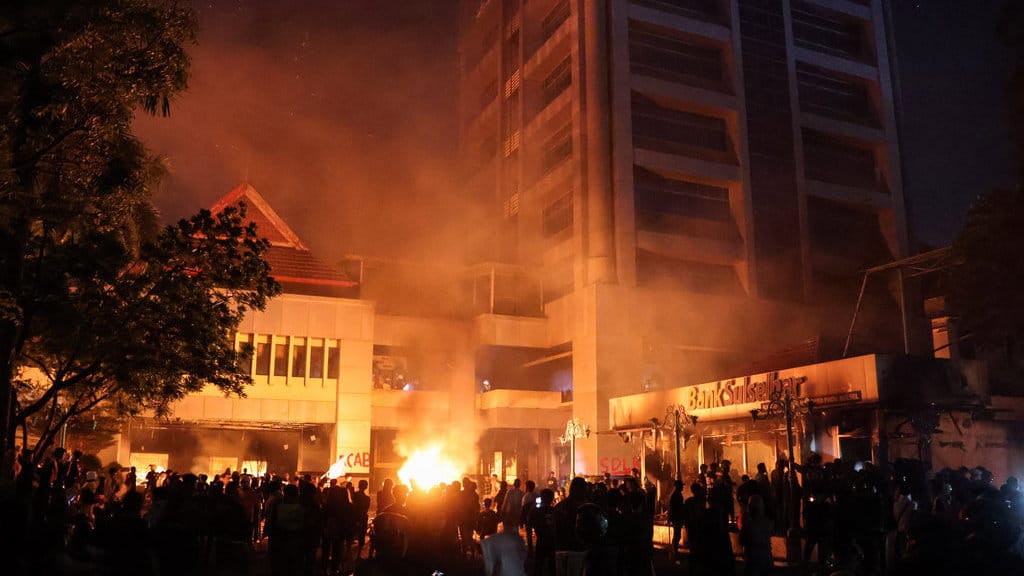
    Protesters watch as the South Sulawesi Regional Legislative Council (DPRD) building is engulfed in flames during the August 29 demonstration in Makassar, South Sulawesi, early Saturday, August 30, 2025. The DPRD building was set on fire by demonstrators rejecting the increase in lawmakers’ allowances and demanding an investigation into the death of online motorcycle taxi driver Affan Kurniawan. ANTARA PHOTO/Arnas Padda/YU.

    What happened to Affan Kurniawan will not be easily forgotten. His death marked a turning point, transforming frustration into mass mobilization, and turning domestic grievances into a story of global significance. From the streets of Jakarta to the pages of international newspapers, Affan’s name has become shorthand for a democracy under strain.

    Indonesia now stands at a crossroads. The government’s next steps—whether through genuine reform, continued repression, or a mix of both—will shape not only its domestic stability but also its standing on the global stage. The tragedy of one young man has become a symbol of a larger struggle, and the world is watching closely to see where that struggle leads.

    Affan Kurniawan Al Jazeera Indonesia news global media Indonesia human rights Indonesia Indonesia protests Indonesian democracy crisis international reaction Indonesia Jakarta demonstration Jakarta stock market decline police brutality Indonesia Prabowo Subianto protests Reuters Indonesia protests rupiah fall student protests Jakarta
    Share. Facebook Twitter Pinterest LinkedIn Tumblr Email
    Previous ArticleBarong vs Rangda: How a Balinese Dance Explains the Harmony of Opposites
    Next Article From Importer to Global Player: The Bright Future of Indonesia’s Textile Handbag Business
    Editor Desk
    • Website

    Related Posts

    Economy

    Indonesia’s National Nutrition Agency Leadership Change Draws International Attention

    By Editor DeskJune 3, 2026
    Don't Miss

    Indonesia’s Biodiesel Shift: B50 Plan Put on Hold, Raising Questions for Global Palm Oil Markets

    By Editor DeskJanuary 14, 2026
    Disaster & Environment

    Elephants Help Clear Wooden Debris After Aceh Disaster

    By Editor DeskDecember 27, 2025
    Don't Miss

    Know the Types of Snakes in the Wild & What to Do If You Get Bitten

    By Editor DeskDecember 27, 2025
    Digital Life

    Gen Z in Indonesia and the Global “Escape Culture”: Why Many Are Saying #KaburAjaDulu

    By Editor DeskOctober 20, 2025
    Agriculture

    The Export of Indonesian Specialty Products: How Local Ingredients Are Becoming Global Brands

    By Editor DeskOctober 20, 2025
    Add A Comment
    Leave A Reply Cancel Reply

    Don't Miss

    Indonesia’s National Nutrition Agency Leadership Change Draws International Attention

    By Editor DeskJune 3, 2026

    Indonesia has attracted international attention following a recent leadership change at the National Nutrition Agency,…

    Indonesia’s Biodiesel Shift: B50 Plan Put on Hold, Raising Questions for Global Palm Oil Markets

    January 14, 2026

    Elephants Help Clear Wooden Debris After Aceh Disaster

    December 27, 2025

    Know the Types of Snakes in the Wild & What to Do If You Get Bitten

    December 27, 2025
    Top Posts

    Indonesia’s National Nutrition Agency Leadership Change Draws International Attention

    June 3, 2026

    Experience the Charm of Labuan Bajo’s Pinisi Boat Right Here in Lampung: Discover the Legendary Maritime Heritage of Indonesia

    June 30, 2025

    Must-Know: 5 Traditional Dances from Lampung You’ll Often Encounter

    June 30, 2025

    What to Do When You See a Snake: A Practical Guide for Everyday Life in Sumatra

    June 30, 2025
    Stay In Touch
    • Facebook
    • Twitter
    • Instagram
    • YouTube
    About Us
    About Us

    Saibumi International brings authentic stories, cultural depth, and off-the-radar destinations from Indonesia and the wider Asian region — crafted for readers who want more than surface-level travel and headlines.

    Facebook X (Twitter) YouTube Reddit
    Our Picks

    Indonesia’s National Nutrition Agency Leadership Change Draws International Attention

    June 3, 2026

    Indonesia’s Biodiesel Shift: B50 Plan Put on Hold, Raising Questions for Global Palm Oil Markets

    January 14, 2026

    Elephants Help Clear Wooden Debris After Aceh Disaster

    December 27, 2025
    Most Popular

    Indonesia’s National Nutrition Agency Leadership Change Draws International Attention

    June 3, 2026

    Experience the Charm of Labuan Bajo’s Pinisi Boat Right Here in Lampung: Discover the Legendary Maritime Heritage of Indonesia

    June 30, 2025

    Must-Know: 5 Traditional Dances from Lampung You’ll Often Encounter

    June 30, 2025
    • Home
    • About Us
    • Advertise
    • Contact Us
    © 2026 Saibumi International. SEO & Web by Dkonten Studio

    Type above and press Enter to search. Press Esc to cancel.