

Close Menu
Saibumi | Uncovering Asia, One Story at a Time
    What's Hot

    Indonesia’s National Nutrition Agency Leadership Change Draws International Attention

    June 3, 2026

    Indonesia’s Biodiesel Shift: B50 Plan Put on Hold, Raising Questions for Global Palm Oil Markets

    January 14, 2026

    Elephants Help Clear Wooden Debris After Aceh Disaster

    December 27, 2025
    Facebook X (Twitter) Instagram
    Saibumi | Uncovering Asia, One Story at a TimeSaibumi | Uncovering Asia, One Story at a Time
    • About Us
    • Contact Us
    • Advertise
    Facebook X (Twitter) Instagram YouTube LinkedIn Reddit
    • Home
    • Stories

      The Global Plastic Treaty Fails Again – What Does It Mean for the Planet?

      August 27, 2025

      Puru Kambera Savanna: Tracing the Wild Horses of East Sumba

      August 25, 2025

      West Sumatra Emerges as a Leading Muslim-Friendly Travel Destination

      August 24, 2025

      Tabola Bale Song: The Viral Music Blend From Eastern Indonesia

      August 20, 2025

      Tanjung Karang Beach: An Underwater Paradise in Donggala

      August 20, 2025
    • Travel

      Know the Types of Snakes in the Wild & What to Do If You Get Bitten

      December 27, 2025

      Thailand Named the Best Food Country in the World 2025 — Beating Italy and Japan

      October 14, 2025

      Dieng Plateau Officially Designated as Indonesia’s Newest National Geopark

      September 29, 2025

      The Culture of Souvenirs: How Indonesians Strengthen Workplace Relationships Through Oleh-oleh

      September 29, 2025

      6 Best Coffee Shops in Asia – And Yes, One of Them Is in Indonesia!

      September 28, 2025
    • Culture
    • Lifestyle
      1. Food & Culture
      2. Green Living
      3. Local Life
      4. Modern Living
      5. People & Inspiration
      6. View All

      Gen Z in Indonesia and the Global “Escape Culture”: Why Many Are Saying #KaburAjaDulu

      October 20, 2025

      The Export of Indonesian Specialty Products: How Local Ingredients Are Becoming Global Brands

      October 20, 2025

      From Training to Takeoff: MKP’s Approach to Responsible Worker Preparation

      October 18, 2025

      Thailand Named the Best Food Country in the World 2025 — Beating Italy and Japan

      October 14, 2025

      List of Plants That Attract and Repel Snakes Around the House

      October 20, 2025

      Bird-Friendly Coffee in Lampung: Wild Birds Help Farmers Control Pests Naturally

      September 23, 2025

      Standing Still Like a Stick: How Tree Snakes Outsmart Predators with Vertical Sleep

      July 17, 2025

      Not a Cat, Not a Snake — Meet the Plant That Can Eat Rats

      July 12, 2025

      #KaburAjaDulu: When Young Indonesians Feel Like Escaping Is the Only Way to Survive

      October 9, 2025

      The Culture of Souvenirs: How Indonesians Strengthen Workplace Relationships Through Oleh-oleh

      September 29, 2025

      How Remote Work and Digitalization Are Transforming Indonesian Work Culture

      September 28, 2025

      Staying Healthy in Unpredictable Weather: Indonesian Habits the World Can Learn From

      September 21, 2025

      Gen Z in Indonesia and the Global “Escape Culture”: Why Many Are Saying #KaburAjaDulu

      October 20, 2025

      Indonesia’s Beauty Industry Is Having a Major Glow-Up

      July 1, 2025

      Why Indonesian Coffee Is the Next Big Thing Among Global Freelancers

      June 30, 2025

      The Culture of Souvenirs: How Indonesians Strengthen Workplace Relationships Through Oleh-oleh

      September 29, 2025

      The Indonesian Work Culture: Harmony and Gotong Royong in Action

      September 16, 2025

      Southeast Asian Solidarity: Citizens Rally Behind Indonesian Protesters Amid Police Violence

      September 6, 2025

      What Germans Can Learn from the Philosophy of Gotong Royong

      July 16, 2025

      Gen Z in Indonesia and the Global “Escape Culture”: Why Many Are Saying #KaburAjaDulu

      October 20, 2025

      #KaburAjaDulu: When Young Indonesians Feel Like Escaping Is the Only Way to Survive

      October 9, 2025

      The Indonesian Work Ethic: Why Global Teams Trust Indonesian Professionals

      October 2, 2025

      Why Indonesian Talents Are the Best Choice for Global Companies

      October 2, 2025
    • Local Business
    Subscribe
    Saibumi | Uncovering Asia, One Story at a Time
    Home » Barong vs Rangda: How a Balinese Dance Explains the Harmony of Opposites
    Culture

    Barong vs Rangda: How a Balinese Dance Explains the Harmony of Opposites

    Editor DeskBy Editor DeskAugust 29, 2025Updated:August 29, 2025No Comments7 Mins Read
    Facebook Twitter Pinterest LinkedIn Tumblr Email
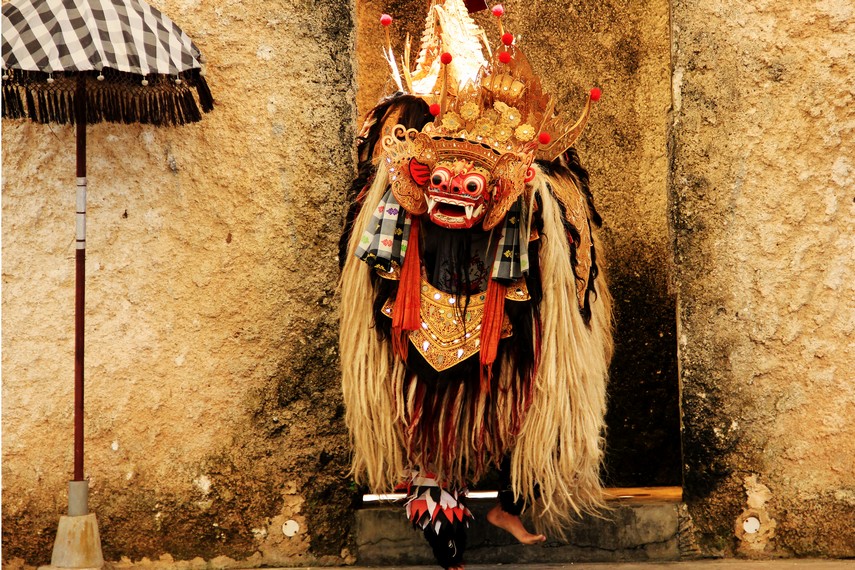
    Barong is considered the king of good spirits | Photo: indonesiakaya.com
    Share
    Facebook Twitter LinkedIn Pinterest Email Copy Link

    When you think of Bali, chances are you picture stunning beaches, lush rice terraces, and intricate temples. But Bali is not just a paradise for nature lovers—it’s also home to some of the most profound cultural performances in the world. Among them, the Barong and Rangda dance holds a special place. It’s not just entertainment for tourists; it’s a living philosophy, a stage where the eternal battle between good and evil is brought to life.

    This dance is more than a performance—it’s a mirror of the Balinese worldview, particularly the concept of rwa bhineda, the principle of balance between opposing forces. To really understand why the Barong and Rangda dance matters, you have to look deeper into Balinese mythology, spirituality, and the way locals see life itself.


    The Story Behind Rangda: The Fearsome Widow Queen
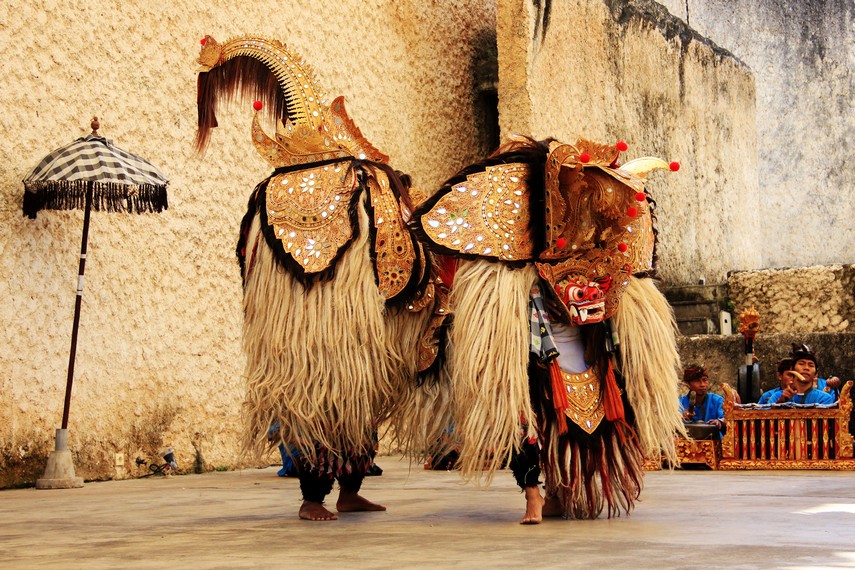
    The Barong Rangda dance is one of the simpler and shorter variants of the Barong dance | Photo: indonesiakaya.com

    In Balinese Hindu mythology, Rangda represents the queen of darkness. Her name itself means widow, and her backstory is rooted in betrayal, revenge, and tragedy. According to legend, Rangda was once Queen Mahendradatta, the wife of King Dharmodayana of Bali.

    When political intrigues led to her exile, Mahendradatta transformed her pain into vengeance. Consumed by anger, she mastered dark magic and unleashed plagues and death upon half of the kingdom. Over time, she came to be known as Rangda, the terrifying leader of the leak—sorcerers who could transform into animals or spirits to harm others.

    Her appearance alone is meant to terrify: long, tangled hair, bulging eyes, sharp fangs, long nails, and a tongue that hangs out grotesquely. Sometimes, she is shown with sagging breasts, emphasizing her identity as an old, wild, and uncontrollable woman. Rangda isn’t just a monster—she is the embodiment of chaos, destruction, and rage.


    Barong: The Protector Spirit of Goodness
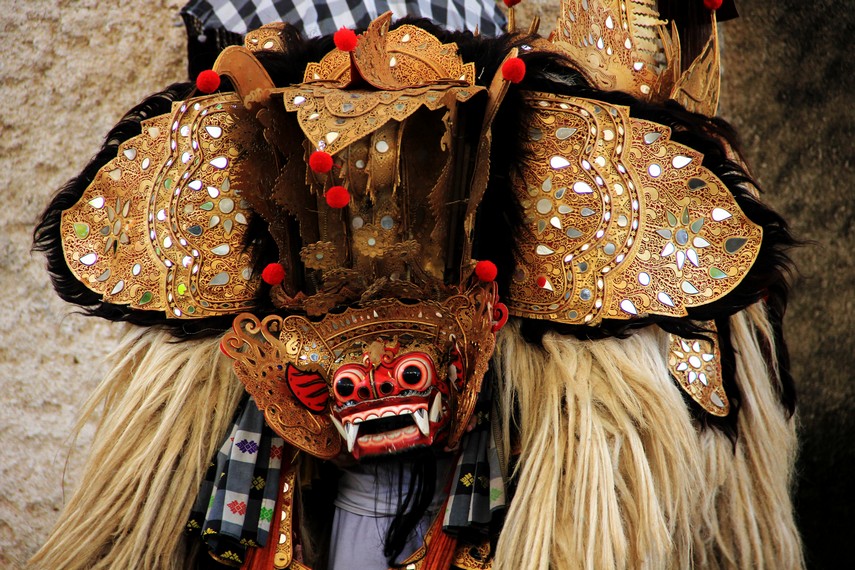
    Foto : Indonesiakaya.com

    If Rangda embodies destruction, Barong represents protection. He is often depicted as a lion-like creature, covered in golden ornaments and long flowing hair, with wide eyes and protruding fangs. But don’t let his fierce appearance fool you—Barong is a guardian spirit, the king of good forces who stands for harmony and protection.

    SEE ALSO  Sauwandarek Village: Papua’s Hidden Paradise Where Nature and Culture Collide

    One of the stories connects Barong to King Airlangga, the successor of Dharmodayana, who fought against Rangda with Barong’s help. In this myth, Barong does not exist to destroy evil entirely, but to maintain balance so that life can continue.

    Barong is celebrated as the symbol of community defense—a reminder that even in the darkest of times, there’s always protection, strength, and resilience standing against destruction.


    The Eternal Battle That Never Ends

    Unlike Western stories where good usually defeats evil, the Barong and Rangda myth doesn’t have a clean ending. The two figures are locked in an eternal conflict—Barong cannot destroy Rangda, and Rangda cannot destroy Barong.

    The balance between them is intentional. Both are considered immortal forces that must coexist. Without evil, good would have no meaning; without good, evil would go unchecked. This endless battle is exactly what makes the Barong and Rangda performance so powerful—it’s not about winning or losing, but about understanding that harmony is born from duality.


    The Dance: A Cultural Bridge for Locals and Visitors

    The Barong and Rangda dance is one of the most iconic cultural shows in Bali. While there are many variations of Barong performances across the island, the Barong vs Rangda version is one of the most dramatic.

    The performance is not just for tourists—it’s deeply rooted in Balinese temple ceremonies and village rituals. But in cultural centers like the amphitheater at Garuda Wisnu Kencana (GWK) Cultural Park, you can watch a condensed version designed to introduce audiences to the philosophy of rwa bhineda.

    The show usually unfolds like this:

    • Rangda enters, casting spells and unleashing her fury.
    • Barong appears with his entourage, including dancers who represent loyal followers.
    • The battle begins, intense and chaotic, with Rangda using dark magic while Barong protects his allies.
    • At times, the dancers fall into a trance, symbolizing how human lives are caught between these opposing forces.
    SEE ALSO  10 Most Beautiful Beaches in Indonesia You Must Visit at Least Once in Your Life

    The climax is a stalemate—neither good nor evil wins. Instead, the performance closes by showing how both must coexist. For the audience, it’s a striking reminder that life itself is a dance of balance.


    Rwa Bhineda: The Balinese Philosophy of Balance

    To truly understand why the Barong and Rangda dance matters, you need to grasp the concept of rwa bhineda. The phrase translates to “two differences,” but it goes far deeper than just acknowledging opposites. It’s about the harmonious coexistence of contradictions.

    In Balinese Hindu thought, the universe exists in pairs of opposites:

    • Good and evil
    • Male and female
    • Black and white
    • Joy and sorrow

    Rather than trying to erase or dominate one side, Balinese culture teaches that both are necessary for life to function. Evil isn’t glorified, but it’s recognized as part of the natural order. Good has meaning only because evil exists to contrast it.

    This worldview explains why the Barong doesn’t slay Rangda in the end—because in reality, goodness doesn’t erase evil. They live together, balancing each other, shaping human experience.


    Why the Dance Resonates Beyond Bali

    For visitors, the Barong and Rangda dance is often the first introduction to Balinese philosophy. At first glance, it may look like a battle between monsters, but once you understand the symbolism, the meaning becomes profound.

    In a world where people often divide everything into winners and losers, the Balinese perspective is refreshing. It’s not about victory—it’s about coexistence. This resonates with modern life more than we might think.

    • Think of the balance between work and rest.
    • The interplay of technology’s benefits and its downsides.
    • Even the climate crisis teaches us about imbalance and the urgent need to restore harmony.

    The Barong and Rangda story is timeless because it reflects these realities. It shows that we don’t live in a world of absolutes, but in a world of contrasts.


    Experiencing the Dance Firsthand

    If you’re traveling to Bali, experiencing the Barong and Rangda dance live is a must. Performances can be found across the island, from village stages to cultural parks. Each setting brings its own atmosphere—some deeply sacred, others designed to welcome international audiences.

    SEE ALSO  West Sumatra Emerges as a Leading Muslim-Friendly Travel Destination

    At places like GWK, the amphitheater setting allows hundreds of visitors to witness the story with dramatic choreography and music. Traditional gamelan orchestras heighten the atmosphere, with gongs, cymbals, and drums building tension as the dance unfolds. The sound is almost hypnotic, pulling you into the clash of forces on stage.

    For those lucky enough to witness the dance in a temple ceremony, the experience is even more profound. Here, the performance is not just art, but ritual—a spiritual offering to maintain cosmic balance.


    Lessons We Can Take From Barong and Rangda

    Beyond its cultural spectacle, the Barong and Rangda dance leaves a lasting message. Life isn’t about eradicating everything we dislike. It’s about balance, patience, and acceptance of duality.

    Evil exists, but so does good. Darkness has its place, but so does light. By accepting both, we learn to live more harmoniously—not just with others, but within ourselves.

    In many ways, this philosophy explains why Bali feels so spiritually rich. The island doesn’t just celebrate beauty and goodness—it also acknowledges struggle, conflict, and imperfection as essential to life.


    Conclusion: A Dance That Explains Life Itself

    The Barong and Rangda dance is more than just a cultural attraction. It’s a story, a philosophy, and a ritual rolled into one. Through the terrifying figure of Rangda and the protective spirit of Barong, the Balinese people share their belief in rwa bhineda—that life is made whole not by erasing opposites, but by letting them coexist.

    Next time you find yourself in Bali, don’t just watch the performance with your eyes. Feel it with your heart. Listen to the clash of gongs, watch the swaying of the dancers, and remember: the eternal battle between good and evil is not about who wins—it’s about keeping the balance that makes life possible.

    Bali cultural heritage Bali traditional dance Balinese culture Balinese Hindu mythology Balinese rituals Barong and Rangda Barong dance Bali Barong performance Barong Rangda dance Rangda Bali Rangda myth rwa bhineda philosophy
    Share. Facebook Twitter Pinterest LinkedIn Tumblr Email
    Previous ArticleCivil Society Groups Slam Police Over Death of Ojol Driver in Jakarta Protest
    Next Article Global Media Spotlight on Indonesia Protests: How the Death of Affan Became a Worldwide Issue
    Editor Desk
    • Website

    Related Posts

    Economy

    Indonesia’s National Nutrition Agency Leadership Change Draws International Attention

    By Editor DeskJune 3, 2026
    Don't Miss

    Indonesia’s Biodiesel Shift: B50 Plan Put on Hold, Raising Questions for Global Palm Oil Markets

    By Editor DeskJanuary 14, 2026
    Disaster & Environment

    Elephants Help Clear Wooden Debris After Aceh Disaster

    By Editor DeskDecember 27, 2025
    Don't Miss

    Know the Types of Snakes in the Wild & What to Do If You Get Bitten

    By Editor DeskDecember 27, 2025
    Digital Life

    Gen Z in Indonesia and the Global “Escape Culture”: Why Many Are Saying #KaburAjaDulu

    By Editor DeskOctober 20, 2025
    Agriculture

    The Export of Indonesian Specialty Products: How Local Ingredients Are Becoming Global Brands

    By Editor DeskOctober 20, 2025
    Add A Comment
    Leave A Reply Cancel Reply

    Don't Miss

    Indonesia’s National Nutrition Agency Leadership Change Draws International Attention

    By Editor DeskJune 3, 2026

    Indonesia has attracted international attention following a recent leadership change at the National Nutrition Agency,…

    Indonesia’s Biodiesel Shift: B50 Plan Put on Hold, Raising Questions for Global Palm Oil Markets

    January 14, 2026

    Elephants Help Clear Wooden Debris After Aceh Disaster

    December 27, 2025

    Know the Types of Snakes in the Wild & What to Do If You Get Bitten

    December 27, 2025
    Top Posts

    Indonesia’s National Nutrition Agency Leadership Change Draws International Attention

    June 3, 2026

    Experience the Charm of Labuan Bajo’s Pinisi Boat Right Here in Lampung: Discover the Legendary Maritime Heritage of Indonesia

    June 30, 2025

    Must-Know: 5 Traditional Dances from Lampung You’ll Often Encounter

    June 30, 2025

    What to Do When You See a Snake: A Practical Guide for Everyday Life in Sumatra

    June 30, 2025
    Stay In Touch
    • Facebook
    • Twitter
    • Instagram
    • YouTube
    About Us
    About Us

    Saibumi International brings authentic stories, cultural depth, and off-the-radar destinations from Indonesia and the wider Asian region — crafted for readers who want more than surface-level travel and headlines.

    Facebook X (Twitter) YouTube Reddit
    Our Picks

    Indonesia’s National Nutrition Agency Leadership Change Draws International Attention

    June 3, 2026

    Indonesia’s Biodiesel Shift: B50 Plan Put on Hold, Raising Questions for Global Palm Oil Markets

    January 14, 2026

    Elephants Help Clear Wooden Debris After Aceh Disaster

    December 27, 2025
    Most Popular

    Indonesia’s National Nutrition Agency Leadership Change Draws International Attention

    June 3, 2026

    Experience the Charm of Labuan Bajo’s Pinisi Boat Right Here in Lampung: Discover the Legendary Maritime Heritage of Indonesia

    June 30, 2025

    Must-Know: 5 Traditional Dances from Lampung You’ll Often Encounter

    June 30, 2025
    • Home
    • About Us
    • Advertise
    • Contact Us
    © 2026 Saibumi International. SEO & Web by Dkonten Studio

    Type above and press Enter to search. Press Esc to cancel.