



A Growing Industry with Sustainable Appeal
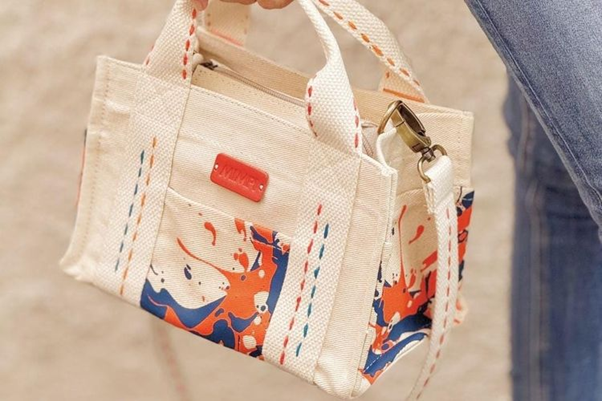
Textile handbags—crafted from fabrics like cotton, linen, and recycled materials—are gaining traction as stylish, eco-friendly alternatives to leather or synthetic bags. In Indonesia, this trend aligns perfectly with the country’s strong textile base, which contributes significantly to its manufacturing sector. With abundant raw materials, skilled labor, and ongoing modernization through Industry 4.0, the foundations are set for Indonesia to shine.
Fashion consumers worldwide are shifting toward sustainability, and textile handbags are at the heart of this movement. They’re lightweight, affordable, versatile, and often infused with cultural artistry like batik patterns. Many local designers are blending traditional craftsmanship with eco-conscious fabrics, giving Indonesian handbags a unique edge in global markets.
Import vs. Export: A Two-Sided Story
Despite strong local production, Indonesia still imports a significant volume of textile handbags. In 2022, imports of handbags with textile or plastic surfaces reached around $171 million, with China alone supplying roughly $139 million. Other suppliers included Singapore, the United States, Cambodia, and France.
On the export side, however, Indonesia is no small player. In the same year, textile handbags produced in Indonesia found eager buyers abroad: the United States imported nearly $114 million, while the Netherlands, Italy, and the U.K. made up a substantial share as well. Exports of leather-surface handbags also showed resilience, reaching about $130.8 million in 2023, with destinations spanning from the U.S. to Japan.
This dual position—being both a heavy importer and a strong exporter—reveals an exciting opportunity. If domestic producers scale further, Indonesia could reduce dependency on imports while cementing its place as a global hub for textile handbags.
Markets That Can Still Be Tapped
The U.S. and Europe remain Indonesia’s strongest markets, but emerging opportunities are visible elsewhere. Exports to the U.K., China, and even smaller markets like Kuwait have surged recently, proving the adaptability of Indonesian handbags to different consumer tastes.
The potential in China, in particular, is striking. While exports there stood at just under $7 million in 2022, market analysis suggests the potential is worth several times more. Tapping into this space requires targeted research into Chinese consumer preferences and smart collaborations with local distributors.
Challenges Along the Way
The road ahead isn’t without hurdles. One pressing issue is the flood of cheap Chinese textiles redirected to Indonesia due to global tariffs. This has tightened margins and even forced closures, with major firms like Sritex caught in the turbulence.
Domestically, the shrinking middle class also presents a challenge. Between 2019 and 2024, the percentage of Indonesians classified as middle class dropped from 21.5% to 17.1%, which could slow down local demand for fashion accessories like handbags.
These factors highlight the need for Indonesia’s textile handbag industry to balance domestic resilience with aggressive global expansion.
Paving the Way Toward Global Leadership
Government support and private innovation are key to taking Indonesia’s handbag industry to the next level. The ongoing negotiations for the Indonesia–EU Comprehensive Economic Partnership Agreement (IEU-CEPA) could open doors to one of the world’s largest fashion markets by lowering tariffs and simplifying trade.
At the same time, investments in modernizing production—through energy-efficient technologies, advanced machinery, and financial incentives for SMEs—are helping local players compete globally.
On the branding side, Indonesia’s cultural strengths are unmatched. Handbags infused with batik or handmade techniques from regions like Bali and Tangerang are more than just accessories; they’re cultural statements. Combining this artistry with sustainability practices positions Indonesia as a credible, innovative voice in global fashion.
Looking further ahead, the adoption of smart textiles and circular fashion practices powered by AI could elevate Indonesia from being a strong exporter to a true trendsetter in eco-fashion.
The Future Is Bright
Indonesia’s textile handbag sector is standing at a crossroads. On one side lies the challenge of cheap imports and domestic consumption pressure. On the other lies the promise of sustainability, cultural richness, and global market growth.
With the right mix of creativity, policy support, and technological adoption, Indonesia can move from being primarily an importer to a global leader in textile handbags. The words “Made in Indonesia” could soon carry even more weight on shelves in New York, London, and Tokyo.
