



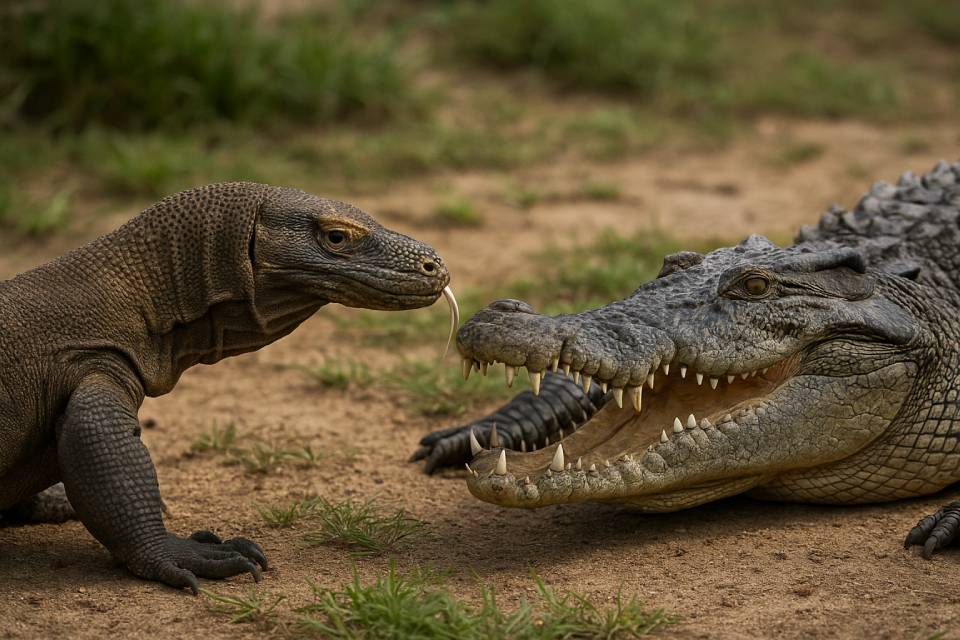
Deep in the tropical wilds of Southeast Asia and northern Australia, two fearsome reptilian giants rule their respective territories: the Komodo dragon and the saltwater crocodile. Both apex predators are evolutionary success stories, surviving millions of years with barely a tweak to their original blueprint. But what happens when we pit these two beasts head-to-head in a hypothetical jungle brawl? Who would win? And how do they compare in size, strength, intelligence, and overall survival prowess?
In this epic wildlife showdown, we break down the key differences (and surprising similarities) between the Komodo dragon (Varanus komodoensis) and the saltwater crocodile (Crocodylus porosus). Let the tropical turf war begin.
1. Meet the Monsters: Origins and Habitats
Let’s start by meeting our two contenders.
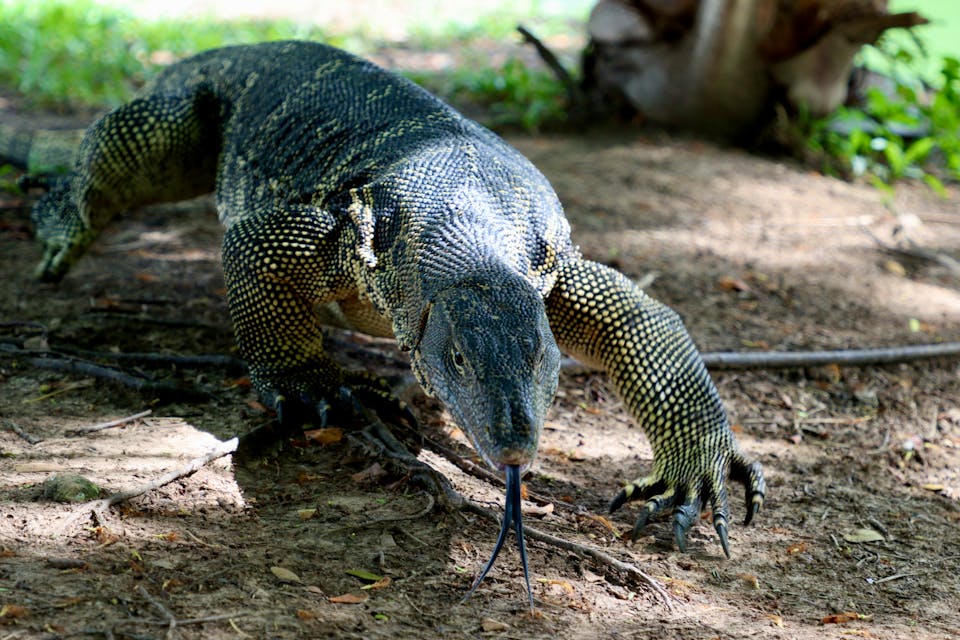
Komodo Dragons are found in Indonesia, primarily on the islands of Komodo, Rinca, Flores, and a few others in the Lesser Sunda chain. These are the largest lizards on Earth, often described as “living dinosaurs” thanks to their primitive appearance, scaly skin, and slow, deliberate movements.
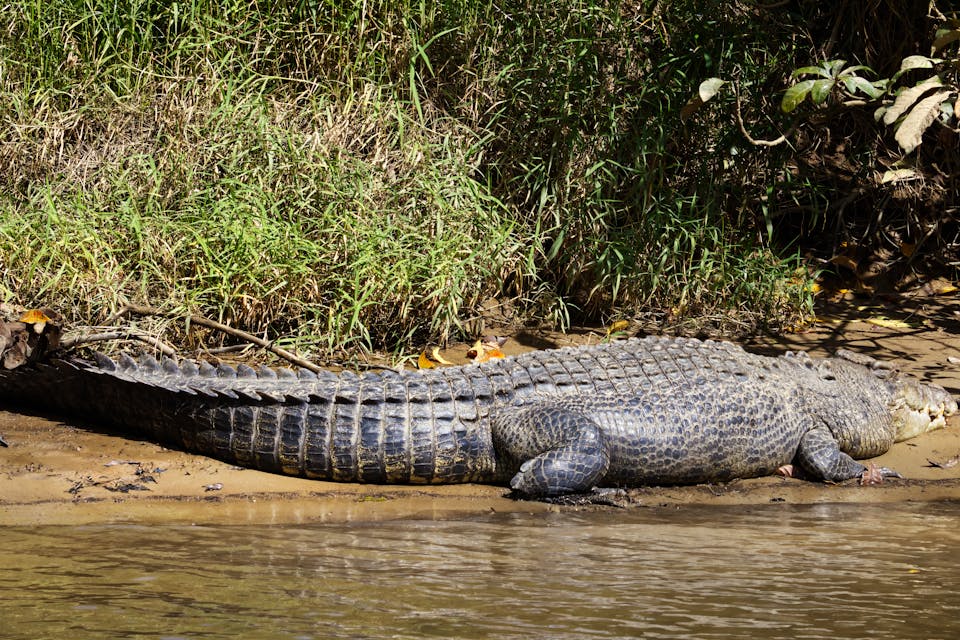
Saltwater Crocodiles, or “salties,” on the other hand, are widely distributed across Southeast Asia, northern Australia, and as far west as the east coast of India. They’re the largest living reptiles, known for their aggressive behavior and ability to live in both freshwater and saltwater.
Where They Overlap:
Though they don’t usually share territory, salties have been spotted in parts of Indonesia—particularly in mangroves or estuaries—bringing them closer than ever to Komodo’s domain.
2. Size and Power: The Heavyweights of the Tropics
Here’s where things get interesting.
Komodo Dragon Stats:
- Length: Up to 10 feet (3 meters)
- Weight: 150–200 pounds (70–90 kg)
- Speed: Up to 12 mph (19 km/h)
- Bite force: 600 PSI (but more dangerous due to venom and bacteria)
Saltwater Crocodile Stats:
- Length: Up to 23 feet (7 meters)
- Weight: Over 2,200 pounds (1,000 kg)
- Speed (in water): 18–20 mph (29–32 km/h)
- Bite force: 3,700 PSI (the strongest bite of any animal)
Verdict:
The saltwater croc is the undisputed tank of the tropics. With sheer size and jaw power, it makes the Komodo look like a lightweight. But don’t count the dragon out just yet—its hunting technique is lethal in its own right.
3. Weaponry and Hunting Style
Komodo Dragon’s Arsenal:
Komodos aren’t fast runners, but they’re master ambush predators. With serrated teeth, venomous saliva, and a bacteria-laden bite, they attack large prey like deer, boar, or even water buffalo. One bite, and they patiently stalk the wounded animal for days until it dies from blood loss or sepsis. Cold-blooded? Absolutely.
Saltwater Crocodile’s Arsenal:
Salties rely on stealth and brute force. With eyes and nostrils on top of their heads, they lurk just beneath the surface, striking with explosive speed. Their signature move? The “death roll”—a spinning motion used to tear apart prey or drown it. Crocs don’t wait; they kill instantly.
Verdict:
Komodos win points for strategy and venom. Crocs dominate with strength and surgical precision. If you’re caught by either, you’re in serious trouble.
4. Intelligence and Behavior
You’d be surprised—both reptiles are smarter than most people give them credit for.
Komodo Dragons:
Studies suggest Komodos can recognize individual humans, navigate complex environments, and even learn. In captivity, some have solved basic puzzles to receive food. They’re solitary, except during mating or feeding frenzies.
Saltwater Crocodiles:
Crocodiles exhibit tactical hunting behavior—some have been observed using tools (like balancing sticks on their heads to lure nesting birds). They have good memory, learn quickly, and can map tidal patterns for hunting.
Verdict:
It’s almost a tie, but crocs might have the edge due to their use of tools and long-term memory. Both are brainy reptiles in their own right.
5. Diet and Appetite
Komodo Dragons:
These beasts are carnivores with no filter. They’ll eat carrion, hunt prey as large as a deer, and sometimes cannibalize smaller dragons. They also consume bones, hooves, and skin—thanks to stomach acid that could melt steel (figuratively, of course).
Saltwater Crocs:
Salties eat anything they can catch, including fish, birds, buffalo, sharks, and occasionally humans. They’re opportunistic feeders, storing fat in their tails and surviving months without eating again after a big meal.
Verdict:
Both are gluttons, but crocs might be more versatile in water. On land, Komodo dragons dominate. So again, it depends on the battlefield.
6. Who Would Win in a Fight?
Let’s be honest—this is the question everyone wants answered.
In the Water:
The saltwater croc wins easily. It’s faster, stronger, and perfectly built for aquatic ambushes. A Komodo dragon would have zero chance in a river or mangrove fight.
On Land:
Things get more complicated. The Komodo dragon’s venomous bite could wear down a croc over time, especially if it can strike and retreat. But the croc’s armor-like scales and jaw strength could end the fight quickly if it gets the first bite.
Hypothetical Outcome:
- In a swampy river: Crocodile wins 9 out of 10 times.
- On rocky dry land: Komodo might win 3 out of 10, but only with luck, venom, and distance.
7. Conservation Status
Both animals face conservation challenges, though their situations differ.
- Komodo Dragons: Listed as Endangered by the IUCN. Habitat loss, climate change, and human encroachment are major threats. Populations are mostly limited to a few Indonesian islands.
- Saltwater Crocodiles: Listed as Least Concern, though once heavily hunted for their skin. Their numbers have rebounded in Australia and parts of Southeast Asia, but illegal hunting still occurs.
Protecting these reptiles ensures the survival of two of Earth’s last true apex predators.
8. Cultural Impact
Komodo dragons are icons of Indonesia—so much so that Komodo National Park is a UNESCO World Heritage Site and one of the country’s top ecotourism draws.
Saltwater crocodiles, while less loved, have inspired thousands of myths across Indigenous Australian and Southeast Asian cultures. They’re often seen as sacred, dangerous, or both.
In pop culture, both have starred in documentaries, books, and films—but let’s be honest, crocs have more horror movies to their name.
Conclusion: Titans of the Tropics
The battle between the Komodo dragon and the saltwater crocodile isn’t just a fantasy match-up for nature nerds—it’s a fascinating look at two very different evolutionary paths. One is a land-dwelling venomous monitor lizard. The other, a water-dominating armored tank with the strongest bite in the animal kingdom.
In a head-to-head fight, the croc usually wins. But in the grander scheme of nature, both deserve our awe and protection. They are relics of Earth’s ancient past, surviving not because they changed, but because they didn’t have to.
So next time you’re trekking in Komodo or kayaking in Darwin—keep your eyes open. You’re in the territory of legends.
