

Close Menu
Saibumi | Uncovering Asia, One Story at a Time
    What's Hot

    Indonesia’s National Nutrition Agency Leadership Change Draws International Attention

    June 3, 2026

    Indonesia’s Biodiesel Shift: B50 Plan Put on Hold, Raising Questions for Global Palm Oil Markets

    January 14, 2026

    Elephants Help Clear Wooden Debris After Aceh Disaster

    December 27, 2025
    Facebook X (Twitter) Instagram
    Saibumi | Uncovering Asia, One Story at a TimeSaibumi | Uncovering Asia, One Story at a Time
    • About Us
    • Contact Us
    • Advertise
    Facebook X (Twitter) Instagram YouTube LinkedIn Reddit
    • Home
    • Stories

      The Global Plastic Treaty Fails Again – What Does It Mean for the Planet?

      August 27, 2025

      Puru Kambera Savanna: Tracing the Wild Horses of East Sumba

      August 25, 2025

      West Sumatra Emerges as a Leading Muslim-Friendly Travel Destination

      August 24, 2025

      Tabola Bale Song: The Viral Music Blend From Eastern Indonesia

      August 20, 2025

      Tanjung Karang Beach: An Underwater Paradise in Donggala

      August 20, 2025
    • Travel

      Know the Types of Snakes in the Wild & What to Do If You Get Bitten

      December 27, 2025

      Thailand Named the Best Food Country in the World 2025 — Beating Italy and Japan

      October 14, 2025

      Dieng Plateau Officially Designated as Indonesia’s Newest National Geopark

      September 29, 2025

      The Culture of Souvenirs: How Indonesians Strengthen Workplace Relationships Through Oleh-oleh

      September 29, 2025

      6 Best Coffee Shops in Asia – And Yes, One of Them Is in Indonesia!

      September 28, 2025
    • Culture
    • Lifestyle
      1. Food & Culture
      2. Green Living
      3. Local Life
      4. Modern Living
      5. People & Inspiration
      6. View All

      Gen Z in Indonesia and the Global “Escape Culture”: Why Many Are Saying #KaburAjaDulu

      October 20, 2025

      The Export of Indonesian Specialty Products: How Local Ingredients Are Becoming Global Brands

      October 20, 2025

      From Training to Takeoff: MKP’s Approach to Responsible Worker Preparation

      October 18, 2025

      Thailand Named the Best Food Country in the World 2025 — Beating Italy and Japan

      October 14, 2025

      List of Plants That Attract and Repel Snakes Around the House

      October 20, 2025

      Bird-Friendly Coffee in Lampung: Wild Birds Help Farmers Control Pests Naturally

      September 23, 2025

      Standing Still Like a Stick: How Tree Snakes Outsmart Predators with Vertical Sleep

      July 17, 2025

      Not a Cat, Not a Snake — Meet the Plant That Can Eat Rats

      July 12, 2025

      #KaburAjaDulu: When Young Indonesians Feel Like Escaping Is the Only Way to Survive

      October 9, 2025

      The Culture of Souvenirs: How Indonesians Strengthen Workplace Relationships Through Oleh-oleh

      September 29, 2025

      How Remote Work and Digitalization Are Transforming Indonesian Work Culture

      September 28, 2025

      Staying Healthy in Unpredictable Weather: Indonesian Habits the World Can Learn From

      September 21, 2025

      Gen Z in Indonesia and the Global “Escape Culture”: Why Many Are Saying #KaburAjaDulu

      October 20, 2025

      Indonesia’s Beauty Industry Is Having a Major Glow-Up

      July 1, 2025

      Why Indonesian Coffee Is the Next Big Thing Among Global Freelancers

      June 30, 2025

      The Culture of Souvenirs: How Indonesians Strengthen Workplace Relationships Through Oleh-oleh

      September 29, 2025

      The Indonesian Work Culture: Harmony and Gotong Royong in Action

      September 16, 2025

      Southeast Asian Solidarity: Citizens Rally Behind Indonesian Protesters Amid Police Violence

      September 6, 2025

      What Germans Can Learn from the Philosophy of Gotong Royong

      July 16, 2025

      Gen Z in Indonesia and the Global “Escape Culture”: Why Many Are Saying #KaburAjaDulu

      October 20, 2025

      #KaburAjaDulu: When Young Indonesians Feel Like Escaping Is the Only Way to Survive

      October 9, 2025

      The Indonesian Work Ethic: Why Global Teams Trust Indonesian Professionals

      October 2, 2025

      Why Indonesian Talents Are the Best Choice for Global Companies

      October 2, 2025
    • Local Business
    Subscribe
    Saibumi | Uncovering Asia, One Story at a Time
    Home » Not Sharks: Meet the Most Dangerous Sea Creature in the World
    Featured

    Not Sharks: Meet the Most Dangerous Sea Creature in the World

    Editor DeskBy Editor DeskAugust 26, 2025Updated:August 26, 2025No Comments8 Mins Read
    Facebook Twitter Pinterest LinkedIn Tumblr Email
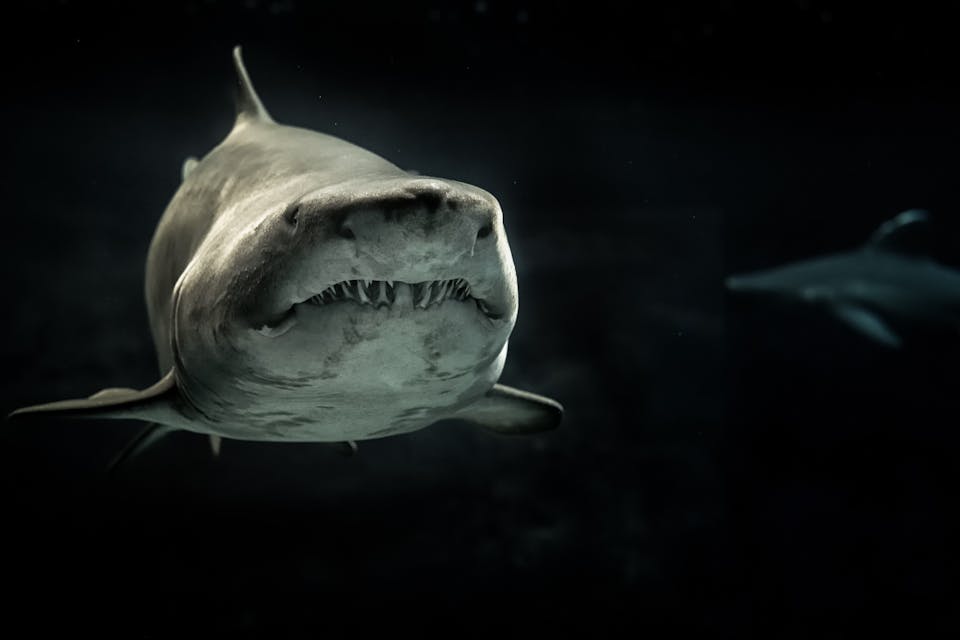
    Foto oleh GEORGE DESIPRIS: https://www.pexels.com/id-id/foto/foto-selektif-grey-shark-726478/
    Share
    Facebook Twitter LinkedIn Pinterest Email Copy Link

    When people think about the dangers of the ocean, the first image that usually pops into their minds is a shark. Huge jaws, rows of razor-sharp teeth, and that heart-pounding soundtrack from Jaws have done their job in cementing sharks as the ultimate villains of the sea. Movies and media often portray them as unstoppable killing machines, lurking just beneath the waves, ready to strike.

    But here’s the surprising truth: sharks aren’t nearly as deadly as their reputation suggests. In fact, the real killer of the ocean is a creature you might not even notice until it’s too late—a nearly invisible animal that looks fragile, yet carries one of the most powerful venoms known to science. And no, it’s not a shark at all. It’s a jellyfish.

    Specifically, the box jellyfish, with the Australian species Chironex fleckeri leading the pack as the deadliest marine creature alive.


    Sharks: More Misunderstood Than Murderous

    Let’s clear something up right away—sharks are not the monsters we’ve been led to believe. Sure, they’re apex predators, but the numbers simply don’t match the fear. According to the International Shark Attack File (ISAF) 2024 report, there were only 47 unprovoked shark bites worldwide, with just four fatalities. That’s slightly below the five-year average, which hovers around 64 incidents and six deaths per year.

    To put it in perspective, you’re statistically more likely to be struck by lightning, stung by a bee, or injured while taking a selfie than killed by a shark. Sharks don’t actively hunt humans. Most bites happen when they mistake swimmers or surfers for prey like seals.

    So if sharks aren’t the ocean’s deadliest creatures, what is?


    The Silent Killer: Box Jellyfish
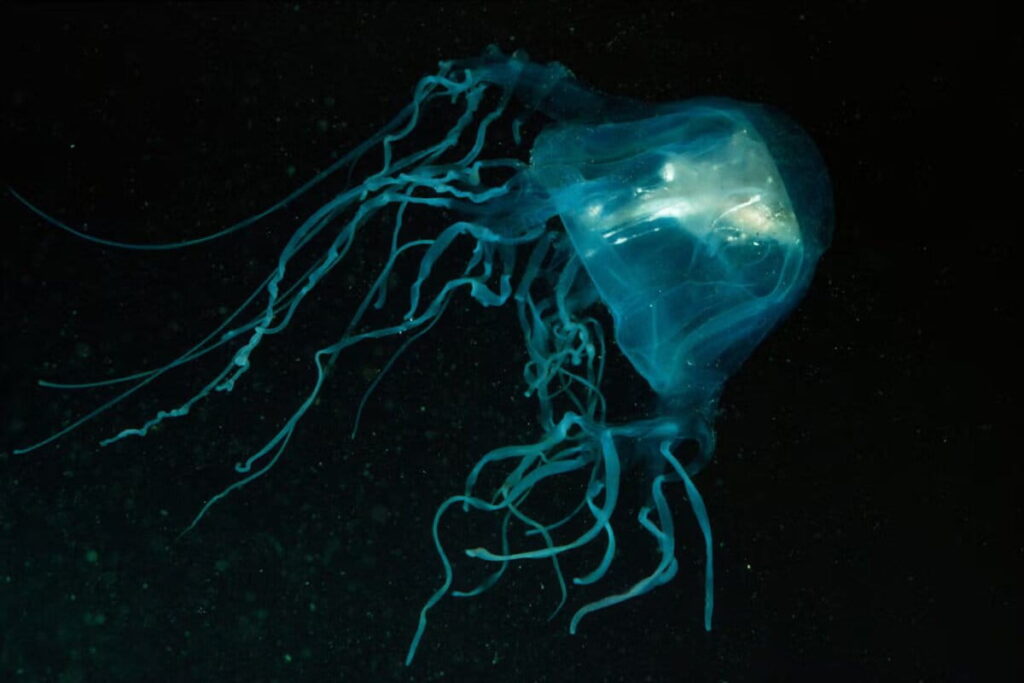
    The Australian box jellyfish (Chironex fleckeri) is known as one of the deadliest marine creatures in the world. Its venom can cause cardiac arrest within minutes. This photo shows its transparent body with long tentacles lined with deadly stinging cells. 📸 Photo: Ron & Valerie Taylor / Mary Evans / picturedesk.com

    Meet the box jellyfish, particularly Chironex fleckeri. It looks harmless at first glance—almost beautiful, with its transparent, cube-shaped body and delicate tentacles trailing behind it. But don’t be fooled. This creature carries venom so potent that it can stop a human heart in just a few minutes.

    The bell of a box jellyfish measures around 30 centimeters across, but its tentacles can stretch out nearly three meters. Each tentacle is armed with thousands of microscopic stinging cells called nematocysts. When triggered, these cells fire tiny harpoons loaded with venom directly into their target.

    SEE ALSO  What to Do When You See a Monitor Lizard: Understanding Biawak and Living Peacefully with Wild Reptiles in Indonesia

    The result? Immediate, excruciating pain, followed by cardiovascular collapse if treatment isn’t given fast enough. Survivors often describe the sting as feeling like hot acid and electricity running through their skin at the same time.

    But it’s not just the physical agony that makes box jellyfish terrifying. Victims often experience what doctors call a “sense of impending doom.” This overwhelming psychological reaction—where a person feels certain they’re about to die—is triggered by the speed and intensity of the venom’s impact on the nervous system.

    It’s no wonder marine biologists regularly call the box jellyfish the most dangerous sea creature in the world.


    How Box Jellyfish Venom Works

    So, what makes Chironex fleckeri’s sting so lethal? The secret lies in the structure of its venom. Scientists studying the jellyfish have found that its toxins are a brutal cocktail of proteins, including:

    • Porins: Proteins that punch holes in cell membranes, disrupting the balance of ions like sodium and potassium. This quickly leads to heart failure.
    • Cardiotoxins: Compounds that attack the heart muscle directly.
    • Neurotoxins: Chemicals that interfere with nerve signals, causing paralysis and shock.

    This toxic combination acts fast. Within minutes, the venom can overwhelm the human body, shutting down vital systems before help arrives. In remote areas without immediate medical support, the sting is almost always fatal.


    Speed, Vision, and Stealth: Why You Won’t See It Coming
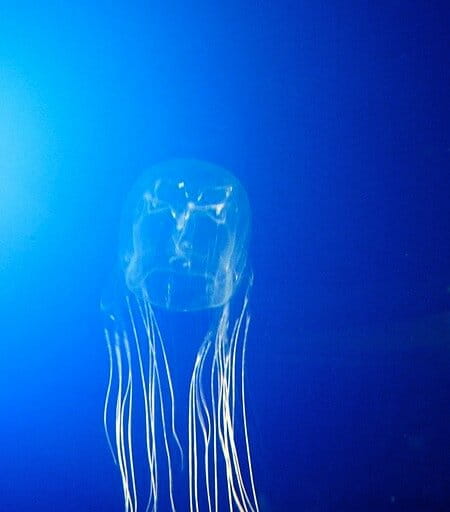
    The box jellyfish (Chironex fleckeri) drifts through the blue waters of Australia. Despite its fragile and transparent appearance, this species carries deadly venom along its tentacles that can kill a human within minutes. 📸 Photo: Guido Gautsch, Melbourne, Australia

    Unlike the jellyfish you might see drifting lazily near the shore, box jellyfish are strong, active swimmers. Using a form of jet propulsion, they can move at speeds up to 1.5 meters per second—or about 5.4 kilometers per hour. That’s surprisingly fast for a creature made of 95% water.

    They’re also equipped with a sophisticated visual system. A box jellyfish has 24 eyes arranged in clusters called ropalia. While they don’t see the world the way we do, these eyes allow the jellyfish to detect light, movement, and obstacles. This means they can react to their environment instead of simply floating aimlessly with the current.

    SEE ALSO  Volcano Nation: Why Geologists and Nature Lovers Flock to Indonesia

    Combine that with their almost invisible, bluish-transparent bodies, and you’ve got the perfect stealth predator. Even in crystal-clear water, spotting one before it spots you is nearly impossible.


    The Irukandji: Tiny but Terrifying
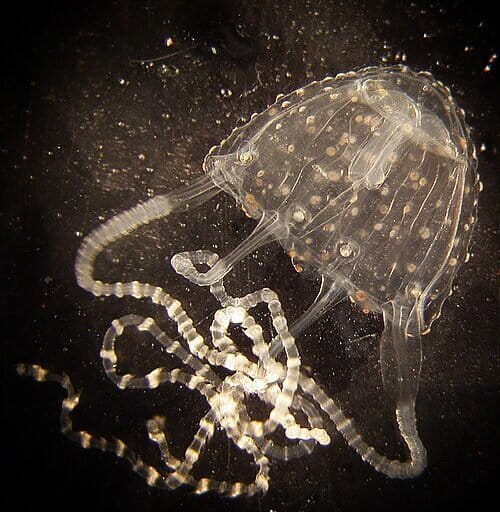
    Carukia barnesi, one of the Irukandji jellyfish species, is highly venomous despite its tiny size. A sting from this species can trigger Irukandji syndrome—a toxic reaction that causes severe muscle pain, vomiting, and dangerously high blood pressure. 📸 Photo: Lisa-ann Gershwin, 2005

    If you thought Chironex fleckeri was scary, wait until you meet its cousin—the Irukandji jellyfish. At just 2.5 centimeters across, it looks almost harmless. But its venom packs a punch powerful enough to cause a medical condition called Irukandji syndrome.

    Victims of this sting report excruciating muscle cramps, vomiting, skyrocketing blood pressure, and intense feelings of dread. Some even describe it as the most painful experience of their lives.

    The discovery of Irukandji syndrome has a rather wild backstory. In 1964, Australian doctor Jack Barnes deliberately stung himself, his nine-year-old son, and a lifeguard to prove that a tiny species of box jellyfish (Carukia barnesi) was responsible for the mysterious illness. All three survived, but the self-experiment confirmed his theory and opened the door for further medical research.

    Today, scientists know that multiple species of Irukandji jellyfish exist, all capable of triggering the same devastating syndrome.


    Could These Deadly Creatures Spread Further?

    While Australia is the global hotspot for deadly jellyfish, tropical waters across the Indo-Pacific—including parts of Indonesia—are also home to box jellyfish. With climate change warming the oceans, scientists warn that their range could expand even further.

    According to NOAA Climate.gov, the western Pacific is showing stronger La Niña-like patterns, with warmer surface waters and more stable layers in the ocean. These conditions create perfect environments for jellyfish blooms by boosting plankton populations, which serve as food.

    As sea temperatures shift and currents change, box jellyfish could begin showing up in new areas, potentially even in popular tourist spots across Southeast Asia. Already in Thailand, beaches like Koh Samui and Koh Phangan have installed protective nets in swimming zones to reduce the risk of jellyfish stings.

    For regions like Indonesia, where marine tourism is booming, the possibility of more frequent encounters with box jellyfish is something local authorities will need to watch closely.

    SEE ALSO  Tabola Bale Song: The Viral Music Blend From Eastern Indonesia

    Protecting People Without Damaging the Ocean

    Dealing with box jellyfish is tricky. On one hand, public safety is a real concern. On the other, the ocean’s ecosystems are delicate, and mass removal of jellyfish isn’t a realistic or environmentally friendly option.

    Some strategies that have been used in high-risk areas include:

    • Protective nets: Installed around swimming areas to block jellyfish.
    • Warning systems: Public notices and seasonal alerts to inform beachgoers when jellyfish are most active.
    • First-aid education: Teaching lifeguards and locals how to respond to stings, including the use of vinegar to neutralize undischarged stingers.

    But perhaps the most important step is awareness. Most fatal encounters happen because people simply don’t realize what’s in the water. Understanding the risks and respecting the ocean is the best defense we have.


    Why the Box Jellyfish Holds the Crown

    So, why is the box jellyfish considered the ocean’s deadliest animal, even above sharks, crocodiles, or venomous fish? It comes down to three factors:

    1. Lethality of venom: Its toxins act faster than almost any other marine venom.
    2. Stealth and speed: It’s nearly invisible and capable of active swimming.
    3. Human encounters: Unlike rare shark attacks, jellyfish stings are far more common in tropical waters where people swim.

    It’s a perfect storm of biology that makes this seemingly delicate creature a far greater threat than the ocean’s more obvious predators.


    Respect the Ocean, Don’t Fear It

    At the end of the day, the ocean isn’t out to get us. Sharks, jellyfish, and all marine creatures are simply playing their roles in a complex ecosystem that has existed for millions of years. The problem arises when humans step into their territory without awareness or respect.

    The box jellyfish may hold the title of the world’s deadliest sea creature, but that doesn’t mean we should fear the ocean. Instead, it’s a reminder of the raw, untamed power of nature—and why humility is so important when we interact with it.

    So the next time you hear about shark attacks, remember: the real danger might be something you’ll never even see coming.

    box jellyfish Chironex fleckeri climate change jellyfish cubozoa dangerous sea animals deadly jellyfish deadly marine life Irukandji jellyfish Irukandji syndrome jellyfish attack jellyfish in Indonesia jellyfish sting jellyfish venom marine life Australia most dangerous sea creature ocean dangers ocean predators ocean safety poisonous jellyfish sharks vs jellyfish
    Share. Facebook Twitter Pinterest LinkedIn Tumblr Email
    Previous ArticlePreserving the Sasi Laut Tradition to Support Sustainable Fisheries in Maluku
    Next Article Coconut Fiber Export Price: Specifications and Global Business Opportunities
    Editor Desk
    • Website

    Related Posts

    Economy

    Indonesia’s National Nutrition Agency Leadership Change Draws International Attention

    By Editor DeskJune 3, 2026
    Don't Miss

    Indonesia’s Biodiesel Shift: B50 Plan Put on Hold, Raising Questions for Global Palm Oil Markets

    By Editor DeskJanuary 14, 2026
    Disaster & Environment

    Elephants Help Clear Wooden Debris After Aceh Disaster

    By Editor DeskDecember 27, 2025
    Don't Miss

    Know the Types of Snakes in the Wild & What to Do If You Get Bitten

    By Editor DeskDecember 27, 2025
    Digital Life

    Gen Z in Indonesia and the Global “Escape Culture”: Why Many Are Saying #KaburAjaDulu

    By Editor DeskOctober 20, 2025
    Agriculture

    The Export of Indonesian Specialty Products: How Local Ingredients Are Becoming Global Brands

    By Editor DeskOctober 20, 2025
    Add A Comment
    Leave A Reply Cancel Reply

    Don't Miss

    Indonesia’s National Nutrition Agency Leadership Change Draws International Attention

    By Editor DeskJune 3, 2026

    Indonesia has attracted international attention following a recent leadership change at the National Nutrition Agency,…

    Indonesia’s Biodiesel Shift: B50 Plan Put on Hold, Raising Questions for Global Palm Oil Markets

    January 14, 2026

    Elephants Help Clear Wooden Debris After Aceh Disaster

    December 27, 2025

    Know the Types of Snakes in the Wild & What to Do If You Get Bitten

    December 27, 2025
    Top Posts

    Indonesia’s National Nutrition Agency Leadership Change Draws International Attention

    June 3, 2026

    Experience the Charm of Labuan Bajo’s Pinisi Boat Right Here in Lampung: Discover the Legendary Maritime Heritage of Indonesia

    June 30, 2025

    Must-Know: 5 Traditional Dances from Lampung You’ll Often Encounter

    June 30, 2025

    What to Do When You See a Snake: A Practical Guide for Everyday Life in Sumatra

    June 30, 2025
    Stay In Touch
    • Facebook
    • Twitter
    • Instagram
    • YouTube
    About Us
    About Us

    Saibumi International brings authentic stories, cultural depth, and off-the-radar destinations from Indonesia and the wider Asian region — crafted for readers who want more than surface-level travel and headlines.

    Facebook X (Twitter) YouTube Reddit
    Our Picks

    Indonesia’s National Nutrition Agency Leadership Change Draws International Attention

    June 3, 2026

    Indonesia’s Biodiesel Shift: B50 Plan Put on Hold, Raising Questions for Global Palm Oil Markets

    January 14, 2026

    Elephants Help Clear Wooden Debris After Aceh Disaster

    December 27, 2025
    Most Popular

    Indonesia’s National Nutrition Agency Leadership Change Draws International Attention

    June 3, 2026

    Experience the Charm of Labuan Bajo’s Pinisi Boat Right Here in Lampung: Discover the Legendary Maritime Heritage of Indonesia

    June 30, 2025

    Must-Know: 5 Traditional Dances from Lampung You’ll Often Encounter

    June 30, 2025
    • Home
    • About Us
    • Advertise
    • Contact Us
    © 2026 Saibumi International. SEO & Web by Dkonten Studio

    Type above and press Enter to search. Press Esc to cancel.