

Close Menu
Saibumi | Uncovering Asia, One Story at a Time
    What's Hot

    Indonesia’s National Nutrition Agency Leadership Change Draws International Attention

    June 3, 2026

    Indonesia’s Biodiesel Shift: B50 Plan Put on Hold, Raising Questions for Global Palm Oil Markets

    January 14, 2026

    Elephants Help Clear Wooden Debris After Aceh Disaster

    December 27, 2025
    Facebook X (Twitter) Instagram
    Saibumi | Uncovering Asia, One Story at a TimeSaibumi | Uncovering Asia, One Story at a Time
    • About Us
    • Contact Us
    • Advertise
    Facebook X (Twitter) Instagram YouTube LinkedIn Reddit
    • Home
    • Stories

      The Global Plastic Treaty Fails Again – What Does It Mean for the Planet?

      August 27, 2025

      Puru Kambera Savanna: Tracing the Wild Horses of East Sumba

      August 25, 2025

      West Sumatra Emerges as a Leading Muslim-Friendly Travel Destination

      August 24, 2025

      Tabola Bale Song: The Viral Music Blend From Eastern Indonesia

      August 20, 2025

      Tanjung Karang Beach: An Underwater Paradise in Donggala

      August 20, 2025
    • Travel

      Know the Types of Snakes in the Wild & What to Do If You Get Bitten

      December 27, 2025

      Thailand Named the Best Food Country in the World 2025 — Beating Italy and Japan

      October 14, 2025

      Dieng Plateau Officially Designated as Indonesia’s Newest National Geopark

      September 29, 2025

      The Culture of Souvenirs: How Indonesians Strengthen Workplace Relationships Through Oleh-oleh

      September 29, 2025

      6 Best Coffee Shops in Asia – And Yes, One of Them Is in Indonesia!

      September 28, 2025
    • Culture
    • Lifestyle
      1. Food & Culture
      2. Green Living
      3. Local Life
      4. Modern Living
      5. People & Inspiration
      6. View All

      Gen Z in Indonesia and the Global “Escape Culture”: Why Many Are Saying #KaburAjaDulu

      October 20, 2025

      The Export of Indonesian Specialty Products: How Local Ingredients Are Becoming Global Brands

      October 20, 2025

      From Training to Takeoff: MKP’s Approach to Responsible Worker Preparation

      October 18, 2025

      Thailand Named the Best Food Country in the World 2025 — Beating Italy and Japan

      October 14, 2025

      List of Plants That Attract and Repel Snakes Around the House

      October 20, 2025

      Bird-Friendly Coffee in Lampung: Wild Birds Help Farmers Control Pests Naturally

      September 23, 2025

      Standing Still Like a Stick: How Tree Snakes Outsmart Predators with Vertical Sleep

      July 17, 2025

      Not a Cat, Not a Snake — Meet the Plant That Can Eat Rats

      July 12, 2025

      #KaburAjaDulu: When Young Indonesians Feel Like Escaping Is the Only Way to Survive

      October 9, 2025

      The Culture of Souvenirs: How Indonesians Strengthen Workplace Relationships Through Oleh-oleh

      September 29, 2025

      How Remote Work and Digitalization Are Transforming Indonesian Work Culture

      September 28, 2025

      Staying Healthy in Unpredictable Weather: Indonesian Habits the World Can Learn From

      September 21, 2025

      Gen Z in Indonesia and the Global “Escape Culture”: Why Many Are Saying #KaburAjaDulu

      October 20, 2025

      Indonesia’s Beauty Industry Is Having a Major Glow-Up

      July 1, 2025

      Why Indonesian Coffee Is the Next Big Thing Among Global Freelancers

      June 30, 2025

      The Culture of Souvenirs: How Indonesians Strengthen Workplace Relationships Through Oleh-oleh

      September 29, 2025

      The Indonesian Work Culture: Harmony and Gotong Royong in Action

      September 16, 2025

      Southeast Asian Solidarity: Citizens Rally Behind Indonesian Protesters Amid Police Violence

      September 6, 2025

      What Germans Can Learn from the Philosophy of Gotong Royong

      July 16, 2025

      Gen Z in Indonesia and the Global “Escape Culture”: Why Many Are Saying #KaburAjaDulu

      October 20, 2025

      #KaburAjaDulu: When Young Indonesians Feel Like Escaping Is the Only Way to Survive

      October 9, 2025

      The Indonesian Work Ethic: Why Global Teams Trust Indonesian Professionals

      October 2, 2025

      Why Indonesian Talents Are the Best Choice for Global Companies

      October 2, 2025
    • Local Business
    Subscribe
    Saibumi | Uncovering Asia, One Story at a Time
    Home » When Giants Fall: The Untold Struggle of Indonesia’s Dying Elephants
    Don't Miss

    When Giants Fall: The Untold Struggle of Indonesia’s Dying Elephants

    Editor DeskBy Editor DeskJuly 29, 2025No Comments6 Mins Read
    Facebook Twitter Pinterest LinkedIn Tumblr Email
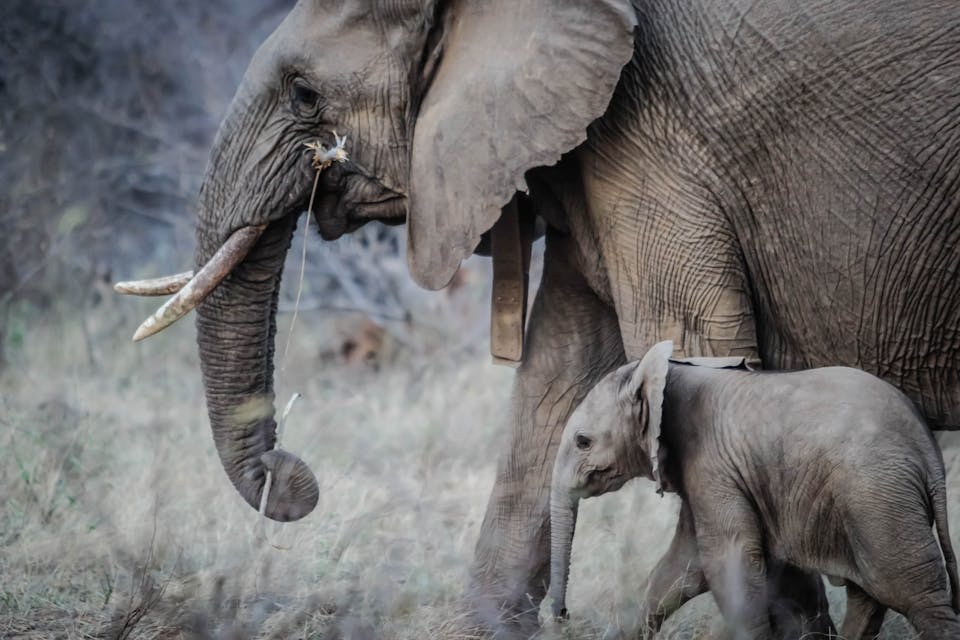
    Foto oleh Casey Allen: https://www.pexels.com/id-id/foto/dua-gajah-abu-abu-16066/
    Share
    Facebook Twitter LinkedIn Pinterest Email Copy Link

    In the heart of one of Indonesia’s last remaining lowland rainforests, an elephant collapsed.

    It wasn’t from age or illness, but from poison. One of its tusks had been brutally sawed off — a grim souvenir for poachers who vanished into the trees. Despite efforts by park rangers and veterinarians, the elephant couldn’t be saved.

    This wasn’t the first. And it won’t be the last — unless something changes.

    Across Indonesia, particularly on the island of Sumatra, stories like this repeat with haunting regularity. The deaths of wild elephants — often poisoned, snared, or shot — are no longer rare news. They are routine tragedies.


    The Silent Numbers Behind the Crisis

    Between 2010 and 2022, at least 183 Sumatran elephants were confirmed dead due to unnatural causes — most of them killed by humans. Some were poached for their ivory. Others were simply seen as pests and eliminated.

    These are only the documented cases. The real number could be higher, hidden deep in the jungle or buried in silence.

    Despite being listed as Critically Endangered by the International Union for Conservation of Nature (IUCN), and protected under national laws, Sumatran elephants continue to vanish. Experts estimate their population has plummeted from around 3,000–5,000 individuals in the 1980s to as few as 1,000 today.

    It’s not just poaching driving the decline. The deeper threat is one that gets less attention — but causes far more damage.


    Habitat Loss: The Real Killer

    Sumatran elephants are forest dwellers. They rely on large, continuous stretches of natural habitat to roam, forage, and raise their young. But year by year, that habitat is being carved up and cleared.

    SEE ALSO  Unbreakable Survivor: Meet the African Lungfish That Can Live Without Water for Up to 4 Years

    In one national park, once spanning over 81,000 hectares of conservation forest, only 13,000 hectares of natural forest remain today. The rest has been replaced by oil palm plantations and human settlements. Similar patterns are seen across Sumatra — even in protected buffer zones of national parks.

    Conservation maps once identified 44 distinct elephant habitats across the island. But between 2011 and 2017, nearly half of these habitats experienced local extinction. These weren’t just isolated pockets — they were entire regions where elephants once thrived, now gone.

    Without space to move and food to find, elephants are forced into farmlands. They raid crops, not out of malice, but out of necessity.


    Misunderstood Giants

    Too often, headlines frame the story like this: “Elephants Invade Village, Destroy Crops.” But this isn’t an invasion — it’s a migration born out of desperation.

    Locals, desperate to protect their livelihoods, try everything. Torches. Firecrackers. Even electric fences. But elephants, especially hungry ones, are hard to deter.

    And so begins a vicious cycle: elephants enter farmlands, humans push back, conflicts rise, and sometimes — elephants are killed.

    In this story, the elephant is cast as the villain. But in truth, it is the victim.


    Memory, Migration, and a Changing World

    Elephants never forget. Their migratory paths are ancient, passed down through generations. But when they follow those same paths today, they don’t find rivers and shade trees — they find fences, highways, and palm oil.

    In some regions, conservation officials have tried to educate communities about these traditional elephant routes. But development often ignores these warnings.

    SEE ALSO  Are Indonesia's Small Islands Still Being Sold? A Hidden Crisis Beneath the Waves

    In one case, a wild elephant followed its ancestral path through what is now a village. The result: a human fatality, and another strike against the species.

    Meanwhile, climate change adds another layer of pressure. Droughts, shifting seasons, and crop failures in the wild are all pushing elephants to adapt in surprising ways.


    Evolution in Real Time

    In 2021, the world watched in awe as a herd of wild elephants in China made an unprecedented journey — walking 500 kilometers through cities, highways, and suburbs. They broke into shops, wandered through courtyards, and napped in roadside forests. The photos went viral. But the reason behind the journey? Simple: they were hungry.

    Their original habitat had been degraded beyond repair.

    In Africa, the adaptation goes even deeper. In Mozambique, decades of ivory poaching have led to a stunning development: many female elephants are now being born without tusks. Scientists believe this is a genetic defense mechanism — one that helps them survive by becoming less desirable to hunters. In some parks, up to 98% of female elephants are now tuskless.

    This isn’t evolution over millennia. This is evolution under siege.


    The Elephant’s Dilemma

    Elephants, despite their intelligence, don’t understand boundaries. They don’t know what land is “protected” or what crops are “off-limits.” They only know instinct: eat, walk, remember, survive.

    And yet, we expect them to understand the world we’ve reshaped.

    If they cross a fence, we call them dangerous. If they damage crops, we label them destructive. But what are they supposed to do when their forests become plantations and their rivers become roads?

    SEE ALSO  The Mysterious Legend of Nyi Roro Kidul: Queen of the Southern Sea

    Elephants are not the ones failing to adapt. We are the ones failing to let them exist.


    More Than Just Ivory

    There’s an old Indonesian proverb: “Gajah mati meninggalkan gading” — “An elephant dies, leaving behind its tusks.” But in a world where elephants are evolving to be born without tusks, even this proverb is losing its meaning.

    What will elephants leave behind if not tusks?

    Will it be footprints in empty forests? Memories of a species that once walked alongside us?

    The loss of elephants isn’t just about conservation — it’s about losing our connection to something ancient, wild, and irreplaceable.


    A Call to Coexist

    Protecting elephants means protecting the forests they need. It means giving them space to roam. It means enforcing the laws that already exist, supporting local communities with sustainable alternatives, and challenging industries that profit from destruction.

    It also means changing the story — from one of conflict to one of coexistence.

    Because elephants don’t invade. They return. To places that were once theirs. To paths their ancestors walked. To homes now buried under bulldozers and concrete.

    It’s up to us whether their return is welcomed — or punished.


    Final Thought

    The struggle of Sumatran elephants is a reflection of our own decisions as a species. We are the ones with voices, with laws, with choices.

    Elephants cannot speak for themselves. But their silence is growing louder every day.

    And if we continue down this path, their silence may become permanent.

    Let’s make sure it doesn’t.

    critically endangered species deforestation in Indonesia elephant conservation elephant migration elephant poaching Indonesia endangered elephants forest destruction Indonesia habitat loss in Sumatra human-elephant conflict Indonesia wildlife ivory trade Sumatran elephants Tesso Nilo elephants wildlife crisis Asia
    Share. Facebook Twitter Pinterest LinkedIn Tumblr Email
    Previous Article8 Garden Plants That Can Naturally Keep Snakes Away From Your Home
    Next Article Discovering Lummense: The Sacred Dance Against Disaster
    Editor Desk
    • Website

    Related Posts

    Economy

    Indonesia’s National Nutrition Agency Leadership Change Draws International Attention

    By Editor DeskJune 3, 2026
    Don't Miss

    Indonesia’s Biodiesel Shift: B50 Plan Put on Hold, Raising Questions for Global Palm Oil Markets

    By Editor DeskJanuary 14, 2026
    Disaster & Environment

    Elephants Help Clear Wooden Debris After Aceh Disaster

    By Editor DeskDecember 27, 2025
    Don't Miss

    Know the Types of Snakes in the Wild & What to Do If You Get Bitten

    By Editor DeskDecember 27, 2025
    Digital Life

    Gen Z in Indonesia and the Global “Escape Culture”: Why Many Are Saying #KaburAjaDulu

    By Editor DeskOctober 20, 2025
    Agriculture

    The Export of Indonesian Specialty Products: How Local Ingredients Are Becoming Global Brands

    By Editor DeskOctober 20, 2025
    Add A Comment
    Leave A Reply Cancel Reply

    Don't Miss

    Indonesia’s National Nutrition Agency Leadership Change Draws International Attention

    By Editor DeskJune 3, 2026

    Indonesia has attracted international attention following a recent leadership change at the National Nutrition Agency,…

    Indonesia’s Biodiesel Shift: B50 Plan Put on Hold, Raising Questions for Global Palm Oil Markets

    January 14, 2026

    Elephants Help Clear Wooden Debris After Aceh Disaster

    December 27, 2025

    Know the Types of Snakes in the Wild & What to Do If You Get Bitten

    December 27, 2025
    Top Posts

    Indonesia’s National Nutrition Agency Leadership Change Draws International Attention

    June 3, 2026

    Experience the Charm of Labuan Bajo’s Pinisi Boat Right Here in Lampung: Discover the Legendary Maritime Heritage of Indonesia

    June 30, 2025

    Must-Know: 5 Traditional Dances from Lampung You’ll Often Encounter

    June 30, 2025

    What to Do When You See a Snake: A Practical Guide for Everyday Life in Sumatra

    June 30, 2025
    Stay In Touch
    • Facebook
    • Twitter
    • Instagram
    • YouTube
    About Us
    About Us

    Saibumi International brings authentic stories, cultural depth, and off-the-radar destinations from Indonesia and the wider Asian region — crafted for readers who want more than surface-level travel and headlines.

    Facebook X (Twitter) YouTube Reddit
    Our Picks

    Indonesia’s National Nutrition Agency Leadership Change Draws International Attention

    June 3, 2026

    Indonesia’s Biodiesel Shift: B50 Plan Put on Hold, Raising Questions for Global Palm Oil Markets

    January 14, 2026

    Elephants Help Clear Wooden Debris After Aceh Disaster

    December 27, 2025
    Most Popular

    Indonesia’s National Nutrition Agency Leadership Change Draws International Attention

    June 3, 2026

    Experience the Charm of Labuan Bajo’s Pinisi Boat Right Here in Lampung: Discover the Legendary Maritime Heritage of Indonesia

    June 30, 2025

    Must-Know: 5 Traditional Dances from Lampung You’ll Often Encounter

    June 30, 2025
    • Home
    • About Us
    • Advertise
    • Contact Us
    © 2026 Saibumi International. SEO & Web by Dkonten Studio

    Type above and press Enter to search. Press Esc to cancel.