



When You Meet a Snake: The Big Question
You’re hiking in the lush forests of Indonesia or maybe just sweeping leaves in your backyard. Then it happens—you spot a snake slithering by. Your heart jumps. Is it dangerous? Should you run? Call someone? Or maybe it’s just a harmless neighbor doing its part in pest control. But how do you know?
The question, “Is this snake venomous?” is not just a curiosity—it could save your life.
In Indonesia, home to more than 300 species of snakes, about 76 are venomous. From the majestic King Cobra to the tiny but deadly sea snake, the country has it all. But not every scary-looking snake is a threat. Here’s how to tell the difference between venomous and non-venomous snakes and what you should do if one bites.
Snake Smarts: Visual Clues to Watch For
Amir Hamidy, a leading snake researcher from the Research Center for Biosystematics and Evolution under BRIN (Indonesia’s National Research and Innovation Agency), says there are a few telltale signs.
1. Head Shape
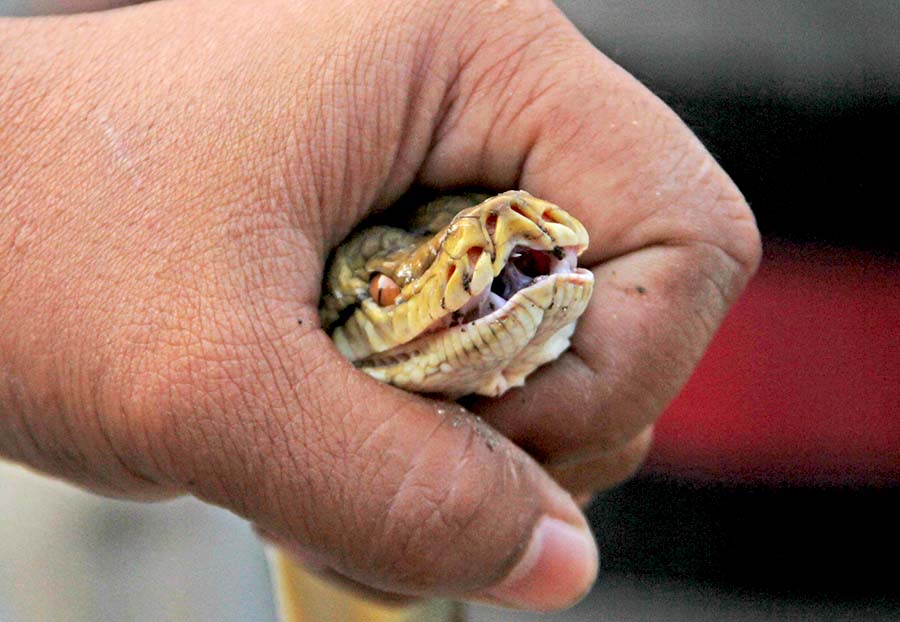
Many venomous snakes have a triangular or spade-shaped head. It’s often wider than the neck, thanks to venom glands on each side.
2. Behavior
Ironically, many venomous snakes are calm and slow to react. They’re confident—and for good reason.
3. Color and Patterns
Bright colors or bold patterns can be a warning sign. But don’t rely solely on this—some non-venomous snakes mimic the look of venomous ones to scare predators.
For instance, the non-venomous red-tailed pipe snake often gets mistaken for the highly venomous banded krait.
4. Body Movement
Some venomous snakes flatten their bodies to look bigger, or raise their heads in a threatening posture. Others, like cobras, spread a hood.
That said, these indicators are just clues, not guarantees. When in doubt, do not approach the snake.
The Two Major Categories of Venomous Snakes
In Indonesia, venomous snakes are broadly classified into two categories based on the type of venom: neurotoxic and hemotoxic.
1. Neurotoxic Snakes
These snakes produce venom that attacks the nervous system. A bite can cause symptoms within minutes and may lead to death if untreated. The major neurotoxic snakes in Indonesia include:
- King Cobra (Ophiophagus hannah)
- Cobras (Naja spp.)
- Kraits, such as the Banded Krait (Bungarus fasciatus) and the Blue Krait (Bungarus candidus)
- Sea Snakes (Hydrophiinae)
These species are often found in Java, where human-snake encounters are relatively high due to population density and habitat overlap.
2. Hemotoxic Snakes
These affect the circulatory system, damaging tissues and preventing blood from clotting. Hemotoxic venom can cause massive internal bleeding and organ failure. Examples include:
- Malayan Pit Viper (Calloselasma rhodostoma)
- Green Pit Vipers (Trimeresurus spp.)
- Pope’s Pit Viper (Trimeresurus popeiorum)
These snakes often rely on camouflage, blending into forest floors or bushes. Because of this, many bites occur when people accidentally step on or disturb them.
What a Venomous Bite Feels Like
Dr. Tri Maharani, Indonesia’s only clinical toxicologist specializing in snakebite treatment, outlines the symptoms of venom exposure based on toxin type.
Neurotoxic Symptoms:
- Drooping eyelids (ptosis)
- Muscle weakness
- Trouble breathing (respiratory paralysis)
- Difficulty swallowing
- Abdominal cramps
Hemotoxic Symptoms:
- Profuse bleeding at the bite site
- Bleeding gums
- Bloody tears or nosebleeds
- Blood in urine or stool
- Bruising or discoloration of skin
- Decreased platelet count
Other rare venom effects include heart damage (cardiotoxin), kidney failure (renal toxicity), and muscle destruction (myotoxin).
What To Do If You’re Bitten
Time is critical. Here’s a step-by-step guide backed by WHO recommendations and field experts.
Step 1: Stay Calm and Still
Panicking only increases your heart rate, which spreads the venom faster. Try to remain still and minimize movement.
Step 2: Immobilize the Limb
Use a splint or any rigid object to immobilize the bitten area—just like treating a fracture. Don’t apply a tourniquet or cut the wound.
Step 3: Get Medical Help
Head to the nearest hospital immediately. Don’t waste time with traditional remedies or snake charmers.
Step 4: Monitor Vital Signs
Doctors will assess your airway, breathing, circulation, and consciousness. If breathing difficulty develops, oxygen or even intubation may be needed.
Step 5: Administer Antivenom
Once doctors identify the snake species or effects, they’ll give the appropriate antivenom. Antibiotics, painkillers, and anti-inflammatories may also be used.
Snakebite Myths That Could Kill You
Many believe in sucking out venom, cutting the wound, or applying ice. None of these methods work—in fact, they make things worse. Cutting increases infection risk, and ice reduces blood flow, worsening tissue damage.
Never try to capture or kill the snake. Instead, take a photo from a safe distance if you can, to help doctors identify it.
Live and Let Slither: The Role of Snakes in Nature
Maula Haqul Dafa from Sioux Ular Indonesia emphasizes one thing: don’t kill snakes just because you’re scared.
“Snakes are vital for controlling pest populations and keeping ecosystems balanced,” he says. “Most won’t harm you unless provoked.”
If you spot a snake in your home, don’t try to remove it yourself. Call local wildlife authorities or trained herpetologists.
Final Thoughts
Identifying venomous snakes isn’t always easy. But understanding general features, being cautious, and knowing what to do in case of a bite can make all the difference. Indonesia’s snake biodiversity is incredible, but it comes with a need for awareness and respect.
With education and calm response, snake encounters can become less a cause for panic and more a moment of awe.
