



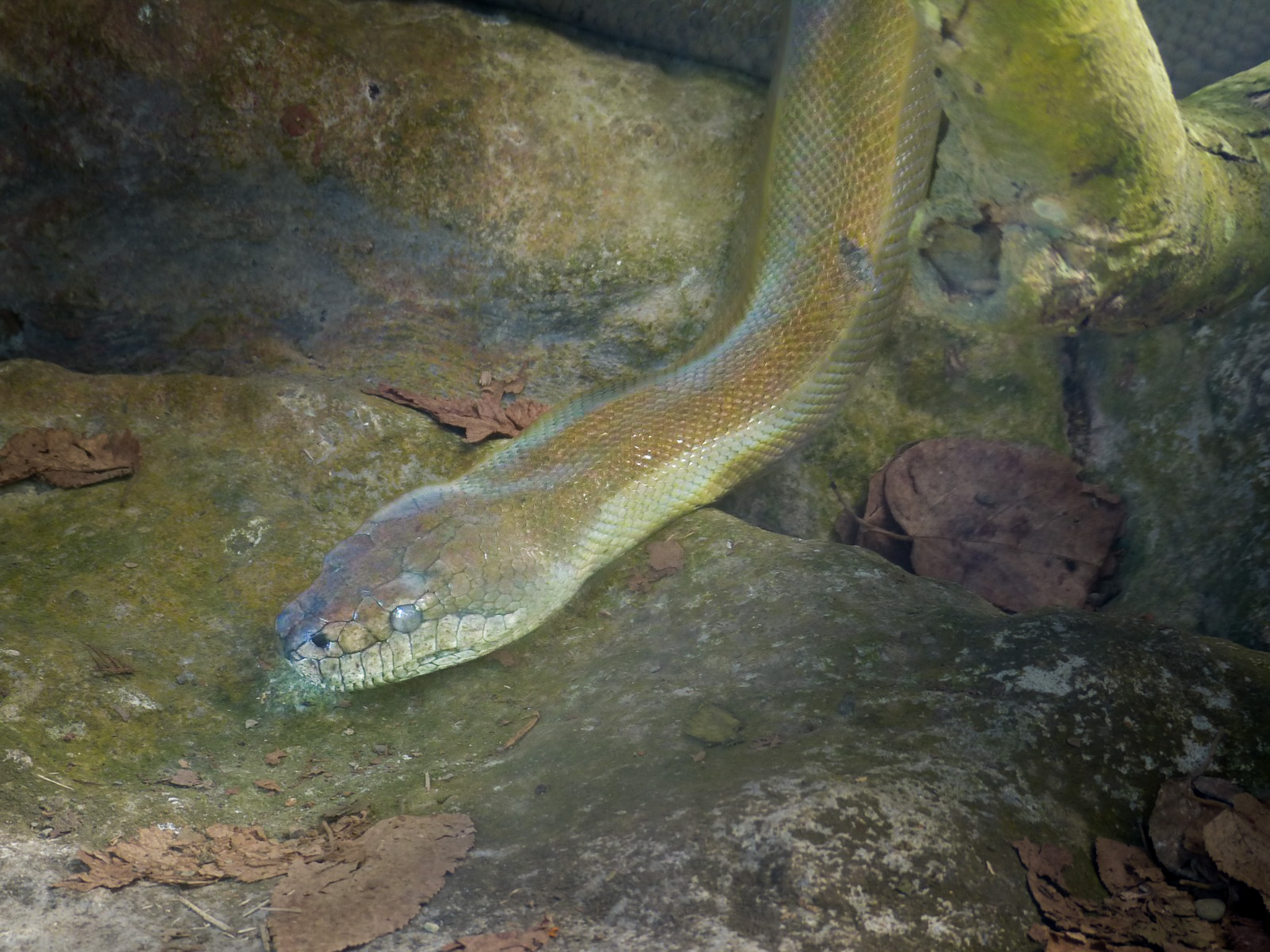
In the lush, mysterious rainforests of Papua, far from the noise of cities and the footprints of mass tourism, lives a creature both feared and revered—an enormous yet elusive serpent known as the Papuan Olive Python (Apodora papuana). With its shimmering olive-hued scales, quiet demeanor, and crucial role in the ecosystem, this python is not just a predator. It’s a symbol of balance, patience, and evolution in one of the world’s richest biodiversity hotspots.
A Serpent Like No Other
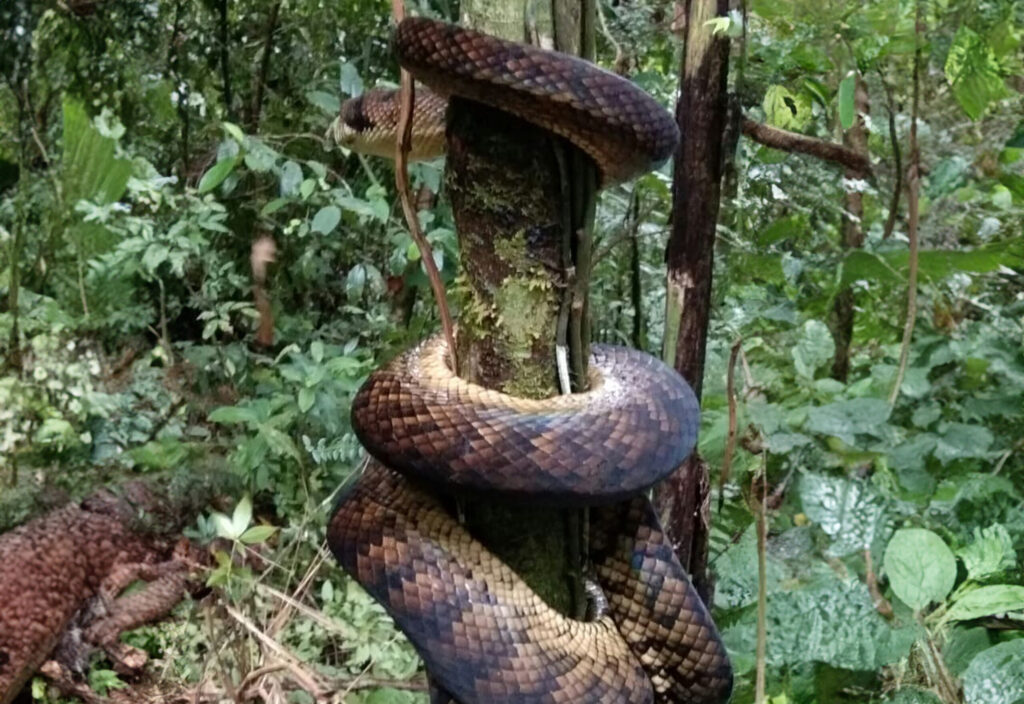
While the name Olive Python might sound poetic or harmless, this species is anything but ordinary. Growing to lengths of over 4 meters (about 13 feet), with robust, muscular bodies, the Papuan Olive Python stands among the largest non-venomous snakes in the world. Yet, size alone isn’t what sets it apart. It’s the only species in its genus (Apodora), making it a truly unique evolutionary branch of the Pythonidae family.
The name “olive” refers to its most striking feature: its color. The python’s body usually appears in shades of olive green, grayish green, or dark olive brown, much like a blend between tree bark and the undergrowth it slithers across. Under stress or excitement, however, it can slightly shift its skin tone—sometimes showing hints of yellow, black, or even a two-toned display. Scientists believe this chameleon-like feature might help with camouflage or signal agitation. Its glossy scales shimmer in dappled sunlight, and vertical-slit pupils peer intently through dense vegetation, capturing every twitch in the darkness.
Habitat of a Giant
The Papuan Olive Python is native to Papua and Papua New Guinea, where it lives mostly on the forest floor, hidden among the roots, leaf litter, and underbrush of the tropical rainforest. You won’t find it hanging from trees like other arboreal snakes—it prefers the damp, dark, grounded corners of the jungle.
According to Hari Suroto, a researcher at the Environmental Archaeology Research Center at BRIN, this python thrives in lowland tropical rainforests, but it can also be found in areas as high as 700 meters (around 2,300 feet) above sea level. The snake has also been observed in several offshore islands near Papua, including Misool, Biak, Yapen, and Numfor. Even in Papua New Guinea, its territory spans islands like Karkar and Ferguson in the Milne Bay Province.
These rainforests offer more than just camouflage—they’re a source of food, warmth, and hydration. The constant humidity and thick vegetation create a perfect environment for ambush predators like the Olive Python. It’s in these silent forests, under the thick canopy and beside muddy trails, where the python patiently waits, blending into the earth itself.
A Predator with Purpose
The Papuan Olive Python is the ultimate embodiment of patience. Unlike most creatures that must hunt daily or even hourly, this python has a remarkably slow metabolism, allowing it to survive for weeks—sometimes months—on a single large meal. That’s not laziness; it’s evolution at its finest.
Rather than chasing prey, the Olive Python is an ambush predator. At night, it uses heat-sensitive pits around its mouth to detect warm-blooded animals moving nearby. Small mammals like rodents, marsupials, and ground-dwelling birds become its unsuspecting targets. Once a victim strays into its reach, the python strikes with astonishing speed, coils tightly around the prey, and suffocates it through sheer pressure. There’s no venom, no dramatic hiss—just cold efficiency and silence.
Yet despite their fearsome hunting technique and impressive size, these snakes are not aggressive toward humans. Unless threatened, they would rather remain unseen than confrontational. Most locals and researchers who’ve encountered them report calm, even passive behavior—so long as the snake isn’t provoked.
Guardians of the Ecosystem
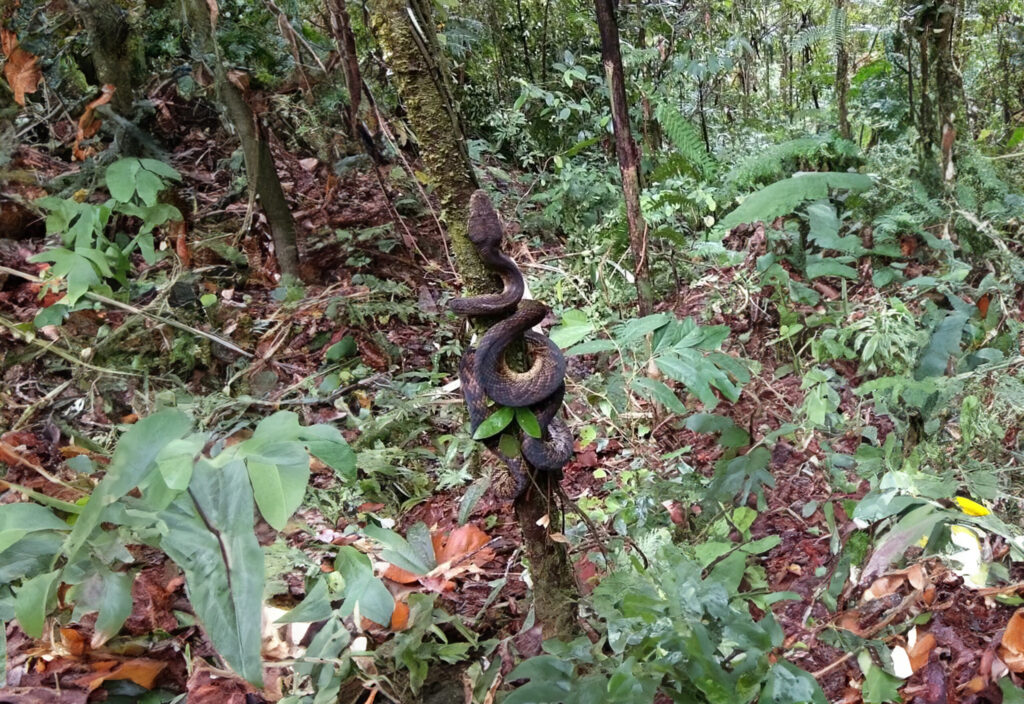
Beyond their beauty and biological intrigue, Olive Pythons play a vital role in maintaining the health of the ecosystem. They help control populations of rodents and small mammals, which, if left unchecked, could wreak havoc on local flora and fauna. By silently managing pest numbers, these reptiles act as natural pest control, promoting balance and protecting the regenerative cycles of the forest.
In fact, research from The George Institute highlights the ecological importance of snakes like these. Pythons are not only top predators; they’re also indirectly involved in plant reproduction. How?
Here’s the fascinating part: when the python consumes rodents—many of which feed on seeds—the seeds often pass through the prey’s digestive tract intact. After digestion, the python eventually excretes these seeds in different locations, thanks to its wide range of movement. This behavior enables “secondary seed dispersal”, helping trees and plants grow farther from their parent plant and reducing competition for light, water, and nutrients.
In a way, the Papuan Olive Python doesn’t just hunt in the forest—it helps the forest grow.
Conservation Status: Safe, But Not Untouchable
Currently, the IUCN Red List classifies the Papuan Olive Python as a species of Least Concern, meaning it’s not on the verge of extinction. But that doesn’t mean it’s out of danger.
As with many species living in tropical forests, the python is increasingly threatened by habitat loss. Vast swaths of rainforest are being cleared to make room for plantations, mining operations, and residential development. Roads and human settlements continue to fragment its natural environment, limiting its roaming areas and food sources.
There’s also the growing pressure of the exotic pet trade. While not as commonly seen in the illegal wildlife market as other snakes, Olive Pythons are occasionally captured and sold. Their large size and relatively docile nature can make them appealing to collectors, but taking these snakes out of the wild disrupts ecosystems and threatens their population stability.
In many cases, the decline of a predator species like this one is one of the first signs of a deeper environmental imbalance—whether it’s climate change, deforestation, or human encroachment.
Mystery, Respect, and Misunderstanding
Snakes have long been misunderstood in popular culture. Across the globe, they’re often painted as villains—symbols of evil, betrayal, or danger. But among many Indigenous communities in Papua, snakes like the Olive Python are treated with a mix of respect, awe, and spiritual significance.
To some, they are guardians of the land—creatures that must not be disturbed. In traditional folklore, a large snake appearing near a village could signify environmental or spiritual messages. Whether regarded as omens, protectors, or symbols of wisdom, pythons occupy a unique space in the cultural consciousness of the Papuan people.
This connection highlights how conservation isn’t just about science or policy. It’s also about understanding cultural relationships with the environment and preserving traditional knowledge systems that have long coexisted with nature.
Why the World Should Care
In the age of climate change, biodiversity loss, and rapid urban expansion, it’s easy to forget the quiet actors like the Papuan Olive Python. They’re not flashy. They don’t roar or leap. They live in shadows, wrapped in silence.
But their role in sustaining life in the rainforest is monumental. Without snakes like these, rodent populations could spiral, plant life could suffer, and the delicate web of rainforest life could slowly unravel.
Understanding and protecting species like the Olive Python isn’t just about saving a single animal—it’s about safeguarding the entire ecosystem it supports. It’s about preserving Papua’s wild soul for future generations.
Final Thoughts
The Papuan Olive Python is a magnificent reminder of nature’s complexity. From its shimmering scales to its patient hunting style, from its contribution to plant life to its role as a silent regulator of balance, this snake is more than meets the eye.
It’s a symbol of the unseen harmony that pulses beneath the forest floor. A gentle giant who asks only for space, silence, and respect.
So the next time you think of predators, don’t just imagine roaring lions or stalking tigers. Think of the Olive Python—the quiet ruler of the rainforest, the guardian of seeds, the ecosystem’s hidden hand.
And maybe, just maybe, we’ll learn to respect the quiet ones more.
