



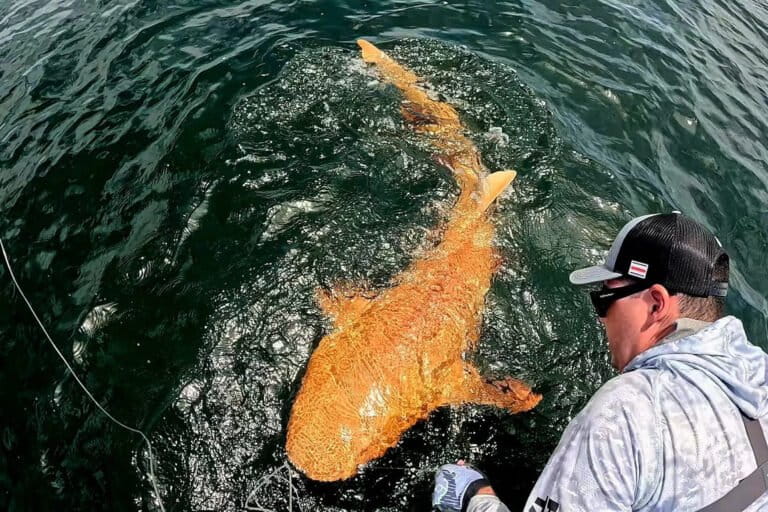
The ocean is full of mysteries, but sometimes it throws us something so unusual that it makes the whole world pause. That’s exactly what happened off the coast of Tortuguero National Park, Costa Rica, when a recreational fisherman came across a nurse shark (Ginglymostoma cirratum) unlike any other. Instead of the typical dull brown color, this shark glowed with a bright orange body and had ghostly white eyes that looked almost supernatural.
The shark, measuring about two meters long, was documented at a depth of 37 meters before being released back into the sea. What makes this encounter so remarkable is that nurse sharks are usually masters of camouflage, blending in with the sandy seafloor. Yet this one stood out like a neon sign, marking the first documented case of its kind in the world among sharks and other cartilaginous fish.
The Science Behind an Unusual Color
Scientists were quick to examine the footage and photographs, and their conclusion was fascinating. The shark showed evidence of two extremely rare pigment conditions. The first, xanthism, causes animals to appear yellow or orange because of missing red pigments. The second, partial albinism, was evident in the shark’s pale white eyes that lacked the usual iris color.
Together, these conditions form what experts are calling albino-xanthochromism, a phenomenon never before recorded in sharks. Xanthism has been seen in freshwater fish like guppies and cichlids, as well as in some birds and reptiles. But in sharks—creatures long thought to have stable pigment patterns—this is groundbreaking.
In a report published in Marine Biodiversity and later dilansir dari Mongabay, researchers suggested that this discovery could open new doors to studying genetics and color evolution in marine life.
Possible Causes Beyond Genetics
While xanthism is typically tied to mutations, scientists believe the story might not end there. They point out that factors such as inbreeding, environmental stress, hormonal imbalances, and even rising ocean temperatures could play a role.
This combination of genetics and environmental pressures may explain why such an unusual color variation appeared in the wild. It raises the possibility that this isn’t just a one-off shark, but a hint at deeper biological changes happening in the Caribbean.
Survival in the Wild
From a survival standpoint, being orange with ghostly eyes sounds like a disadvantage. Camouflage is usually key to both hunting prey and avoiding predators. Yet this shark managed to reach adulthood, growing up to two meters in length. That means the bright color didn’t stop it from thriving.
Nurse sharks are mid-level predators, feeding on small fish, mollusks, and crustaceans. They also have a unique ability to rest on the ocean floor thanks to a breathing adaptation called buccal pumping, which allows them to push water over their gills without constant swimming. This lifestyle may have helped the orange shark avoid some of the risks that come with its eye-catching appearance.
What This Means for Conservation
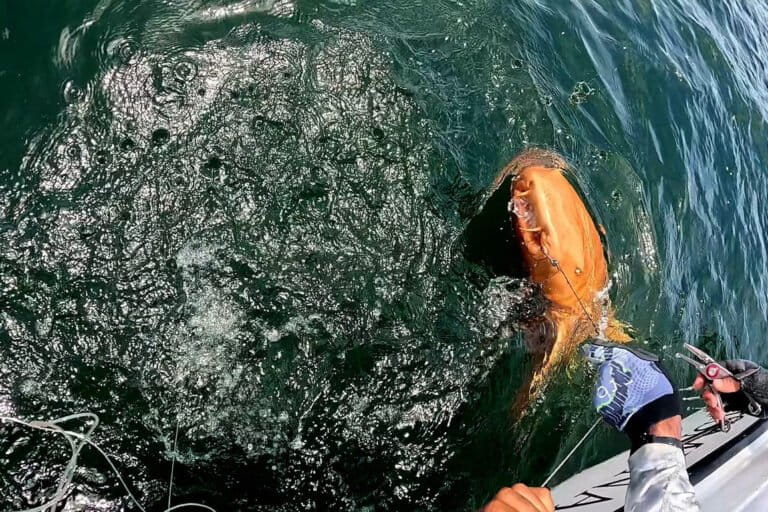
The discovery raises big questions. Is this simply a rare, isolated event, or does it signal genetic shifts in local shark populations? Could climate change be influencing pigmentation in ways we don’t yet understand?
Scientists argue that long-term monitoring of nurse shark populations in the Caribbean is essential—not only counting numbers but also keeping track of genetic diversity. Genetic variation is what gives species the ability to adapt and survive environmental change. In today’s oceans, stressed by human activity and climate shifts, these kinds of anomalies might hold important clues about the future of marine ecosystems.
Other Rare Animals That Captured Attention
This orange shark now joins a fascinating group of animals that have captivated scientists with their unusual colors. People might remember the pink manta ray spotted in the Great Barrier Reef, Snowflake the albino gorilla in Barcelona, Alba the albino orangutan from Indonesia, or even the occasional penguin with unique pigmentation. Each of these cases has reminded us how much nature still has to teach us about genetics and adaptation.
A Reminder From the Ocean
At the end of the day, this bright-orange nurse shark with ghost-white eyes is more than just a viral curiosity. It’s a vivid reminder of how little we truly know about the ocean’s hidden stories. Whether this phenomenon is a genetic twist, an environmental warning, or both, it challenges us to look closer and study harder.
Nature, as always, has the last word—and it often speaks in colors we never expect.
