



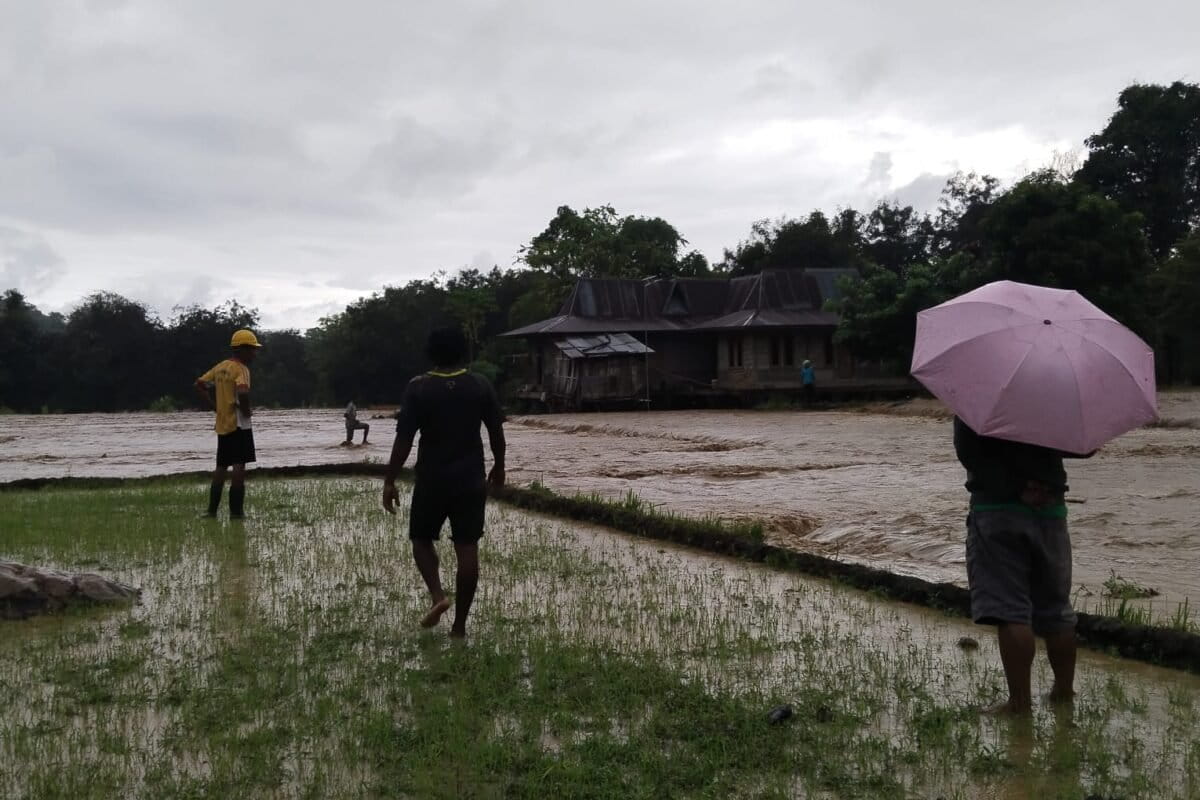
Nagekeo, East Nusa Tenggara – September 2025. A powerful flash flood and landslide struck Nagekeo Regency, East Nusa Tenggara (NTT), Indonesia, on September 8, 2025. The disaster left at least five people dead, three missing, dozens displaced, and widespread infrastructure damage. The Indonesian Meteorology, Climatology, and Geophysics Agency (BMKG) confirmed that the rainy season has arrived earlier than usual, increasing the risk of floods and landslides across the country.
Human Tragedy in Mauponggo District
Eyewitnesses described terrifying scenes as torrential rain, thunder, and landslides devastated villages near Mount Ebulobo. Father Arnoldus Yansen Triyono, a local parish priest, recalled:
“Within 15 minutes, several houses were destroyed. Huge rocks, as big as cars, rolled down from the mountain and crushed homes. People were swept away by the flood.”
BNPB (Indonesia’s National Disaster Management Agency) reported 60 homes damaged, while 57 residents were forced to evacuate to safer areas. Clean water shortages remain a critical issue after 400 meters of pipelines were destroyed.
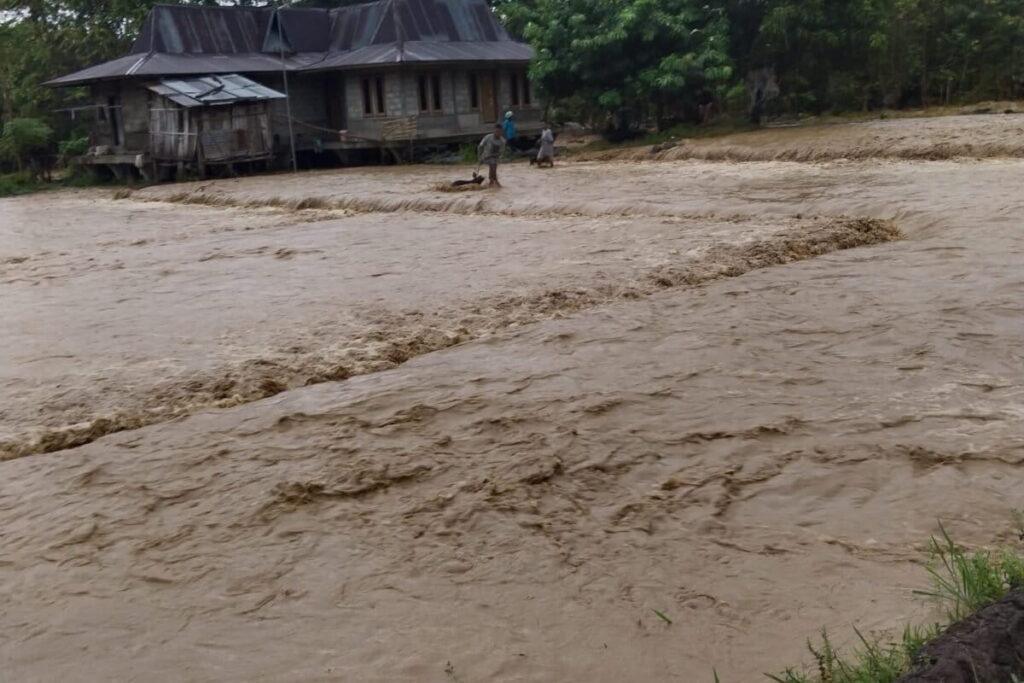
Infrastructure Damage and Emergency Response
- Two bridges collapsed (Teodhae 1 & 2), cutting access between villages.
- The Lowokoke River widened from 30 meters to 100 meters due to the flood.
- Electricity supply is 95% restored, while temporary Bailey bridges will be built to replace collapsed ones.
BNPB deployed 219 personnel, drones, and heavy equipment to search for missing victims and repair damaged infrastructure.
Climate Patterns Behind the Disaster
BMKG explained that the 2025 rainy season began one to two months earlier than average, with unusually high rainfall. Peak rains are expected between November 2025 and February 2026, depending on the region.
Several atmospheric factors contributed to the disaster:
- Negative Indian Ocean Dipole (IOD): bringing extra moisture from the Indian Ocean.
- Neutral ENSO conditions: no strong El Niño/La Niña effect.
- Warmer sea surface temperatures (+0.42°C): boosting cloud formation.
- Active MJO, Kelvin, and Rossby waves: intensifying heavy rainfall.
- Tropical Cyclone 93S in the Indian Ocean: strengthening wind convergence.
According to BMKG Chief Dwikorita Karnawati, these combined phenomena create a high risk of flash floods, landslides, and extreme weather across Indonesia in the coming months.
Historical Context: A Recurring Risk for NTT
East Nusa Tenggara has faced similar disasters in the past, including Cyclone Seroja in 2021 and Cyclone Flores in 1973, both of which caused hundreds of deaths. Experts stress that while meteorological triggers differ, extreme rainfall is the common factor.
Meteorologist Helny Yofin Mega Milla explained:
“It’s not an identical cycle, but extreme rainfall events repeat with different triggers. This makes early warning and community preparedness crucial.”
Key Takeaways
- At least 5 people dead, 3 missing in Nagekeo flash flood.
- 60 houses, two bridges, and pipelines destroyed.
- BMKG warns of an early and intense rainy season lasting until April 2026.
- Communities in East Nusa Tenggara remain highly vulnerable to hydro-meteorological disasters.
