



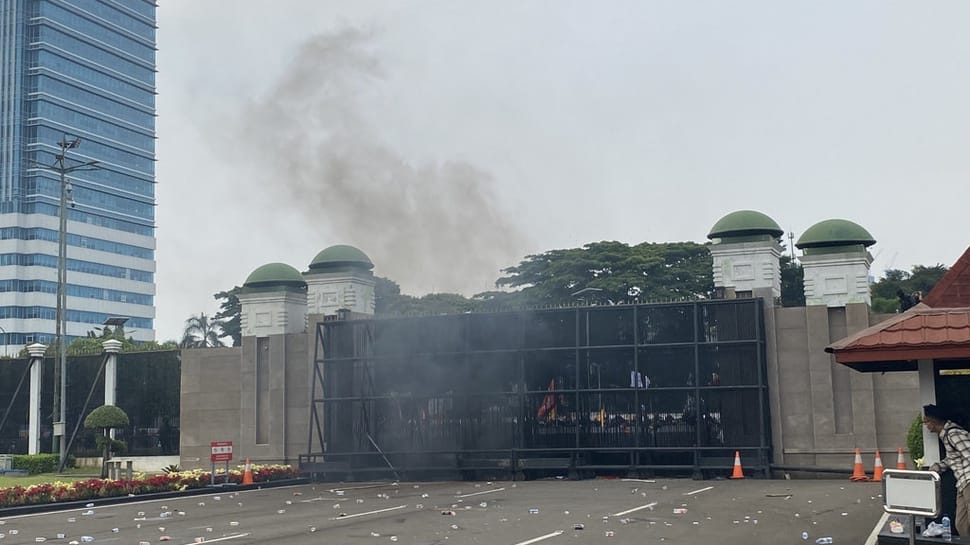
Jakarta, August 28, 2025 — Student groups in Indonesia staged a protest in front of the national Parliament building in Jakarta on Thursday, only hours after workers’ organizations had wrapped up their own demonstrations in the same area.
Hundreds of students, many wearing jackets and symbols representing their universities, arrived carrying Indonesian flags as well as banners from various student organizations. The atmosphere quickly grew tense. Protesters were seen throwing plastic bottles, stones, and even firecrackers into the Parliament compound. Some attempted to push through the front gate while others sprayed graffiti on the walls.
Several incidents of fire-setting were also reported, with flames briefly flaring up near the gates of the legislative complex in Senayan, Central Jakarta.
Police officers deployed at the site made repeated announcements through loudspeakers, urging demonstrators to remain peaceful and avoid violence.
“Open the gate! Open the gate!” the crowd shouted, demanding entry into the Parliament grounds.
From Across Greater Jakarta
The demonstrators were largely students from universities across the Greater Jakarta metropolitan area. However, several individuals without campus identification were also seen blending into the crowd.
The protest followed an earlier demonstration led by labor groups, who had dispersed around 1:00 p.m. local time. Roughly an hour later, student protesters began to arrive, extending the wave of demonstrations in front of the Parliament building.
Mounting Pressure on Lawmakers
The back-to-back rallies by workers and students signal a growing tide of public discontent directed at Indonesia’s lawmakers. While labor groups voiced concerns over employment and economic policies, students appeared to be pushing their own set of demands, though tensions on the ground overshadowed the clarity of their message.
Authorities have yet to confirm whether the demonstrations will continue in the coming days, but the dual protests underline a broader sense of frustration among segments of Indonesian society toward government policies.
