



A New Wave of Youth-Led Demonstrations
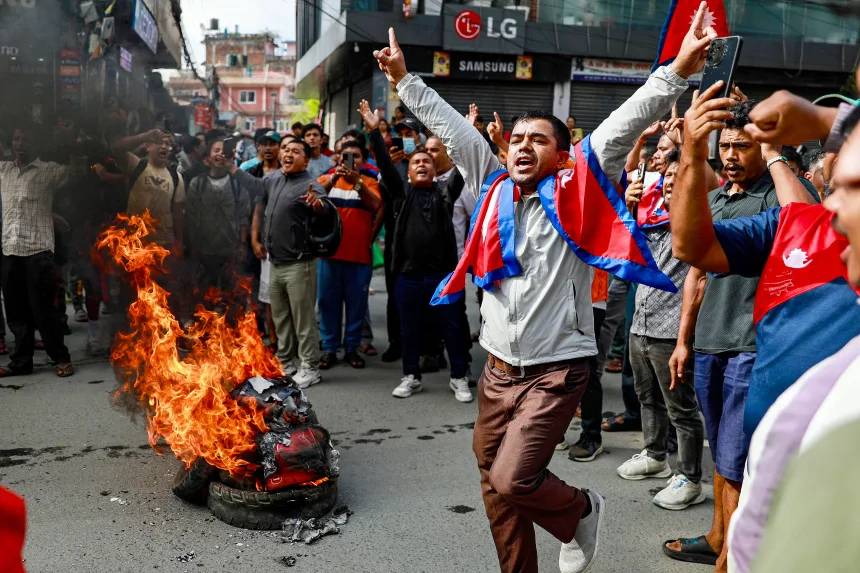
In recent weeks, Nepal has witnessed an unexpected surge of youth-led protests, widely known as the “Gen Z movement.” What started as a reaction to the government’s ban on several social media platforms quickly grew into a broader outcry against corruption, nepotism, and lack of transparency in governance.
The demonstrators, mostly young people and students, flooded the streets, armed not with weapons but with smartphones, memes, and chants that resonated with digital-native energy. For global observers, the movement feels familiar. It echoes youth-driven protests seen elsewhere in Asia, including Indonesia, where younger generations have repeatedly mobilized against government policies they perceive as unjust.
This raises an intriguing question: are Nepal’s protests inspired by Indonesia’s own history of youth movements?
The Context Behind Nepal’s Gen Z Movement
Nepal’s protests were initially triggered by frustration with the government’s attempt to restrict online freedom. Banning social media was perceived not just as a policy decision but as an attack on an entire generation’s way of life. Social platforms like TikTok, Instagram, and X (formerly Twitter) are not only spaces for entertainment but also vital channels for self-expression, learning, and civic engagement.
As the protests unfolded, the narrative expanded. Young demonstrators began addressing broader issues: corruption scandals involving political elites, dissatisfaction with the slow pace of reforms, and a call for accountability in public office. In many ways, these demands reflect a global trend of younger citizens demanding a bigger voice in shaping their country’s future.
Indonesia’s Parallel Experience
Indonesia offers an interesting point of comparison. Over the past two decades, the country has experienced multiple waves of youth-driven protests. From anti-corruption marches to demonstrations against controversial laws, Indonesian students and young professionals have often been at the forefront of public dissent.
Like in Nepal, social media played a crucial role in mobilizing crowds, spreading awareness, and shaping narratives. Protesters in Indonesia frequently combined digital activism with street demonstrations, making their movements difficult to suppress. The similarities in style—creative slogans, viral hashtags, and youth-centered organizing—make it tempting to think of a direct link between the two nations’ protests.
Inspiration or Parallel Struggles?
Despite the parallels, there is no evidence that Nepal’s demonstrators are explicitly modeling their movement after Indonesia. Local grievances in Nepal remain the driving force: political instability, economic challenges, and dissatisfaction with governance.
What we may be seeing is not direct inspiration but a global pattern. Across Asia and beyond, younger generations are confronting similar frustrations—government corruption, inequality, and threats to freedom of expression. With digital platforms connecting youth worldwide, protest styles often look alike, even when they emerge independently.
A Shared Global Moment
While it may be inaccurate to say Nepal’s Gen Z protests were inspired by Indonesia, both countries highlight the same reality: young people are no longer passive observers of politics. They are active participants, willing to challenge the status quo when their voices are ignored.
For a global audience, these movements underscore a powerful shift. Whether in Jakarta, Kathmandu, or elsewhere, youth-led protests represent not only national discontent but also a shared generational demand for more transparent, accountable, and democratic governance.
