



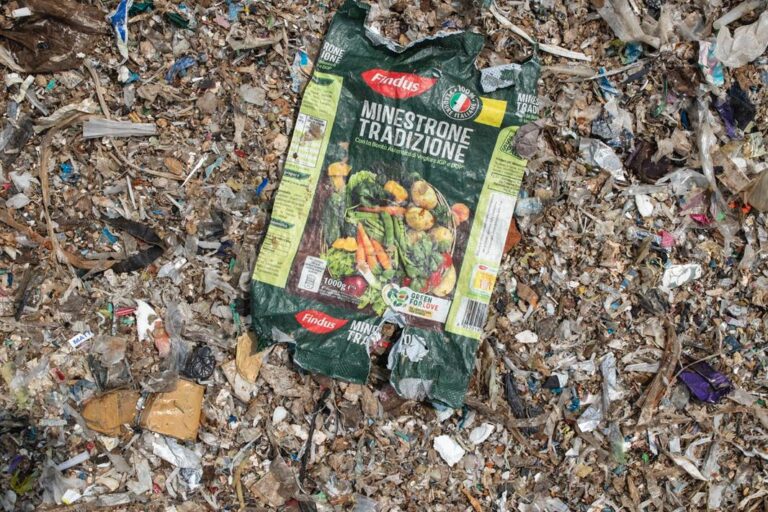
When American rapper Azealia Banks tweeted, “Indonesia is the trash can of the world,” the statement stirred a storm online. Indonesian netizens didn’t hold back their responses, but behind the outrage lies a pressing question: was she really wrong?
Banks argued that Indonesia, much like India, had become one of the most polluted places on Earth. She claimed the country receives waste from around the world, putting its people’s health at risk for generations to come. Instead of billionaires like Elon Musk or Jeff Bezos pouring billions into space tourism, Banks said they’d better spend their money tackling global waste problems — especially in places like Indonesia.
Her comments may have been provocative, but they touch on a reality that is both uncomfortable and undeniable: Indonesia is caught in the middle of the global waste trade. And unless drastic measures are taken, the country risks living up to that unwanted title — the world’s trash bin.
A Mountain of Waste: How Big Is the Problem?
The numbers tell a staggering story. Based on data from Indonesia’s National Waste Management System (SPSN), the country generates 33.6 million tons of waste annually. Nearly 40% of that waste is left unmanaged, which means about 13.4 million tons of garbage simply piles up each year with no proper treatment.
Now, that’s just domestic waste. Add the burden of imported waste — the leftovers that wealthier nations don’t want to deal with — and the picture gets even darker. According to Indonesia’s Central Statistics Agency (BPS), the country still received 262,903 tons of imported waste in recent years. The Netherlands was the biggest contributor, followed by Germany, Belgium, and the United States.
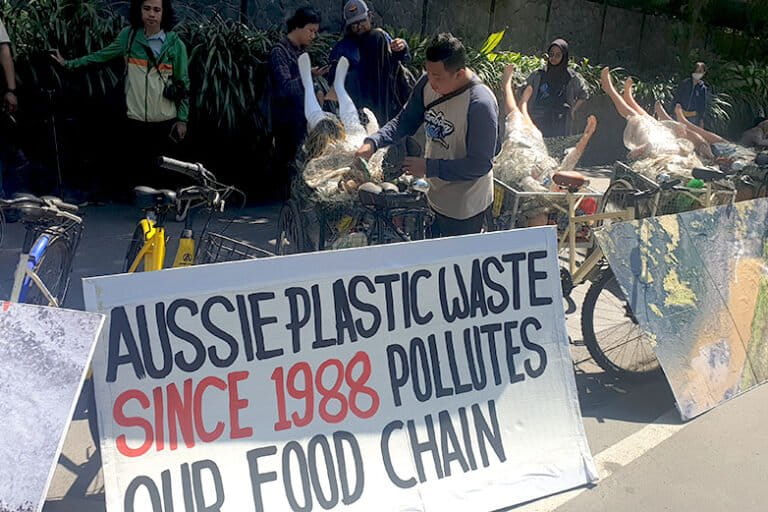
On top of that, data from the UN Comtrade database revealed that Indonesia imported more than 22,000 tons of plastic waste from Australia between 2023 and 2024 — a 28% increase from the previous year.
What does this mean? Simply put, Indonesia is handling not only its own massive waste problem but also the trash of other countries. Environmental activist Prigi Arisandi, founder of Ecoton (Ecological Observation and Wetland Conservation), didn’t mince words: “We are becoming the new dumping ground. Countries in the Global North see us as a convenient destination to dump their garbage.”
Waste Imports: Recycling or Neo-Colonialism?
Supporters of waste imports argue that much of it is destined for recycling. Indonesia’s pulp and paper industry, for example, relies heavily on imported scrap paper because local supplies aren’t enough. The Indonesian Pulp & Paper Association (APKI) estimates the industry lacks 3.2–3.5 million tons of recyclable paper annually.
But here’s the catch: imported waste often comes with impurities. Even though Indonesia has regulations limiting contamination to just 2%, Ecoton and other watchdogs frequently find shipments that far exceed this threshold. That means the waste is mixed with plastics and other materials that can’t be recycled — leaving behind tons of trash that simply piles up.
Environmentalists like Prigi argue this practice is nothing less than a form of neo-colonialism. Wealthy nations save money by exporting their waste instead of managing it at home, while developing countries like Indonesia pay the environmental and health costs. In 2022, Indonesia was ranked the third-largest recipient of imported waste worldwide, trailing only a couple of other nations.
So, while on paper these imports may look like a resource for recycling industries, in practice they often bring along a toxic legacy of residues, contamination, and unmanageable leftovers.
Open Dumps and Burning Piles: Where the Waste Ends Up
Indonesia’s waste management infrastructure simply cannot keep up. Instead of modern waste treatment facilities, much of the trash ends up in open dumpsites — vast fields where waste is left exposed.
There are at least six major open dumpsites across Java, from Serang in Banten to Malang and Sidoarjo in East Java, to Bogor in West Java. Locals often make a living scavenging through these sites, collecting plastics and materials to resell. But what can’t be recycled is usually burned.
The problem? Burning plastic releases dioxins, some of the most toxic pollutants known to science. Dioxins are classified as persistent organic pollutants (POPs) — meaning they linger in the environment for decades. They contaminate soil, water, and air, and are linked to cancer, hormonal disruption, reproductive issues, and skin disorders.
Indonesia already ranks as the fifth-highest country in the world for dioxin pollution, and the second in Asia. It’s a health crisis hiding in plain sight.
And it doesn’t stop there. When trash isn’t burned, it’s often dumped into rivers and seas. In 2024, the National Research and Innovation Agency (BRIN) estimated that 350,000 tons of waste ended up in Indonesian waters. Rivers like the Citarum in West Java are now filled with microplastics, which are eaten by fish and eventually make their way onto people’s dinner plates.
Ecoton’s studies even found microplastics inside chicken eggs from rural areas, proving that contamination has seeped into land-based food chains too. As Prigi puts it: “At the top of the ecosystem food chain is humans. Whatever ends up in water, soil, or crops — eventually comes back to us.”
The Single-Use Packaging Problem
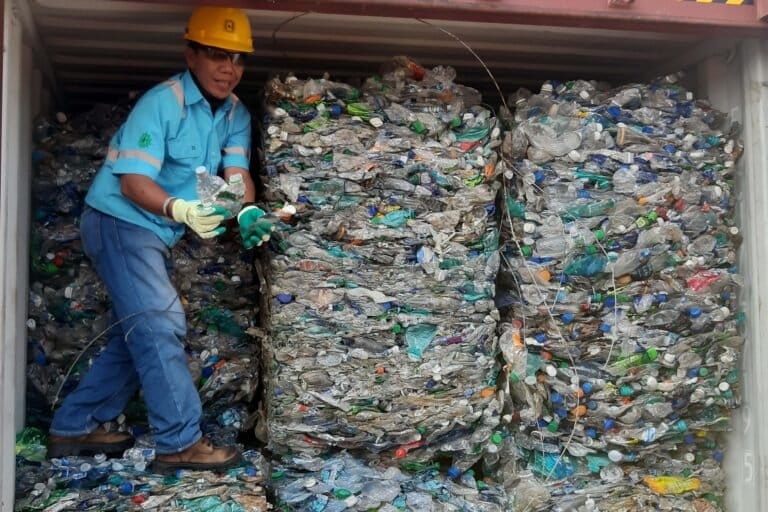
The waste crisis in Indonesia isn’t just about imports. It’s also fueled by a flood of consumer products packaged in single-use plastics. Fast-moving consumer goods (FMCG) companies, many of them global giants, rely heavily on sachets and small disposable packages to market their products in Southeast Asia.
Why? Because in developing countries, single-use sachets are seen as affordable and convenient. For companies, it’s a lucrative strategy. But for the environment, it’s devastating. Unlike in Europe, where these same companies often use eco-friendly packaging, in Indonesia the market is flooded with plastics that are nearly impossible to recycle.
Environmental activists like Abdul Ghofar from WALHI (Friends of the Earth Indonesia) call this hypocrisy. He argues that multinational corporations treat Southeast Asia as a dumping ground for packaging waste under the excuse of “affordability.”
Thrifted Goods and the Hidden Waste Trade
Ironically, even industries marketed as “eco-friendly” can contribute to the problem. The booming thrift market — secondhand clothing and electronics imported from abroad — has also brought in huge amounts of waste.
In Batam, for instance, much of the imported used clothing and gadgets come with residues, broken items, or unusable junk. While some goods are resold, much of the rest simply becomes more garbage. And worse, much of this import activity is illegal.
So while thrifting may appear sustainable on the surface, the hidden costs are more piles of waste for Indonesia to deal with.
Policy Shifts: A Ban on Scrap Plastic Imports
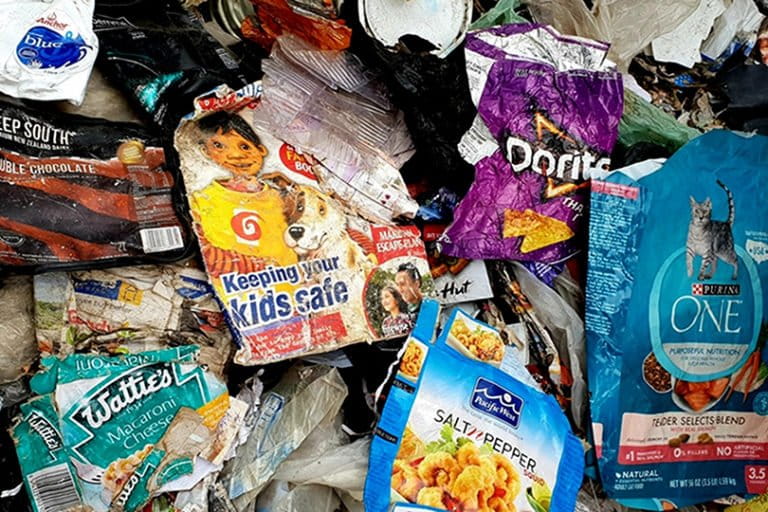
In January 2025, Indonesia’s Environment Minister Hanif Faisol officially banned the import of scrap plastics. Activists hailed this as a step in the right direction, especially after years of loopholes that allowed “legal” imports with impurity limits.
But as always, the challenge lies in implementation. Activists worry that without strict enforcement, the ban will remain only on paper. Previous regulations, like the 2% impurity rule, were frequently ignored in practice.
The government has also announced plans to gradually shut down 343 open dumping sites across the country. But again, environmentalists warn of new risks. Simply closing dumps without upgrading them into sanitary landfills could leave communities with nowhere to put their waste — creating chaos rather than solutions.
Young Voices Rising: River Warrior and Aeshnina’s Fight
Interestingly, some of the most vocal advocates against waste imports in Indonesia are young people. Aeshnina Azzahra Aqilani, a high school student from Gresik, East Java, leads a group called River Warrior, which monitors plastic and paper waste imports.
In March 2025, they sent a letter to the Environment Minister, urging the government to reject waste imports and tighten oversight at customs. They even demanded that exporting countries take responsibility for cleaning up the mess their trash has created in Indonesia.
It’s a reminder that the next generation is already fighting a battle for the future — one they didn’t choose, but one they are determined not to lose.
Government Pushback: “We’re Not the World’s Trash Bin”
Not everyone agrees with the “trash can of the world” label. Novrizal Tahar, Director of Waste Management at the Environment Ministry, dismissed Azealia Banks’s comments as exaggerated. According to him, Indonesia’s waste management has improved, and the government has taken serious steps, including administrative sanctions on local governments and even criminal cases against violators.
Still, the skepticism remains. Environmentalists argue that while policies may look good on paper, enforcement is often weak, leaving gaps that foreign exporters and local industries exploit.
The Bigger Picture: A Shared Global Responsibility
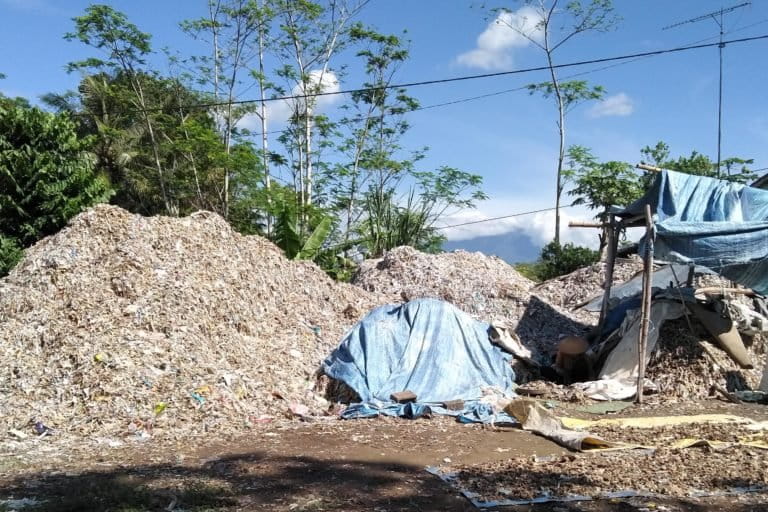
Indonesia’s waste crisis reflects a larger global problem. Wealthy nations have long outsourced their trash to poorer countries, a practice justified under the guise of “recycling.” But recycling is only a small part of the story. For every ton of recyclable material, tons of residues and impurities get left behind.
The result is an environmental and health disaster that disproportionately affects countries like Indonesia. From dioxin pollution to contaminated rivers and microplastics in food, the consequences are not limited to waste importers — they spread through global ecosystems.
If the international community is serious about tackling the waste crisis, it needs to start with fairness. That means wealthier nations should manage their own garbage, corporations must stop dumping single-use plastics into developing markets, and governments like Indonesia’s must strengthen enforcement, not just issue bans.
Conclusion: A Fight for the Future
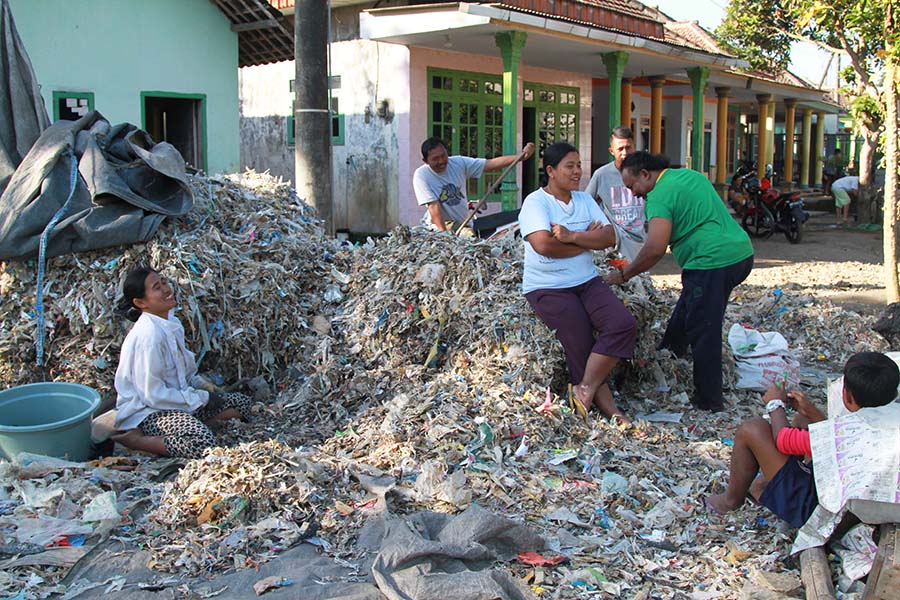
So, is Indonesia really the “trash can of the world”? In some ways, yes — the data shows the country is overwhelmed by both its own waste and imports from abroad. But it’s also a country where activists, students, and communities are fighting back, demanding accountability from corporations, governments, and international partners.
The road ahead won’t be easy. Closing dumpsites, enforcing bans, and reducing single-use plastics will take time, money, and political will. But the alternative is far worse: a future where Indonesia is not just labeled the world’s dumping ground, but where its people live in a toxic landscape with poisoned rivers, contaminated food, and declining health.
Perhaps Azealia Banks’s tweet was harsh, but maybe that shock is what’s needed. Because at the end of the day, this isn’t just Indonesia’s fight. It’s a global one.
