



When people talk about Maluku, also known as the Spice Islands of Indonesia, the first things that often come to mind are its turquoise waters, vibrant coral reefs, and rich marine life. For centuries, these islands have depended heavily on the sea as their primary source of food and livelihood. Yet today, the region faces a serious challenge: the rapid depletion of fish stocks and the degradation of marine ecosystems caused by overfishing, destructive fishing methods, and the pressures of globalization.
Against this backdrop, one ancient practice has stood the test of time—sasi laut, a traditional community-based system that regulates the harvesting of marine resources. This indigenous approach is more than a set of rules; it’s a philosophy of life that connects the people of Maluku to their ancestors, their culture, and the sea. In many ways, the revival and protection of sasi laut may be one of the most effective ways to ensure the long-term sustainability of Maluku’s fisheries.
Maluku and the Challenge of Overfishing
Maluku holds one of the largest Fisheries Management Areas (WPP) in Indonesia and contributes up to 30 percent of the country’s fisheries sector. This makes it a vital hub for national food security and economic growth. For local communities, the sea isn’t just about commerce—it’s their lifeline, their kitchen, and their cultural identity.
However, this dependence has led to serious exploitation. Large vessels from outside the region frequently enter Maluku’s waters, taking fish in massive quantities and leaving little for small-scale fishers. Over the years, the region’s status as Indonesia’s so-called “fish barn” has been placed at risk.
Key species that once thrived in abundance—such as squid, reef fish, large pelagic species, lobsters, crabs, and penaeid shrimp—are now classified as over-exploited. In addition to overfishing, the region suffers from illegal, unreported, and unregulated (IUU) fishing, which undermines efforts to protect stocks. Worse still, destructive practices such as the use of trawl nets (pukat harimau), cantrang boats, explosives, and even toxic chemicals further damage fragile marine ecosystems.
Small-scale local fishers, who make up the majority in Maluku, are among the hardest hit. They are forced to travel farther into deeper waters, spending more money and risking their lives just to catch enough fish. For many, their income has declined significantly, creating ripple effects for families and communities that rely on the daily catch.
Understanding the Sasi Laut Tradition
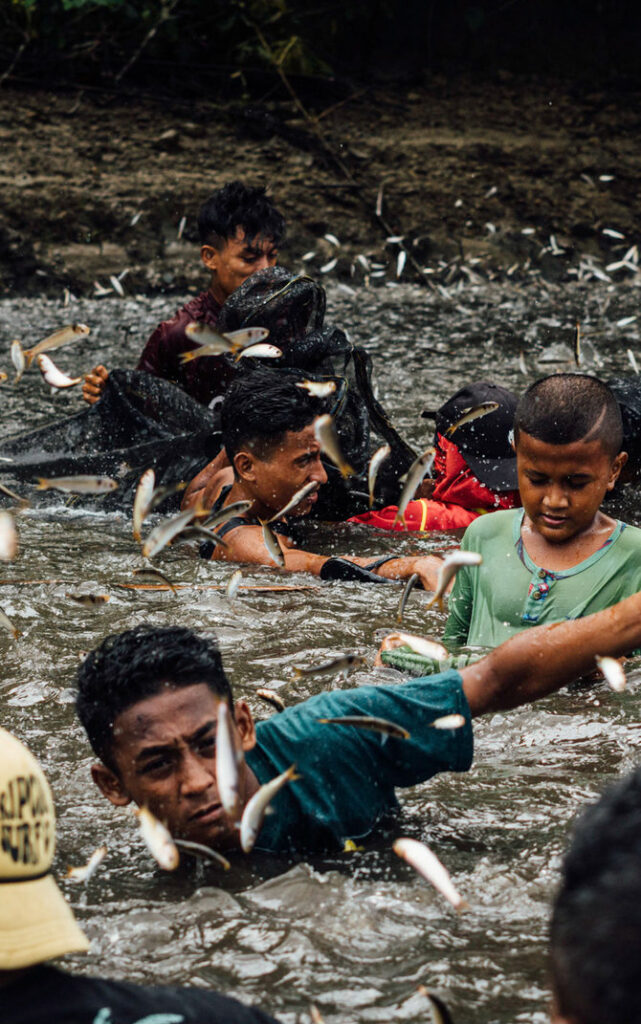
So where does sasi laut fit into this picture?
Sasi laut is a traditional practice passed down for generations among Maluku’s coastal communities. At its core, it is a form of temporary prohibition on the harvesting of specific marine resources—fish, shellfish, sea cucumbers, or lobsters—within a designated area and for a specific period.
This is not a government policy, nor is it simply a set of fishing regulations. Instead, it’s deeply rooted in local customs, spirituality, and respect for nature. Communities decide collectively when and where the sasi will be enforced, often aligning with natural cycles such as fish spawning seasons. When a sasi is declared, all members of the community are expected to comply, and violators face customary sanctions.
The institution responsible for overseeing the practice is the Kewang, a traditional body made up of representatives from local groups (called soa). The kewang monitors compliance, enforces sanctions, and ensures that the practice remains a collective responsibility. More importantly, the decision-making process behind sasi involves everyone—from village elders and customary leaders to ordinary community members.
In this sense, sasi laut is both ecological and cultural. It’s a community-driven system that reinforces social cohesion while ensuring that marine resources have time to recover. By the time the ban is lifted—often through a ceremonial ritual—the population of the targeted species has usually replenished, allowing sustainable harvesting without depleting the resource.
The Cultural and Ecological Goals of Sasi Laut
The beauty of sasi lies in how it blends ecological wisdom with cultural values. The goals of this practice extend far beyond conservation.
Conservation of Marine Resources
By temporarily closing off fishing grounds, sasi allows fish populations and other marine species to recover naturally. This directly contributes to the preservation of biodiversity and the sustainability of the ecosystem.
Supporting Community Livelihoods
For Maluku’s coastal villagers, the sea is their pantry. Sasi ensures that fish stocks are not depleted permanently, giving local fishers a reliable source of income and food for generations.
Maintaining Ecological Balance
By respecting natural cycles—such as breeding and spawning seasons—sasi maintains the delicate balance of marine ecosystems. This prevents overharvesting and ensures that vulnerable species are protected during critical life stages.
Social Cohesion and Harmony
Sasi is a collective agreement that fosters unity within the community. It requires cooperation, consensus, and mutual respect, strengthening the bonds among community members.
Preserving Cultural Knowledge
Perhaps most importantly, sasi serves as a cultural classroom. It transmits traditional ecological knowledge, respect for nature, and spiritual values to younger generations, ensuring that cultural identity is preserved alongside natural resources.
A Living Example: The Sasi in Rutong Village
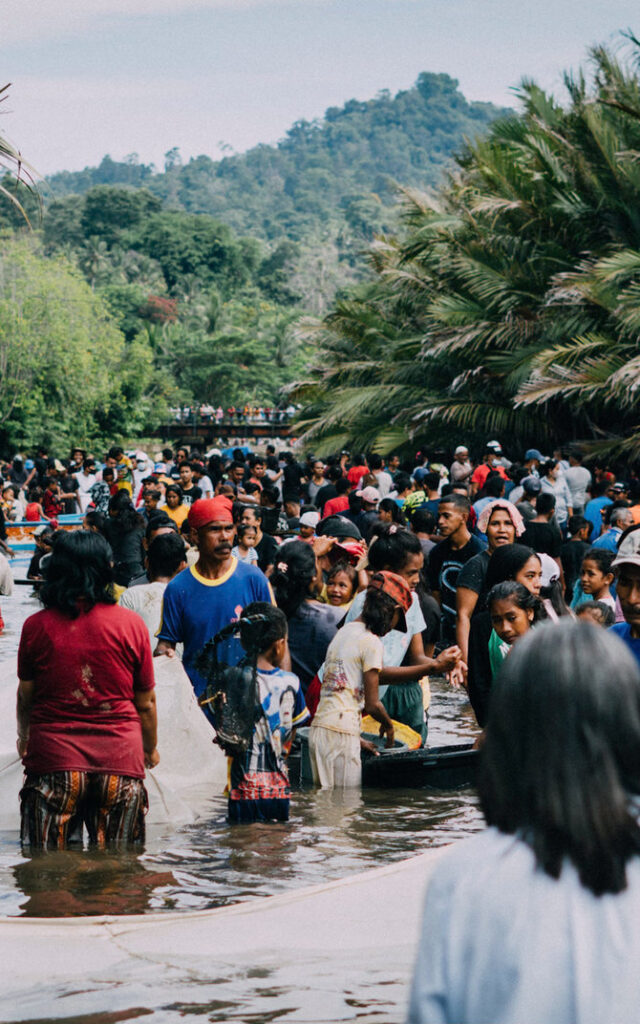
One recent example illustrates how effective sasi can be. In February 2024, the government of Rutong Village, located in Leitimur Selatan, Ambon, held a ritual to reopen the sasi laut on three valuable marine species: sea cucumbers, turban shells (lola), and lobsters. During the closure, which lasted several months, these species experienced significant growth in population.
When the sasi was lifted, the harvest was abundant, providing both food and income for the villagers. The event was not just an economic moment but also a cultural celebration, reinforcing the community’s collective responsibility to protect and manage their waters.
This example shows that sasi is not a relic of the past—it’s a living, breathing system that can still deliver tangible benefits when respected and implemented.
The Threats Facing Sasi Laut Today
Despite its proven benefits, sasi is under threat. Modernization, globalization, and rapid socio-economic changes have eroded traditional structures that once supported its enforcement.
According to Eliza Kissya, the head of Kewang in Haruku, Central Maluku, many areas no longer have active kewang leaders. Without this traditional authority, violations are on the rise, and the system is weakening. Large commercial fishing companies and newcomers from outside the community often ignore sasi altogether, creating a sense of unfairness and undermining the practice.
When outsiders disregard sasi, local fishers who have respected the closures find themselves at a disadvantage, fueling frustration and sometimes leading to conflict. Over time, this weakens trust in the system and discourages compliance.
Why Reviving Sasi Matters for the Future
Reviving and strengthening sasi laut isn’t just about saving an old custom—it’s about building a sustainable future. Here’s why it matters:
- Ecological sustainability: Sasi has proven to be an effective community-based management system that allows ecosystems to heal.
- Economic stability: Healthy fish stocks translate into steady incomes for local communities.
- Cultural preservation: Sasi is part of Maluku’s cultural DNA. Preserving it means preserving identity.
- Community empowerment: By involving everyone in decision-making, sasi ensures that local voices are at the heart of resource management.
For these reasons, protecting sasi is not only an environmental necessity but also a cultural and social imperative.
What It Takes to Keep Sasi Alive
Ensuring that sasi laut continues to thrive requires more than nostalgia. It needs deliberate action:
- Education and awareness: Younger generations must understand the cultural and ecological value of sasi. This can be done through schools, local storytelling, and community rituals.
- Community participation: Sasi can only succeed if it has broad community support. This means involving everyone—from village leaders to ordinary fishers.
- Integration with modern policies: Government agencies and conservation NGOs should recognize sasi as part of Indonesia’s broader fisheries management strategies.
- Engaging newcomers and companies: Outsiders who operate in Maluku’s waters must be educated and held accountable for respecting sasi rules.
- Cultural celebration: Rituals and ceremonies around sasi should continue to be celebrated, not only as tradition but also as a reminder of shared responsibility.
Conclusion: A Tradition Worth Protecting
In many parts of the world, communities are searching for new ways to manage fisheries sustainably. Yet in Maluku, the blueprint has existed for centuries. Sasi laut is more than a rulebook—it is a living heritage that blends ecological wisdom, spiritual values, and community solidarity.
If preserved and adapted to modern realities, sasi can continue to ensure that Maluku’s seas remain abundant, its fishers thrive, and its culture endures.
At the end of the day, protecting sasi laut is not just about honoring the past—it’s about securing the future. For Maluku, the choice is clear: by holding onto this tradition, the islands can lead the way in showing the world how local wisdom can create global solutions for sustainable fisheries.
