



When Avatar 2: The Way of Water hit theaters, audiences were mesmerized by the breathtaking ocean scenes, the intricate stilt houses, and the deep connection of the Metkayina clan to the sea. But what many don’t know is that these fictional characters and their way of life were inspired by a real-life community that exists in Southeast Asia: the Bajau people, also known as “Sea Nomads.”
The Bajau are not just another indigenous group—they are living proof that human beings can adapt in extraordinary ways to their environment, developing skills and physical traits that seem almost superhuman. Their culture, traditions, and relationship with the sea have fascinated anthropologists, travelers, and filmmakers alike. And while the Bajau’s nomadic days are slowly fading, their heritage remains one of the most captivating in the world.
Who Are the Bajau?
The Bajau people are a maritime ethnic group spread across the waters of the Philippines, Malaysia, and Indonesia. In Indonesia, they are particularly known for inhabiting coastal areas and small islands in Sulawesi, especially within the Togean Islands National Park in Central Sulawesi.
Historically, the Bajau were true nomads of the sea—sailing from place to place, living almost entirely on boats, and rarely setting foot on land except to trade or gather fresh water. According to oral history, many Bajau trace their origins to the Sulu Archipelago in the southern Philippines, from where they began their long voyages across the seas hundreds of years ago. Over time, their travels led them to various parts of Indonesia, where some communities eventually settled down.
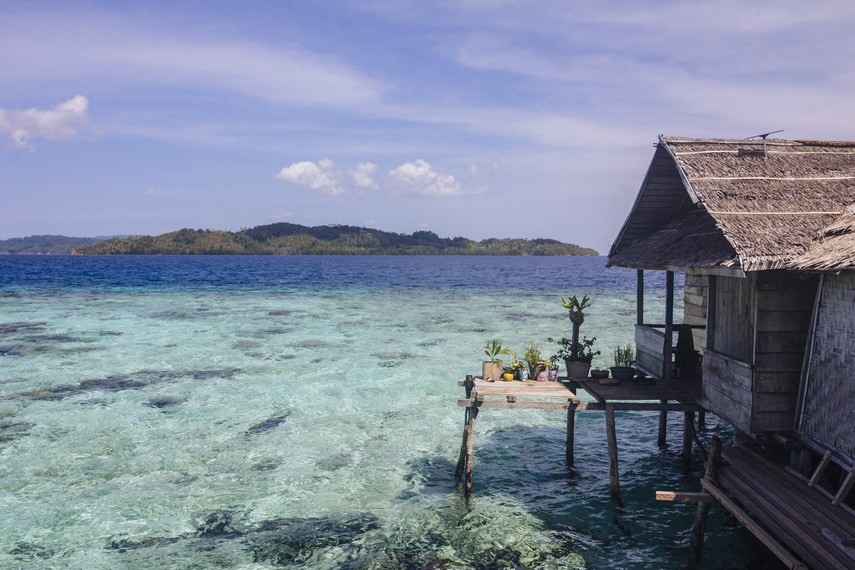
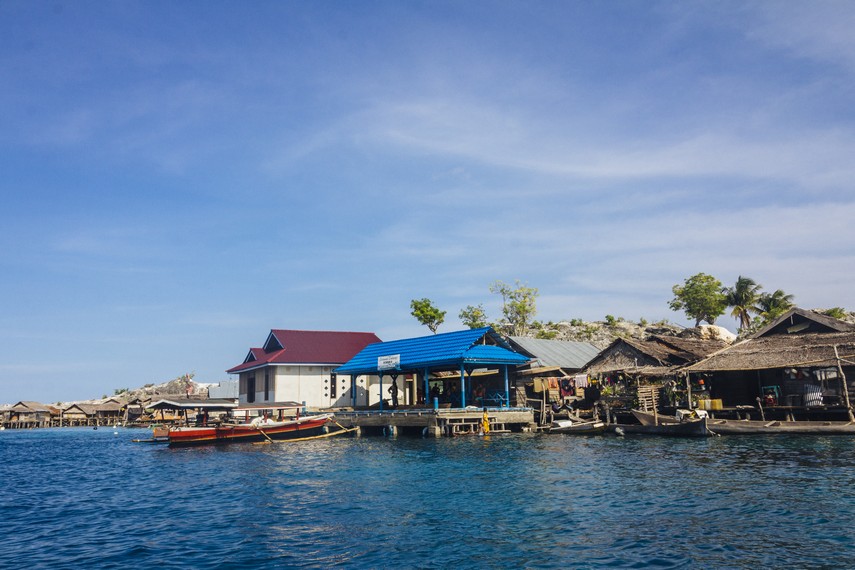
Today, while some Bajau still live on houseboats, many have chosen to make permanent homes in coastal villages or on small islands. One such island is Pulau Papan, part of the Togean Islands, where most of the houses are built on stilts directly above the water—a lifestyle that keeps their bond with the sea alive.
Life on Pulau Papan
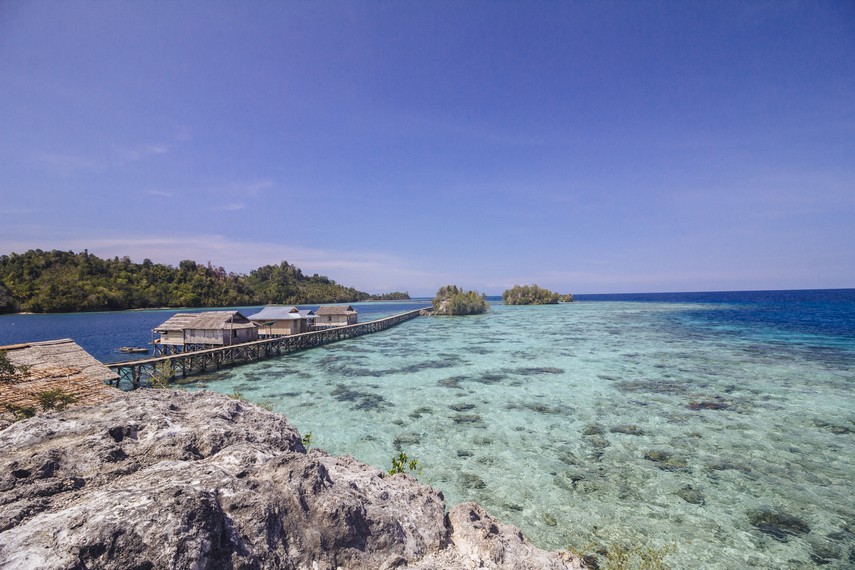
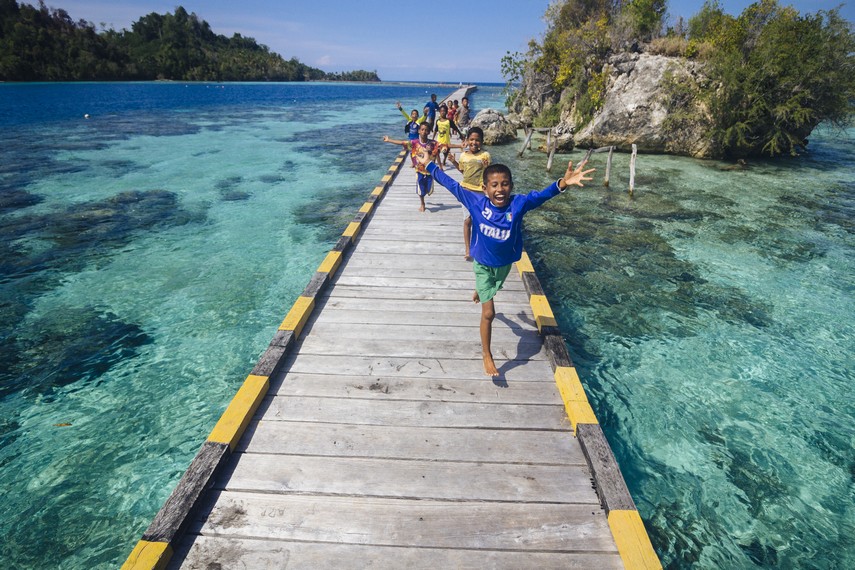
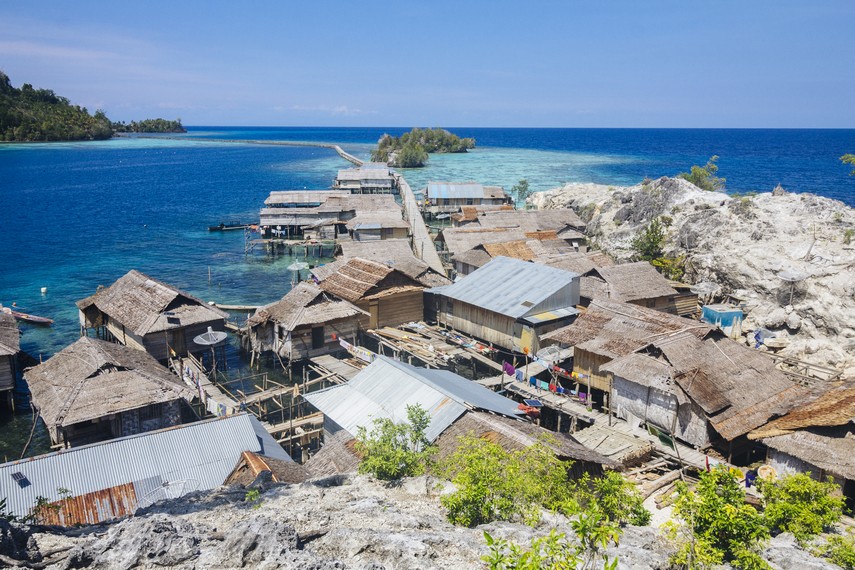
Pulau Papan is a postcard-perfect island that feels like it’s been plucked straight from a travel magazine. Imagine rows of wooden stilt houses connected by narrow walkways, children laughing as they leap into the clear turquoise water, and fishing boats bobbing gently in the distance.
One of the island’s most striking features is the 1-kilometer-long wooden bridge that connects Pulau Papan to the neighboring island of Pulau Malenge, the administrative hub of the area. Walking across the bridge feels like stepping into another world—you can see coral reefs beneath your feet and watch schools of colorful fish darting around in the crystal-clear shallows.
In the middle of the village lies Puncak Batu Karang (Coral Rock Peak), a favorite hangout spot for local children and visiting tourists. From this elevated viewpoint, you can see the entire stretch of the bridge, the village’s stilt houses, and the breathtaking ocean surrounding the island.
But beyond its natural beauty, what truly makes Pulau Papan unforgettable is the warmth of its people. Bajau children are famously friendly and curious—eager to greet visitors, play games, and even guide them around their village. For travelers, these moments of genuine human connection often become the most treasured memories of their trip.
Masters of the Sea: The Bajau’s Diving Skills
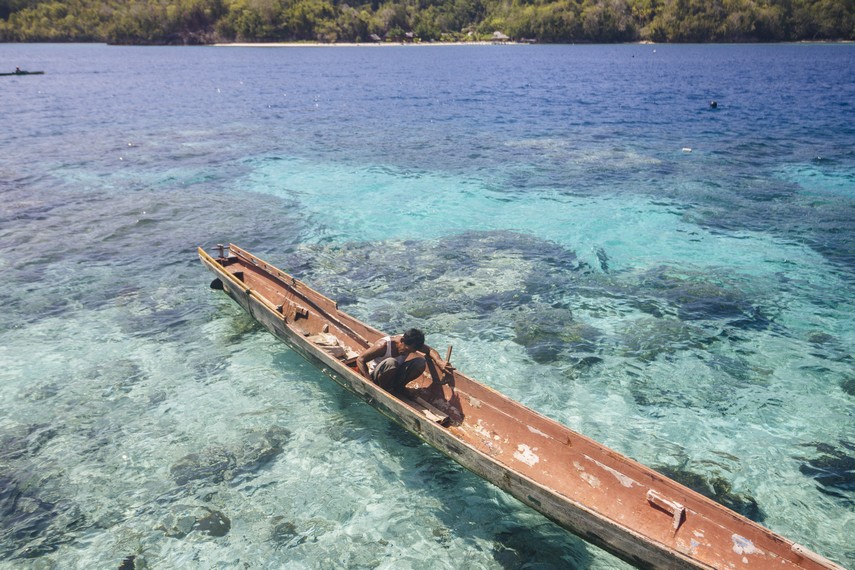
If the Bajau are known for one thing, it’s their extraordinary ability to dive deep and hold their breath for long periods—without any scuba gear. It’s not just a party trick; it’s a skill honed over generations as a way to catch fish and gather seafood such as sea cucumbers, shellfish, and octopus.
Some Bajau divers can descend to depths of up to 70 meters (230 feet) on a single breath, staying underwater for several minutes at a time. This is made possible not just by training, but also by unique physiological adaptations. Studies have shown that many Bajau have larger spleens than average, which allows them to store and release more oxygenated red blood cells while diving—a natural “superpower” that helps them survive in their aquatic environment.
When James Cameron was creating the world of the Metkayina clan for Avatar 2: The Way of Water, he and his team studied the Bajau extensively. They took inspiration from the Bajau’s free-diving techniques, body movements underwater, and even their architectural style. The Metkayina’s overwater homes and deep bond with the sea are direct reflections of Bajau culture.
From Nomads to Settlers
While the Bajau’s ancestors spent most of their lives at sea, modern Bajau communities are more settled. Life on islands like Pulau Papan offers easier access to trade, education, and healthcare—things that were harder to come by when living entirely on boats.
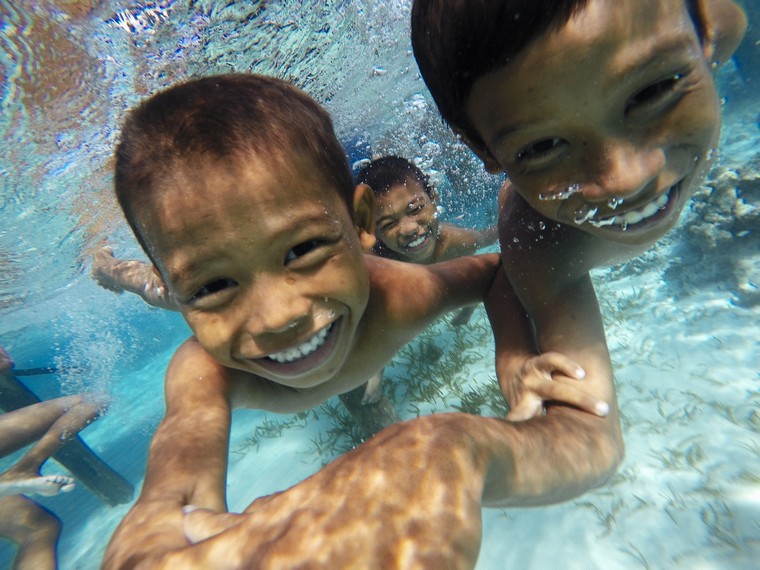
That said, the Bajau’s connection to the sea remains strong. Fishing is still the primary livelihood for many families, and the ocean continues to play a central role in cultural traditions. Children grow up learning to swim before they can walk confidently, and fishing skills are passed down from one generation to the next.
Intermarriage with other ethnic groups in the region has also become more common, blending traditions and creating a more integrated island community. But even with these changes, the Bajau’s seafaring identity is something they carry with pride.
A Cultural Experience for Travelers
For travelers seeking something more than just a beach holiday, a visit to Pulau Papan offers a rich cultural experience. Here, you can:
- Walk the wooden bridge connecting Pulau Papan to Pulau Malenge, stopping to take photos of the reefs and fishing boats.
- Climb to Puncak Batu Karang for panoramic views of the village and surrounding sea.
- Go snorkeling or diving to witness the underwater world that sustains the Bajau way of life.
- Join local fishermen on a trip to learn traditional fishing methods.
- Interact with Bajau children, who are always excited to meet visitors.
And perhaps most importantly, you can listen to the stories of the Bajau themselves—tales of their ancestors’ voyages, their relationship with the ocean, and their hopes for the future.
The Challenges They Face
Like many indigenous communities, the Bajau face challenges in preserving their way of life. Overfishing, climate change, and modernization are slowly altering the marine environment they depend on. Rising sea levels and coral reef degradation threaten both their livelihoods and their homes.
Tourism brings both opportunities and challenges. While it can provide economic benefits, it also risks disrupting local traditions if not managed responsibly. Sustainable tourism—where visitors respect local customs, minimize waste, and support community-based initiatives—offers a way forward.
Why the Bajau’s Story Matters
In a world where most people live far removed from nature, the Bajau remind us of a different way of life—one built on harmony with the ocean. Their knowledge of the sea, passed down over generations, is a form of wisdom that deserves recognition and protection.
James Cameron may have brought elements of Bajau culture to the big screen, but the real-life Bajau need more than just cinematic fame. They need policies that protect their fishing grounds, support their communities, and preserve their traditions for future generations.
Final Thoughts
Visiting the Bajau community of Pulau Papan is like stepping into another world—a world where the horizon is endless, the ocean is home, and human connection feels genuine and unfiltered. It’s a reminder that even in our rapidly changing modern world, there are still places where people live in rhythm with nature.
Whether you’re a diver, a cultural traveler, or simply someone inspired by Avatar 2, getting to know the Bajau is an experience that will stay with you long after you’ve left their shores.
