



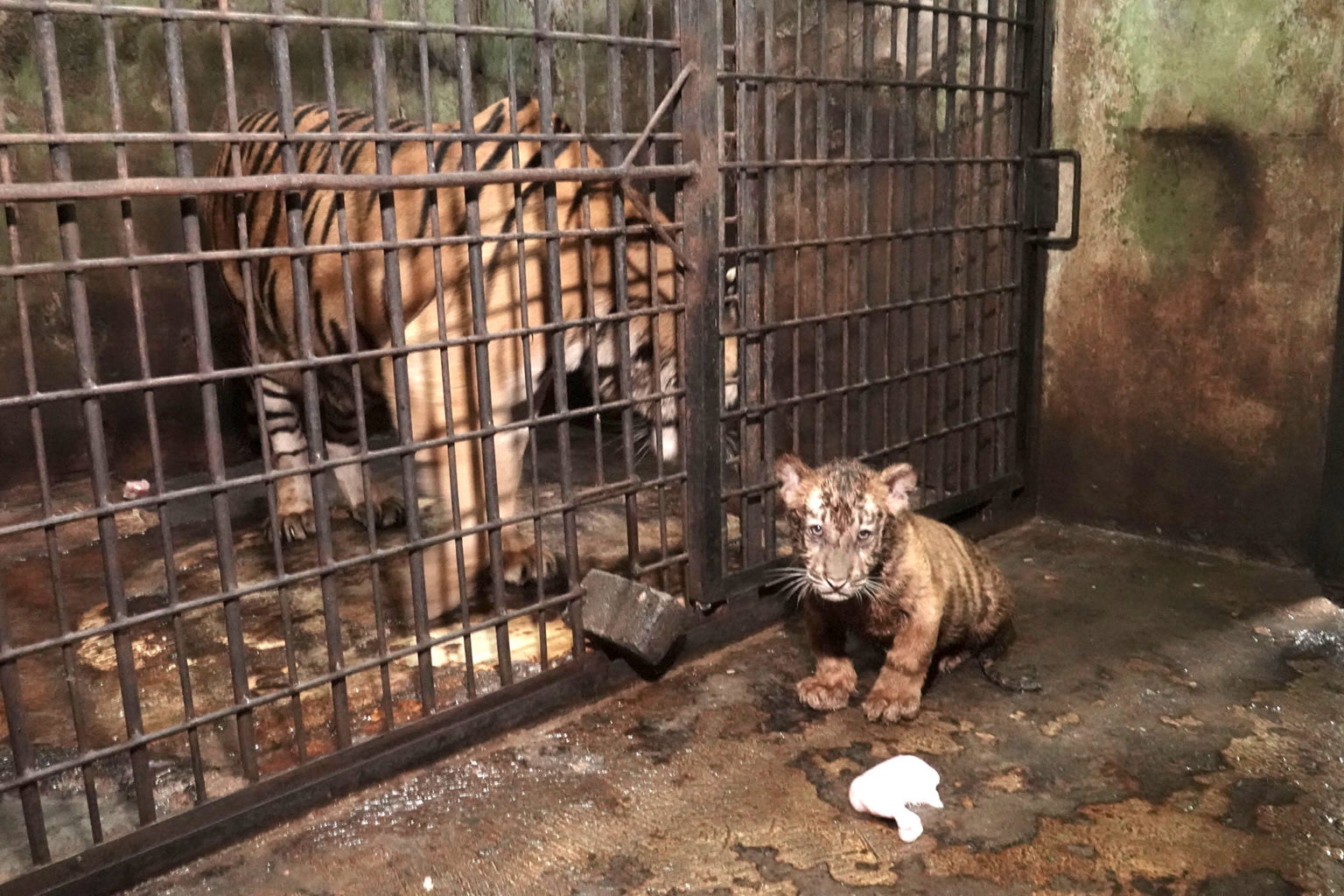
It was a heartbreaking start to July at the Taman Margasatwa dan Budaya Kinantan (TMSBK) in Bukittinggi, West Sumatra. Just one week after being born, a male Sumatran tiger cub passed away. The cause? A mix of severe malnutrition, dehydration, maternal stress, and potentially, genetic defects.
The tiny tiger, born to Yani and Bujang Mandeh—two Sumatran tigers part of a controlled breeding program—was found unwell shortly after birth. According to Hartono, Head of the West Sumatra Natural Resources Conservation Agency (BKSDA), the mother, Yani, showed repeated signs of rejecting the cub and refused to nurse him.
“Yani became restless and refused to feed her cub,” said Hartono. “Eventually, the cub appeared weak and lay limp. The team tried to save him by evacuating and taking him to the clinic for treatment.”
Unfortunately, despite medical intervention by veterinarians and animal keepers, the cub died on July 1, 2025.
What Really Happened?
Post-mortem examinations, known as necropsies, revealed no visible abnormalities in the cub’s internal organs. The cause of death was clear: the cub died from dehydration and a lack of vital nutrients that it should have received from its mother’s milk.
Dr. Zulfanedi Yoli, the head veterinarian and Chair of the Flora and Fauna Conservation Team at TMSBK, explained that both internal and external stressors likely caused Yani’s maternal rejection.
One key external stressor? Zoo visitors.
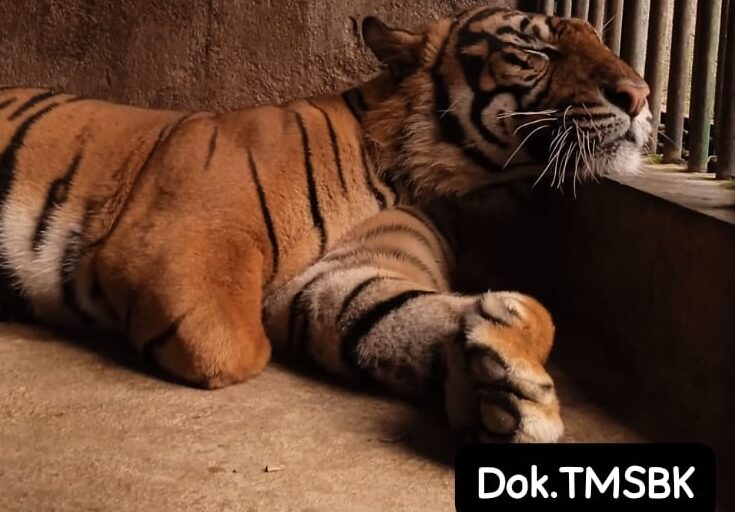
“Yani’s cage is quite exposed to the public,” Zulfanedi said. “And from what we’ve observed, she’s not comfortable with that setup.”
In an attempt to reduce stress, zoo staff did close off Yani’s enclosure during the birthing process and again on June 29. Still, the damage had likely been done. Stress can heavily influence a mother tiger’s psychological and physiological state—affecting milk production and her ability to care for her young.
Could Genetics Be to Blame?
There’s also growing concern over Yani’s genetic background. Unlike some tigers rescued from the wild, Yani was born in captivity—specifically at TMSBK in Bukittinggi, as the offspring of a tiger named Sean from Taman Rimbo Jambi.
This wasn’t Yani’s first failed birth. Since 2024, she has given birth three times. The first two cubs were stillborn, and now this third one has died shortly after birth. These repeated losses have raised suspicions of a potential genetic issue.
“It’s still just a suspicion,” said Zulfanedi. “Confirming a genetic disorder requires in-depth testing, and currently, we don’t have the resources for that.”
To address this, the Directorate General of Natural Resources and Ecosystem Conservation (KSDAE) under the Ministry of Environment and Forestry plans to conduct genetic testing on Yani and her offspring. This is part of a broader investigation to determine whether hereditary problems are contributing to the high cub mortality rate.
Satyawan Pudyatmoko, Director General of KSDAE, emphasized that genetic abnormalities and maternal behavior are both strong factors.
“This mother tiger clearly rejected her cub—shown by her refusal to nurse or care for it. These behaviors can also happen in the wild, often due to genetic defects or stress.”
What’s Next for the Breeding Program?
While the loss is devastating, it’s not the first such case at TMSBK. In addition to Yani’s three unsuccessful pregnancies, another tiger pair—Bujang Mandeh and Mantagi—also lost a cub. Born on December 28, 2024, one of their twins died just two days after birth.
However, there’s also hope.
On May 3, 2025, Bujang Mandeh and Mantagi welcomed another set of twins, both of whom are currently healthy. The cubs were later named Rizki and Lestari by Titiek Soeharto, Chairperson of Commission IV of the House of Representatives, during a visit to the zoo alongside Minister of Environment and Forestry, Raja Juli Antoni.
“These births are part of our controlled breeding program,” Zulfanedi explained. “It’s an effort to preserve the Sumatran tiger population through ex-situ conservation, involving both conflict tigers and captive-born individuals.”
Controlled breeding is a globally recognized conservation strategy. It aims to maintain a genetically diverse population of endangered species—targeting at least 90% genetic variability. Yani was the first tiger at TMSBK to participate in this program, paired with Bujang Mandeh in mid-2023.
Initially, Yani showed no signs of pregnancy despite multiple mating sessions. It wasn’t until dietary changes and fertility-enhancing supplements were introduced that she finally conceived.
“We changed her diet to improve her reproductive health, focusing on nutrition that supports hormone production and organ development.”
A Wake-Up Call for Sumatran Tiger Conservation
According to data from the Global Species Management Plan (GSMP), the population of Sumatran tigers in Indonesian conservation centers is declining. Zoos and conservation institutions across the country are now being urged to step up efforts to help this critically endangered species reproduce.
Despite repeated setbacks, TMSBK is one of the few places that has shown progress. With multiple births over the past two years—even if not all cubs survived—the zoo is emerging as a key player in tiger conservation.
“We’ve had more tiger births here recently than many other facilities,” said Zulfanedi. “While some didn’t survive, we’re learning and improving our approach each time.”
The government is now focused on evaluating the root causes of maternal rejection, improving animal welfare, and ensuring high standards for stress management, nutrition, and breeding practices.
“We remain committed to conserving the Sumatran tiger as a priority species,” said Satyawan. “Each incident teaches us something valuable. We invite the public to support these efforts so we can do even better in the future.”
Final Thoughts
The death of a tiger cub—especially one born in a protected facility—hits hard. But it also serves as a reminder that conservation is never simple. It’s a complex balance of biology, behavior, genetics, and environment.
For Indonesia, home to one of the world’s rarest tiger subspecies, every birth counts. And every loss—painful as it may be—is a lesson on how to protect what little remains of the wild.
