
Close Menu
Saibumi | Uncovering Asia, One Story at a Time
    What's Hot

    Indonesia’s National Nutrition Agency Leadership Change Draws International Attention

    June 3, 2026

    Indonesia’s Biodiesel Shift: B50 Plan Put on Hold, Raising Questions for Global Palm Oil Markets

    January 14, 2026

    Elephants Help Clear Wooden Debris After Aceh Disaster

    December 27, 2025
    Facebook X (Twitter) Instagram
    Saibumi | Uncovering Asia, One Story at a TimeSaibumi | Uncovering Asia, One Story at a Time
    • About Us
    • Contact Us
    • Advertise
    Facebook X (Twitter) Instagram YouTube LinkedIn Reddit
    • Home
    • Stories

      The Global Plastic Treaty Fails Again – What Does It Mean for the Planet?

      August 27, 2025

      Puru Kambera Savanna: Tracing the Wild Horses of East Sumba

      August 25, 2025

      West Sumatra Emerges as a Leading Muslim-Friendly Travel Destination

      August 24, 2025

      Tabola Bale Song: The Viral Music Blend From Eastern Indonesia

      August 20, 2025

      Tanjung Karang Beach: An Underwater Paradise in Donggala

      August 20, 2025
    • Travel

      Know the Types of Snakes in the Wild & What to Do If You Get Bitten

      December 27, 2025

      Thailand Named the Best Food Country in the World 2025 — Beating Italy and Japan

      October 14, 2025

      Dieng Plateau Officially Designated as Indonesia’s Newest National Geopark

      September 29, 2025

      The Culture of Souvenirs: How Indonesians Strengthen Workplace Relationships Through Oleh-oleh

      September 29, 2025

      6 Best Coffee Shops in Asia – And Yes, One of Them Is in Indonesia!

      September 28, 2025
    • Culture
    • Lifestyle
      1. Food & Culture
      2. Green Living
      3. Local Life
      4. Modern Living
      5. People & Inspiration
      6. View All

      Gen Z in Indonesia and the Global “Escape Culture”: Why Many Are Saying #KaburAjaDulu

      October 20, 2025

      The Export of Indonesian Specialty Products: How Local Ingredients Are Becoming Global Brands

      October 20, 2025

      From Training to Takeoff: MKP’s Approach to Responsible Worker Preparation

      October 18, 2025

      Thailand Named the Best Food Country in the World 2025 — Beating Italy and Japan

      October 14, 2025

      List of Plants That Attract and Repel Snakes Around the House

      October 20, 2025

      Bird-Friendly Coffee in Lampung: Wild Birds Help Farmers Control Pests Naturally

      September 23, 2025

      Standing Still Like a Stick: How Tree Snakes Outsmart Predators with Vertical Sleep

      July 17, 2025

      Not a Cat, Not a Snake — Meet the Plant That Can Eat Rats

      July 12, 2025

      #KaburAjaDulu: When Young Indonesians Feel Like Escaping Is the Only Way to Survive

      October 9, 2025

      The Culture of Souvenirs: How Indonesians Strengthen Workplace Relationships Through Oleh-oleh

      September 29, 2025

      How Remote Work and Digitalization Are Transforming Indonesian Work Culture

      September 28, 2025

      Staying Healthy in Unpredictable Weather: Indonesian Habits the World Can Learn From

      September 21, 2025

      Gen Z in Indonesia and the Global “Escape Culture”: Why Many Are Saying #KaburAjaDulu

      October 20, 2025

      Indonesia’s Beauty Industry Is Having a Major Glow-Up

      July 1, 2025

      Why Indonesian Coffee Is the Next Big Thing Among Global Freelancers

      June 30, 2025

      The Culture of Souvenirs: How Indonesians Strengthen Workplace Relationships Through Oleh-oleh

      September 29, 2025

      The Indonesian Work Culture: Harmony and Gotong Royong in Action

      September 16, 2025

      Southeast Asian Solidarity: Citizens Rally Behind Indonesian Protesters Amid Police Violence

      September 6, 2025

      What Germans Can Learn from the Philosophy of Gotong Royong

      July 16, 2025

      Gen Z in Indonesia and the Global “Escape Culture”: Why Many Are Saying #KaburAjaDulu

      October 20, 2025

      #KaburAjaDulu: When Young Indonesians Feel Like Escaping Is the Only Way to Survive

      October 9, 2025

      The Indonesian Work Ethic: Why Global Teams Trust Indonesian Professionals

      October 2, 2025

      Why Indonesian Talents Are the Best Choice for Global Companies

      October 2, 2025
    • Local Business
    Subscribe
    Saibumi | Uncovering Asia, One Story at a Time
    Home » Can Indonesia’s Small Islands Ever Be Free from Plastic Waste?
    Don't Miss

    Can Indonesia’s Small Islands Ever Be Free from Plastic Waste?

    Editor DeskBy Editor DeskJuly 13, 2025Updated:July 13, 2025No Comments5 Mins Read
    Facebook Twitter Pinterest LinkedIn Tumblr Email
    Foto: Mongabay Indonesia
    Share
    Facebook Twitter LinkedIn Pinterest Email Copy Link

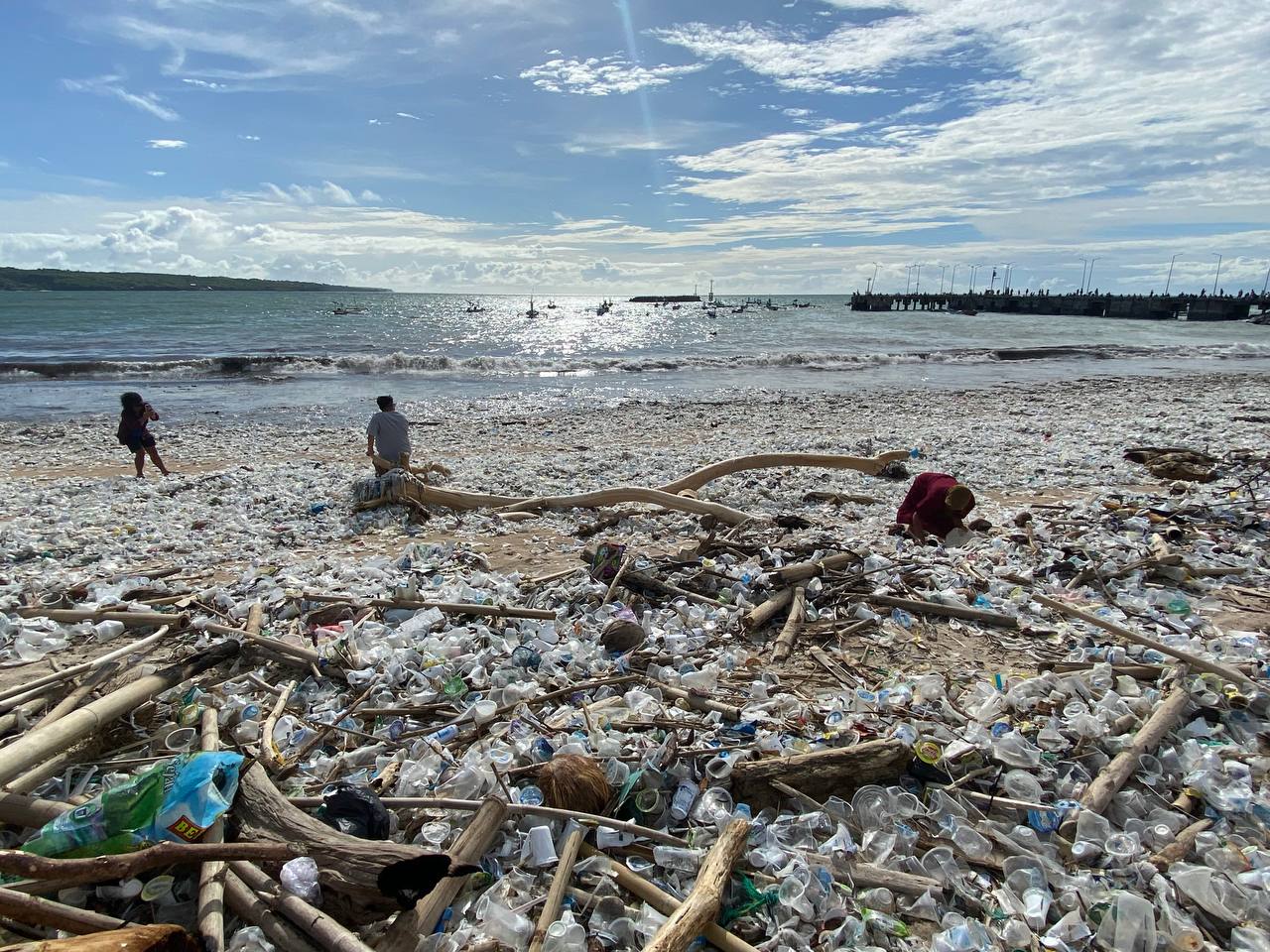
    Somewhere deep in the Banda Sea, on a small island called Rhun, women gather every Friday to clean the beach. The white sand glistens under the tropical sun, but it’s often hidden beneath heaps of plastic bottles, snack wrappers, and fragments of old fishing nets. For Masnah Le Empe and the other women of Raudatul Jannah Waste Bank, this isn’t just community service—it’s survival.

    Plastic pollution has quietly invaded the remote, fragile beauty of Indonesia’s small islands. And Rhun is just one of thousands caught in the tide.

    The Coral Triangle Under Siege

    Indonesia sits at the heart of the Coral Triangle, a region hailed as the “Amazon of the Sea.” It stretches across six countries—Indonesia, Malaysia, Papua New Guinea, the Philippines, Solomon Islands, and Timor-Leste—and contains 76% of the world’s coral species and 37% of reef fish species. It’s a marine biodiversity hotspot and home to over 130 million people who depend on the ocean for food and income.

    But now, plastic waste is suffocating this vital ecosystem.

    According to a joint report by WWF and the Coral Triangle Initiative on Coral Reefs, Fisheries, and Food Security (CTI-CFF), between 2.2 and 5.9 million tons of plastic enter the sea from these six countries every single year. Most of it comes from land-based sources—unmanaged household waste, tourism debris, and infrastructure gaps in waste collection.

    SEE ALSO  Are Nepal’s Gen Z Protests Inspired by Indonesia?

    The Cost of Isolation

    Small islands like Rhun face a double-edged problem. First, they generate their own plastic waste, often with limited means to process or remove it. Second, ocean currents carry trash from other areas onto their shores.

    Masnah and her team sort plastic trash into two piles: dirty waste, which can’t be recycled, and clean waste, which is sent to Surabaya via Banda Neira for recycling. But shipping costs are high, and infrastructure is minimal. On a busy week, they can collect up to 300 kg of dirty plastic and 150 kg of clean plastic per day.

    Now imagine scaling that effort across the 17,000+ islands of Indonesia.

    A Looming Crisis

    A staggering 13 million tons of plastic end up in the ocean globally each year. Without major intervention, this could double by 2040. In the Coral Triangle, poor waste management systems, inadequate recycling infrastructure, and weak regulatory frameworks make it nearly impossible to stem the tide.

    More worrying is the impact on marine ecosystems. Coral reefs die when smothered by plastic, blocking sunlight and introducing toxins. Sea creatures, from fish to turtles, often ingest plastic particles—microplastics have even been found inside endangered species.

    A Turning Point: The Bali Declaration

    In July 2025, environmental leaders from the Coral Triangle nations met in Bali. Their goal? Draft a comprehensive, long-term strategy to stop the ocean from turning into a plastic soup.

    SEE ALSO  Unbreakable Survivor: Meet the African Lungfish That Can Live Without Water for Up to 4 Years

    This effort is part of RPOA 2.0, the updated Regional Plan of Action under CTI-CFF. The strategy moves away from reactionary cleanup efforts and focuses on prevention through systemic change.

    According to Frank Keith Griffin, Executive Director of CTI-CFF, each country will tailor the regional strategy to national plans. The aim is to transition from a linear to a circular economy, where products are reused, recycled, and repurposed—not dumped.

    Research suggests this shift could prevent up to 5.9 million tons of plastic from entering the ocean each year, just from Coral Triangle nations.

    What Does a Circular Economy Look Like?

    A circular economy isn’t just about recycling. It involves redesigning products, investing in local waste management systems, and creating economic incentives for communities.

    Klaas Jan Teule, WWF’s Coral Triangle Programme Leader, emphasizes practical solutions for small islands:

    • Investment in local recycling and sorting facilities
    • Boat fleets to transport sorted waste from island to mainland
    • Public-private partnerships to support the market for recycled plastic

    “Solutions must be adapted to local needs,” he notes. “What works in Nusa Penida might not work in Pulau Rhun.”

    Community Power: The Role of Women

    The Bali strategy also recognizes the key role of women in waste management. From sorting plastic to raising awareness in their communities, women often lead grassroots sustainability movements.

    SEE ALSO  6 Best Places to See Dolphins in Indonesia – You Can Even Swim With Them!

    Rili Djohani, Executive Director of Coral Triangle Center, praises initiatives like the one in Pulau Rhun. “These women are the frontliners. If we empower them with tools and support, we could see real change—maybe even a plastic-free island.”

    The Challenges Ahead

    Despite the optimism, challenges remain.

    In places like Nusa Penida, a popular tourist island, waste generation far outpaces management capacity. High transport costs, inconsistent funding, and lack of coordination between government and NGOs slow progress. Djohani believes dedicated waste boats could help solve the logistics problem—but they require investment.

    Then there’s the behavioral challenge. Plastic consumption continues to rise, fueled by tourism and consumer habits. Education, policy enforcement, and market alternatives (like reusable packaging) must work in tandem to reverse the trend.

    Can We Really See a Plastic-Free Future?

    Foto: CTC-WWF

    A plastic-free island might seem like a utopian dream. But with coordinated action, it’s not impossible.

    The ten-year roadmap laid out by CTI-CFF and WWF aims to support coastal communities, tourist hubs, and marine conservation zones—all of which are on the frontline of plastic pollution. This includes:

    • Policy harmonization among nations
    • Technology transfer and capacity building
    • Funding access for local projects
    • Cross-sector collaboration, including businesses and local governments

    In the meantime, islands like Rhun and the women of Raudatul Jannah will keep doing their part—one plastic bottle at a time.

    circular economy coral triangle CTI-CFF Indonesia marine pollution island resilience ocean cleanup plastic waste small islands sustainable tourism waste management WWF
    Share. Facebook Twitter Pinterest LinkedIn Tumblr Email
    Previous ArticleBeware: These Common Garden Plants Might Attract Snakes to Your Home
    Next Article Disconnected by Choice: Inside Indonesia’s Remote Tribes Who Live Without the Internet
    Editor Desk
    • Website

    Related Posts

    Economy

    Indonesia’s National Nutrition Agency Leadership Change Draws International Attention

    By Editor DeskJune 3, 2026
    Don't Miss

    Indonesia’s Biodiesel Shift: B50 Plan Put on Hold, Raising Questions for Global Palm Oil Markets

    By Editor DeskJanuary 14, 2026
    Disaster & Environment

    Elephants Help Clear Wooden Debris After Aceh Disaster

    By Editor DeskDecember 27, 2025
    Don't Miss

    Know the Types of Snakes in the Wild & What to Do If You Get Bitten

    By Editor DeskDecember 27, 2025
    Digital Life

    Gen Z in Indonesia and the Global “Escape Culture”: Why Many Are Saying #KaburAjaDulu

    By Editor DeskOctober 20, 2025
    Agriculture

    The Export of Indonesian Specialty Products: How Local Ingredients Are Becoming Global Brands

    By Editor DeskOctober 20, 2025
    Add A Comment
    Leave A Reply Cancel Reply

    Don't Miss

    Indonesia’s National Nutrition Agency Leadership Change Draws International Attention

    By Editor DeskJune 3, 2026

    Indonesia has attracted international attention following a recent leadership change at the National Nutrition Agency,…

    Indonesia’s Biodiesel Shift: B50 Plan Put on Hold, Raising Questions for Global Palm Oil Markets

    January 14, 2026

    Elephants Help Clear Wooden Debris After Aceh Disaster

    December 27, 2025

    Know the Types of Snakes in the Wild & What to Do If You Get Bitten

    December 27, 2025
    Top Posts

    Indonesia’s National Nutrition Agency Leadership Change Draws International Attention

    June 3, 2026

    Experience the Charm of Labuan Bajo’s Pinisi Boat Right Here in Lampung: Discover the Legendary Maritime Heritage of Indonesia

    June 30, 2025

    Must-Know: 5 Traditional Dances from Lampung You’ll Often Encounter

    June 30, 2025

    What to Do When You See a Snake: A Practical Guide for Everyday Life in Sumatra

    June 30, 2025
    Stay In Touch
    • Facebook
    • Twitter
    • Instagram
    • YouTube
    About Us
    About Us

    Saibumi International brings authentic stories, cultural depth, and off-the-radar destinations from Indonesia and the wider Asian region — crafted for readers who want more than surface-level travel and headlines.

    Facebook X (Twitter) YouTube Reddit
    Our Picks

    Indonesia’s National Nutrition Agency Leadership Change Draws International Attention

    June 3, 2026

    Indonesia’s Biodiesel Shift: B50 Plan Put on Hold, Raising Questions for Global Palm Oil Markets

    January 14, 2026

    Elephants Help Clear Wooden Debris After Aceh Disaster

    December 27, 2025
    Most Popular

    Indonesia’s National Nutrition Agency Leadership Change Draws International Attention

    June 3, 2026

    Experience the Charm of Labuan Bajo’s Pinisi Boat Right Here in Lampung: Discover the Legendary Maritime Heritage of Indonesia

    June 30, 2025

    Must-Know: 5 Traditional Dances from Lampung You’ll Often Encounter

    June 30, 2025
    • Home
    • About Us
    • Advertise
    • Contact Us
    © 2026 Saibumi International. SEO & Web by Dkonten Studio

    Type above and press Enter to search. Press Esc to cancel.