

Close Menu
Saibumi | Uncovering Asia, One Story at a Time
    What's Hot

    Indonesia’s National Nutrition Agency Leadership Change Draws International Attention

    June 3, 2026

    Indonesia’s Biodiesel Shift: B50 Plan Put on Hold, Raising Questions for Global Palm Oil Markets

    January 14, 2026

    Elephants Help Clear Wooden Debris After Aceh Disaster

    December 27, 2025
    Facebook X (Twitter) Instagram
    Saibumi | Uncovering Asia, One Story at a TimeSaibumi | Uncovering Asia, One Story at a Time
    • About Us
    • Contact Us
    • Advertise
    Facebook X (Twitter) Instagram YouTube LinkedIn Reddit
    • Home
    • Stories

      The Global Plastic Treaty Fails Again – What Does It Mean for the Planet?

      August 27, 2025

      Puru Kambera Savanna: Tracing the Wild Horses of East Sumba

      August 25, 2025

      West Sumatra Emerges as a Leading Muslim-Friendly Travel Destination

      August 24, 2025

      Tabola Bale Song: The Viral Music Blend From Eastern Indonesia

      August 20, 2025

      Tanjung Karang Beach: An Underwater Paradise in Donggala

      August 20, 2025
    • Travel

      Know the Types of Snakes in the Wild & What to Do If You Get Bitten

      December 27, 2025

      Thailand Named the Best Food Country in the World 2025 — Beating Italy and Japan

      October 14, 2025

      Dieng Plateau Officially Designated as Indonesia’s Newest National Geopark

      September 29, 2025

      The Culture of Souvenirs: How Indonesians Strengthen Workplace Relationships Through Oleh-oleh

      September 29, 2025

      6 Best Coffee Shops in Asia – And Yes, One of Them Is in Indonesia!

      September 28, 2025
    • Culture
    • Lifestyle
      1. Food & Culture
      2. Green Living
      3. Local Life
      4. Modern Living
      5. People & Inspiration
      6. View All

      Gen Z in Indonesia and the Global “Escape Culture”: Why Many Are Saying #KaburAjaDulu

      October 20, 2025

      The Export of Indonesian Specialty Products: How Local Ingredients Are Becoming Global Brands

      October 20, 2025

      From Training to Takeoff: MKP’s Approach to Responsible Worker Preparation

      October 18, 2025

      Thailand Named the Best Food Country in the World 2025 — Beating Italy and Japan

      October 14, 2025

      List of Plants That Attract and Repel Snakes Around the House

      October 20, 2025

      Bird-Friendly Coffee in Lampung: Wild Birds Help Farmers Control Pests Naturally

      September 23, 2025

      Standing Still Like a Stick: How Tree Snakes Outsmart Predators with Vertical Sleep

      July 17, 2025

      Not a Cat, Not a Snake — Meet the Plant That Can Eat Rats

      July 12, 2025

      #KaburAjaDulu: When Young Indonesians Feel Like Escaping Is the Only Way to Survive

      October 9, 2025

      The Culture of Souvenirs: How Indonesians Strengthen Workplace Relationships Through Oleh-oleh

      September 29, 2025

      How Remote Work and Digitalization Are Transforming Indonesian Work Culture

      September 28, 2025

      Staying Healthy in Unpredictable Weather: Indonesian Habits the World Can Learn From

      September 21, 2025

      Gen Z in Indonesia and the Global “Escape Culture”: Why Many Are Saying #KaburAjaDulu

      October 20, 2025

      Indonesia’s Beauty Industry Is Having a Major Glow-Up

      July 1, 2025

      Why Indonesian Coffee Is the Next Big Thing Among Global Freelancers

      June 30, 2025

      The Culture of Souvenirs: How Indonesians Strengthen Workplace Relationships Through Oleh-oleh

      September 29, 2025

      The Indonesian Work Culture: Harmony and Gotong Royong in Action

      September 16, 2025

      Southeast Asian Solidarity: Citizens Rally Behind Indonesian Protesters Amid Police Violence

      September 6, 2025

      What Germans Can Learn from the Philosophy of Gotong Royong

      July 16, 2025

      Gen Z in Indonesia and the Global “Escape Culture”: Why Many Are Saying #KaburAjaDulu

      October 20, 2025

      #KaburAjaDulu: When Young Indonesians Feel Like Escaping Is the Only Way to Survive

      October 9, 2025

      The Indonesian Work Ethic: Why Global Teams Trust Indonesian Professionals

      October 2, 2025

      Why Indonesian Talents Are the Best Choice for Global Companies

      October 2, 2025
    • Local Business
    Subscribe
    Saibumi | Uncovering Asia, One Story at a Time
    Home » Es Pisang Ijo: The Iconic Makassar Dessert Packed with History
    Don't Miss

    Es Pisang Ijo: The Iconic Makassar Dessert Packed with History

    Editor DeskBy Editor DeskAugust 15, 2025Updated:August 15, 2025No Comments7 Mins Read
    Facebook Twitter Pinterest LinkedIn Tumblr Email
    Ist
    Share
    Facebook Twitter LinkedIn Pinterest Email Copy Link

    When the dry season hits and the sun seems to have a personal vendetta against you, there’s nothing more refreshing than a cold dessert. But if you’re looking for something more than just a drink — something sweet, icy, and filling — Es Pisang Ijo is the way to go. This beloved Indonesian treat combines soft sweetness, chewy textures, and ice-cold freshness in every spoonful.

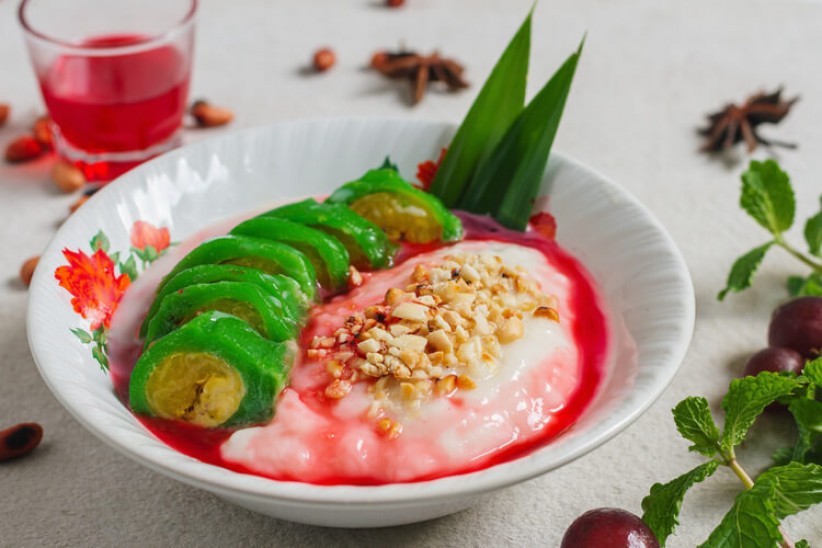
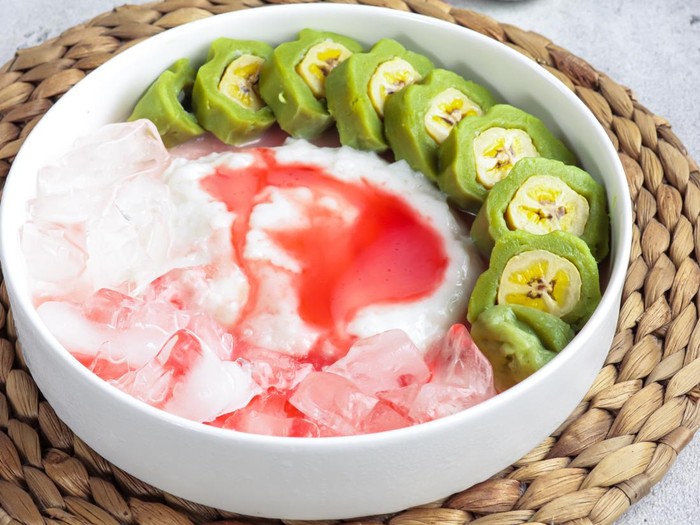
    Originating from Makassar, the capital city of South Sulawesi, Es Pisang Ijo is a dessert that’s as rich in flavor as it is in history. At its core, it’s made from ripe bananas — usually pisang raja, pisang ambon, or pisang kepok — wrapped in a soft green dough made from rice flour, coconut milk, and pandan leaf extract. That signature green color and fragrant aroma come from the pandan leaves, which are widely used in Southeast Asian cooking.

    The banana parcel is then served with chewy white porridge made from boiled wheat flour (or sometimes bubur sum-sum, a coconut milk-based rice flour pudding). But what truly makes it pop is the drizzle of bright red syrup — a Makassar specialty — and a generous splash of sweetened condensed milk. To finish, a heap of shaved ice or small ice cubes is added, turning it into the ultimate tropical refreshment.

    Although it looks simple, Es Pisang Ijo delivers a perfect blend of flavors and textures: sweet, creamy, chewy, icy, and aromatic. It’s often served in a wide bowl or shallow plate, and in Makassar, it’s not unusual to enjoy it alongside snacks like jalangkote (a fried pastry similar to an empanada) or spring rolls. It’s comfort food with a tropical twist.


    The Story Behind the Banana

    Like many traditional dishes, the origins of Es Pisang Ijo are a bit hazy. There’s no concrete historical record or mention of it in old lontara manuscripts of South Sulawesi. What we do know is that its main ingredient — the banana — has been part of Southeast Asian life for thousands of years.

    In their book Pisang: Budi Daya, Pengolahan, dan Prospek Pasar (“Banana: Cultivation, Processing, and Market Prospects”), authors Suyanti and Ahmad Supriyadi note that bananas have been around since the dawn of human civilization. Back then, they grew wild and were not yet cultivated. Cultivation began only when human societies shifted from nomadic life to settled agriculture.

    SEE ALSO  Discover Bali Through Its Food: Ayam Betutu, Lawar, Sate Lilit, and More

    In Southeast Asia, bananas were more than just a snack. People used nearly every part of the plant: the fruit, the shoots, and even the trunk and leaves. Today, Indonesia is one of the largest banana producers in the world. In Java, the biggest production areas are West Java, East Java, and Central Java. Outside Java, South Sulawesi takes the crown.

    Bananas are consumed in countless ways: eaten raw, fried, boiled, grilled, or, in this case, wrapped in pandan dough and served over ice. But there’s a key question: how did ice — an equally important component of Es Pisang Ijo — make its way into the Indonesian culinary scene?


    From Boston to Batavia: How Ice Arrived in Indonesia

    The earliest record of ice consumption in Indonesia comes from a French traveler named Delmas, who visited Batavia (now Jakarta) in 1895. In Nusa Jawa Silang Budaya 2: Jaringan Asia, historian Denys Lombard cites Delmas’s experience drinking “a large glass of cider-champagne, a delicious drink made from local fruits, ice, and soda.”

    At that time, ice was a luxury item, affordable only to wealthy families in Batavia. It was expensive because it had to be imported from faraway places — including Boston, USA. Imagine that: ice shipped across the world to the tropics, long before refrigeration was common.

    The game changed when European entrepreneurs began building ice factories in Java. This made ice more accessible, though still somewhat exclusive. The Chinese-Indonesian community also played a big role in spreading ice production. One notable figure, Kwa Wan Hong of Semarang, established three ice factories in Semarang, Tegal, and Pekalongan during the 1910s.


    Ice Meets Makassar
    So how did ice make its way to Makassar? The answer lies in trade. Since the 17th century, Makassar had been connected to Java through a vibrant maritime trading network. This relationship grew even stronger in the late 19th and early 20th centuries, especially when the Dutch colonial government declared Makassar a free port.

    SEE ALSO  “Dang” Mobile Padang Rice: Menu, Prices, and Unique Location

    During this period, the Koninklijke Paketvaart Maatschappij (KPM), or Royal Dutch Shipping Company, dominated inter-island trade routes. With its powerful fleet, KPM made it easy to transport goods — including ice — between Makassar and other major ports in Indonesia.

    The arrival of ice in Makassar likely inspired local food vendors to experiment with new dessert ideas. According to Taufik, a native Makassar Es Pisang Ijo vendor, the dessert wasn’t always as delicious as it is today. In the past, the sauce was made from rice flour and coconut milk, which tasted rather bland. Over time, the recipe evolved: cornstarch replaced rice flour for a smoother texture, and the sweet red syrup became a standard topping.


    More Than Just a Dessert

    Makassar’s relationship with bananas goes beyond food. Bananas appear frequently in old lontara manuscripts and oral traditions, often carrying symbolic meaning. In local culture, the banana tree is seen as a metaphor for resilience and generosity — qualities valued in Makassarese society.

    One local proverb reflects the philosophy of ilmu ta’bang untia, or “the knowledge of a long life.” It says that even when a banana tree is cut down, it continues to grow and eventually bear fruit. In other words, even in hardship, one should continue giving and thriving.

    This cultural connection makes Es Pisang Ijo more than just a refreshing snack. It’s a representation of local heritage — a fusion of agricultural history, colonial trade influence, and culinary creativity.


    Where to Try Es Pisang Ijo in Makassar

    Today, Es Pisang Ijo is a staple in Makassar’s culinary scene. You can find it everywhere, from humble street stalls to high-end hotel restaurants. Some of the most famous spots include:

    • Warung Bravo – Often hailed as the best place for Es Pisang Ijo in Makassar.
    • Kios La Galigo – A classic stop for locals and tourists alike.
    • Rumah Makan Muda Mudi – Serving Es Pisang Ijo alongside traditional Makassarese dishes.
    • Warung Raja Pisang Ijo – Known for their generous portions and perfectly balanced sweetness.
    SEE ALSO  Living with Tigers: The Semende People, Forests, and the Struggle for Harmony in South Sumatra

    The dessert’s popularity has spread far beyond South Sulawesi. Today, you can find it in major cities across Indonesia, from Jakarta to Surabaya, often with slight variations to suit local tastes.


    How to Make Es Pisang Ijo at Home

    The good news? You don’t have to fly to Makassar to enjoy Es Pisang Ijo. The ingredients are widely available in Asian grocery stores, and the preparation is surprisingly simple.

    You’ll need:

    • Ripe bananas (pisang raja if you can find them)
    • Rice flour
    • Coconut milk
    • Pandan leaf juice or pandan extract
    • Cornstarch (for the sauce)
    • Sweetened condensed milk
    • Makassar-style red syrup (you can substitute with rose syrup)
    • Shaved ice or crushed ice

    Basic steps:

    1. Make the green dough by mixing rice flour, coconut milk, and pandan juice. Steam it until pliable.
    2. Wrap each banana in the dough, then steam again until cooked through.
    3. Prepare the sauce by cooking cornstarch with coconut milk until thick.
    4. Slice the wrapped bananas, arrange them in a bowl, pour the sauce, drizzle with red syrup and condensed milk, and top with ice.

    The result? A taste of Makassar in your own kitchen.


    Why You’ll Love Es Pisang Ijo

    Es Pisang Ijo is more than just a dessert. It’s a sensory journey — the aroma of pandan, the creamy richness of coconut milk, the chill of the ice, and the sweet burst of syrup all come together to create something magical. It’s also a slice of Indonesian history, with each bite telling a story of agricultural heritage, colonial trade routes, and local ingenuity.

    So the next time the heat is unbearable and you’re craving something special, remember Es Pisang Ijo. Whether you try it in Makassar, order it in another Indonesian city, or make it at home, you’re not just enjoying a sweet treat — you’re savoring a piece of Makassar’s cultural soul.

    banana pandan recipe Es Pisang Ijo Indonesian desserts Indonesian shaved ice Indonesian street food Makassar culinary heritage Makassar dessert Makassar food culture pandan banana dessert pandan dessert recipe shaved ice dessert Indonesia South Sulawesi food traditional Indonesian sweets traditional Makassar food tropical dessert Indonesia
    Share. Facebook Twitter Pinterest LinkedIn Tumblr Email
    Previous ArticleGorontalo Tuna Satay – Ocean Freshness Wrapped in Spices
    Next Article Tiwul: From Crisis-Era Staple to Beloved Traditional Snack
    Editor Desk
    • Website

    Related Posts

    Economy

    Indonesia’s National Nutrition Agency Leadership Change Draws International Attention

    By Editor DeskJune 3, 2026
    Don't Miss

    Indonesia’s Biodiesel Shift: B50 Plan Put on Hold, Raising Questions for Global Palm Oil Markets

    By Editor DeskJanuary 14, 2026
    Disaster & Environment

    Elephants Help Clear Wooden Debris After Aceh Disaster

    By Editor DeskDecember 27, 2025
    Don't Miss

    Know the Types of Snakes in the Wild & What to Do If You Get Bitten

    By Editor DeskDecember 27, 2025
    Digital Life

    Gen Z in Indonesia and the Global “Escape Culture”: Why Many Are Saying #KaburAjaDulu

    By Editor DeskOctober 20, 2025
    Agriculture

    The Export of Indonesian Specialty Products: How Local Ingredients Are Becoming Global Brands

    By Editor DeskOctober 20, 2025
    Add A Comment
    Leave A Reply Cancel Reply

    Don't Miss

    Indonesia’s National Nutrition Agency Leadership Change Draws International Attention

    By Editor DeskJune 3, 2026

    Indonesia has attracted international attention following a recent leadership change at the National Nutrition Agency,…

    Indonesia’s Biodiesel Shift: B50 Plan Put on Hold, Raising Questions for Global Palm Oil Markets

    January 14, 2026

    Elephants Help Clear Wooden Debris After Aceh Disaster

    December 27, 2025

    Know the Types of Snakes in the Wild & What to Do If You Get Bitten

    December 27, 2025
    Top Posts

    Indonesia’s National Nutrition Agency Leadership Change Draws International Attention

    June 3, 2026

    Experience the Charm of Labuan Bajo’s Pinisi Boat Right Here in Lampung: Discover the Legendary Maritime Heritage of Indonesia

    June 30, 2025

    Must-Know: 5 Traditional Dances from Lampung You’ll Often Encounter

    June 30, 2025

    What to Do When You See a Snake: A Practical Guide for Everyday Life in Sumatra

    June 30, 2025
    Stay In Touch
    • Facebook
    • Twitter
    • Instagram
    • YouTube
    About Us
    About Us

    Saibumi International brings authentic stories, cultural depth, and off-the-radar destinations from Indonesia and the wider Asian region — crafted for readers who want more than surface-level travel and headlines.

    Facebook X (Twitter) YouTube Reddit
    Our Picks

    Indonesia’s National Nutrition Agency Leadership Change Draws International Attention

    June 3, 2026

    Indonesia’s Biodiesel Shift: B50 Plan Put on Hold, Raising Questions for Global Palm Oil Markets

    January 14, 2026

    Elephants Help Clear Wooden Debris After Aceh Disaster

    December 27, 2025
    Most Popular

    Indonesia’s National Nutrition Agency Leadership Change Draws International Attention

    June 3, 2026

    Experience the Charm of Labuan Bajo’s Pinisi Boat Right Here in Lampung: Discover the Legendary Maritime Heritage of Indonesia

    June 30, 2025

    Must-Know: 5 Traditional Dances from Lampung You’ll Often Encounter

    June 30, 2025
    • Home
    • About Us
    • Advertise
    • Contact Us
    © 2026 Saibumi International. SEO & Web by Dkonten Studio

    Type above and press Enter to search. Press Esc to cancel.