

Close Menu
Saibumi | Uncovering Asia, One Story at a Time
    What's Hot

    Indonesia’s National Nutrition Agency Leadership Change Draws International Attention

    June 3, 2026

    Indonesia’s Biodiesel Shift: B50 Plan Put on Hold, Raising Questions for Global Palm Oil Markets

    January 14, 2026

    Elephants Help Clear Wooden Debris After Aceh Disaster

    December 27, 2025
    Facebook X (Twitter) Instagram
    Saibumi | Uncovering Asia, One Story at a TimeSaibumi | Uncovering Asia, One Story at a Time
    • About Us
    • Contact Us
    • Advertise
    Facebook X (Twitter) Instagram YouTube LinkedIn Reddit
    • Home
    • Stories

      The Global Plastic Treaty Fails Again – What Does It Mean for the Planet?

      August 27, 2025

      Puru Kambera Savanna: Tracing the Wild Horses of East Sumba

      August 25, 2025

      West Sumatra Emerges as a Leading Muslim-Friendly Travel Destination

      August 24, 2025

      Tabola Bale Song: The Viral Music Blend From Eastern Indonesia

      August 20, 2025

      Tanjung Karang Beach: An Underwater Paradise in Donggala

      August 20, 2025
    • Travel

      Know the Types of Snakes in the Wild & What to Do If You Get Bitten

      December 27, 2025

      Thailand Named the Best Food Country in the World 2025 — Beating Italy and Japan

      October 14, 2025

      Dieng Plateau Officially Designated as Indonesia’s Newest National Geopark

      September 29, 2025

      The Culture of Souvenirs: How Indonesians Strengthen Workplace Relationships Through Oleh-oleh

      September 29, 2025

      6 Best Coffee Shops in Asia – And Yes, One of Them Is in Indonesia!

      September 28, 2025
    • Culture
    • Lifestyle
      1. Food & Culture
      2. Green Living
      3. Local Life
      4. Modern Living
      5. People & Inspiration
      6. View All

      Gen Z in Indonesia and the Global “Escape Culture”: Why Many Are Saying #KaburAjaDulu

      October 20, 2025

      The Export of Indonesian Specialty Products: How Local Ingredients Are Becoming Global Brands

      October 20, 2025

      From Training to Takeoff: MKP’s Approach to Responsible Worker Preparation

      October 18, 2025

      Thailand Named the Best Food Country in the World 2025 — Beating Italy and Japan

      October 14, 2025

      List of Plants That Attract and Repel Snakes Around the House

      October 20, 2025

      Bird-Friendly Coffee in Lampung: Wild Birds Help Farmers Control Pests Naturally

      September 23, 2025

      Standing Still Like a Stick: How Tree Snakes Outsmart Predators with Vertical Sleep

      July 17, 2025

      Not a Cat, Not a Snake — Meet the Plant That Can Eat Rats

      July 12, 2025

      #KaburAjaDulu: When Young Indonesians Feel Like Escaping Is the Only Way to Survive

      October 9, 2025

      The Culture of Souvenirs: How Indonesians Strengthen Workplace Relationships Through Oleh-oleh

      September 29, 2025

      How Remote Work and Digitalization Are Transforming Indonesian Work Culture

      September 28, 2025

      Staying Healthy in Unpredictable Weather: Indonesian Habits the World Can Learn From

      September 21, 2025

      Gen Z in Indonesia and the Global “Escape Culture”: Why Many Are Saying #KaburAjaDulu

      October 20, 2025

      Indonesia’s Beauty Industry Is Having a Major Glow-Up

      July 1, 2025

      Why Indonesian Coffee Is the Next Big Thing Among Global Freelancers

      June 30, 2025

      The Culture of Souvenirs: How Indonesians Strengthen Workplace Relationships Through Oleh-oleh

      September 29, 2025

      The Indonesian Work Culture: Harmony and Gotong Royong in Action

      September 16, 2025

      Southeast Asian Solidarity: Citizens Rally Behind Indonesian Protesters Amid Police Violence

      September 6, 2025

      What Germans Can Learn from the Philosophy of Gotong Royong

      July 16, 2025

      Gen Z in Indonesia and the Global “Escape Culture”: Why Many Are Saying #KaburAjaDulu

      October 20, 2025

      #KaburAjaDulu: When Young Indonesians Feel Like Escaping Is the Only Way to Survive

      October 9, 2025

      The Indonesian Work Ethic: Why Global Teams Trust Indonesian Professionals

      October 2, 2025

      Why Indonesian Talents Are the Best Choice for Global Companies

      October 2, 2025
    • Local Business
    Subscribe
    Saibumi | Uncovering Asia, One Story at a Time
    Home » The Timeless Wisdom Behind the Sago Caterpillar Festival Dance of the Asmat Tribe
    Culture

    The Timeless Wisdom Behind the Sago Caterpillar Festival Dance of the Asmat Tribe

    Editor DeskBy Editor DeskAugust 14, 2025Updated:August 14, 2025No Comments8 Mins Read
    Facebook Twitter Pinterest LinkedIn Tumblr Email
    Foto : indonesiakaya.com
    Share
    Facebook Twitter LinkedIn Pinterest Email Copy Link

    Introduction: A Dance Rooted in Gratitude

    In the far-flung southern coast of Papua, Indonesia, life moves to a rhythm entirely its own. Towering sago palms sway gently above vast wetlands, rivers snake through dense forests, and traditions remain deeply rooted in the heart of the people. Here lives the Asmat tribe — one of Papua’s most renowned indigenous groups — known globally for their intricate wood carvings, warrior spirit, and deep respect for nature.

    Among their many traditions, one stands out not for its ferocity or spectacle, but for its deep sense of gratitude: the Sago Caterpillar Festival Dance. It is not a performance designed to impress tourists, nor a battle reenactment meant to glorify past conquests. Instead, it’s a heartfelt celebration of life’s most essential gift — food, in the form of sago.


    Sago: The Lifeblood of Papua

    To understand this dance, you first have to understand sago. In many parts of Indonesia, rice is the unquestioned staple. In Europe and the Americas, it’s wheat. But in Papua, the beating heart of the diet comes from the towering sago palm.

    The process of making sago is laborious. The trunk of the mature palm is felled, split open, and its pith scraped out. This pith is then washed and filtered, producing a soft, white starch — a versatile carbohydrate source that can be steamed, baked, or mixed into soups.

    For the Asmat people, sago isn’t just food. It is the foundation of life itself. Without it, communities cannot survive. Its harvest is as vital as the air they breathe. And so, it is no surprise that the Asmat have an entire ceremonial dance dedicated to giving thanks for this blessing from nature.


    Setting the Stage for the Festival
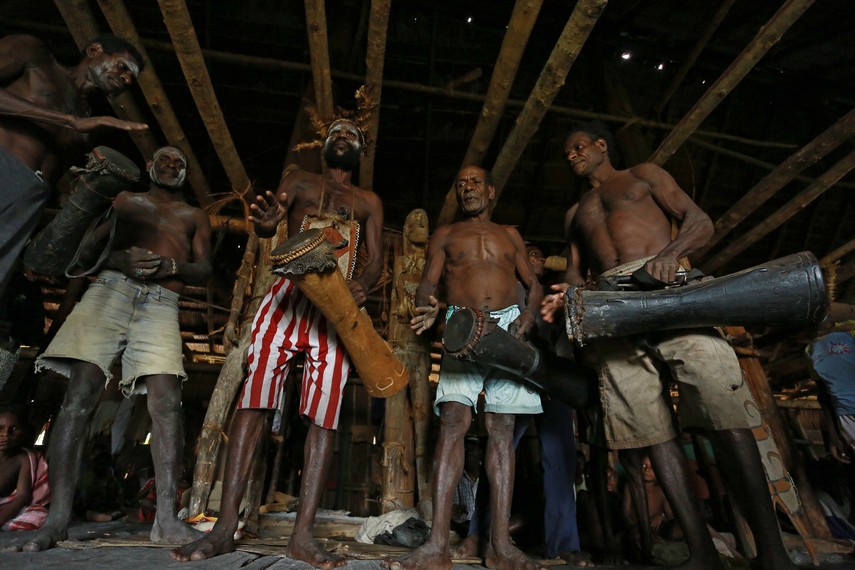
    Foto : indonesiakaya.com

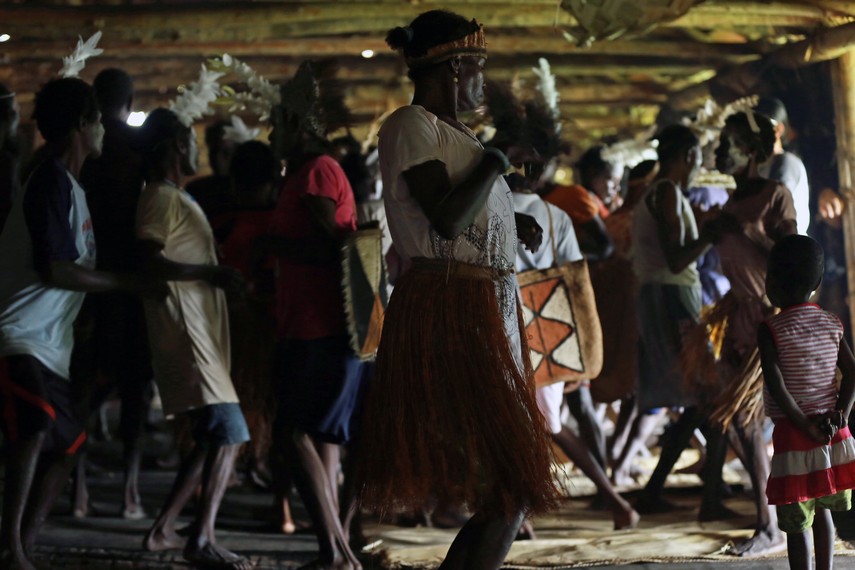
    The Sago Caterpillar Festival Dance is not a casual occurrence. It is tied to the harvest seasons, usually performed before and after the sago harvest. The ritual’s purpose is simple yet profound: to thank God and the spirits of nature for their generosity, and to ensure continued abundance.

    Preparation begins early. Women — the central figures in this dance — adorn themselves with unique traditional cosmetics. Using a white pigment made from crushed river shell lime, they paint intricate patterns on their faces and bodies. These designs are more than decoration; they are symbols of beauty, identity, and spiritual readiness.

    SEE ALSO  Dragon Fruit Export from Indonesia: A Golden Opportunity in the Global Fruit Market

    Some wear majestic headpieces crafted from cassowary feathers, adding a regal touch to their appearance. While many still wear modern T-shirts and shorts in everyday life, some women shed these for the ceremony, baring their upper bodies in a return to traditional attire, embracing the customs passed down from their grandmothers.


    Why the Dance Belongs to the Women

    In Asmat culture, gender roles are deeply ingrained. Men are the hunters, warriors, and woodcarvers — crafting the intricate shields and canoes for which the Asmat are famous. Women, on the other hand, are the gatherers, farmers, and food preparers.

    It is the women who process sago, who dig for tubers, who collect edible plants and shellfish. Thus, when it comes to giving thanks for food, it is only fitting that they take the lead. The Sago Caterpillar Festival Dance is exclusively theirs — a sacred right and responsibility.


    The Ceremony Unfolds

    Foto : indonesiakaya.com

    As the sun begins to dip, the community gathers around the Jew, the traditional Asmat men’s house that also serves as a ceremonial space.

    Fifty to sixty women assemble in neat rows in the open yard. Around them, men take up positions — some seated in a semi-circle, others gripping tifa (Papuan hand drums) to provide the deep, resonant beat that will guide the dancers.

    The drumming begins softly, accompanied by a chorus of shouts from the tribal elders. These are not random calls; they are chants — blessings, invocations, and expressions of joy. The women respond in kind, their voices blending into a unified, powerful sound.


    The Dance Movements
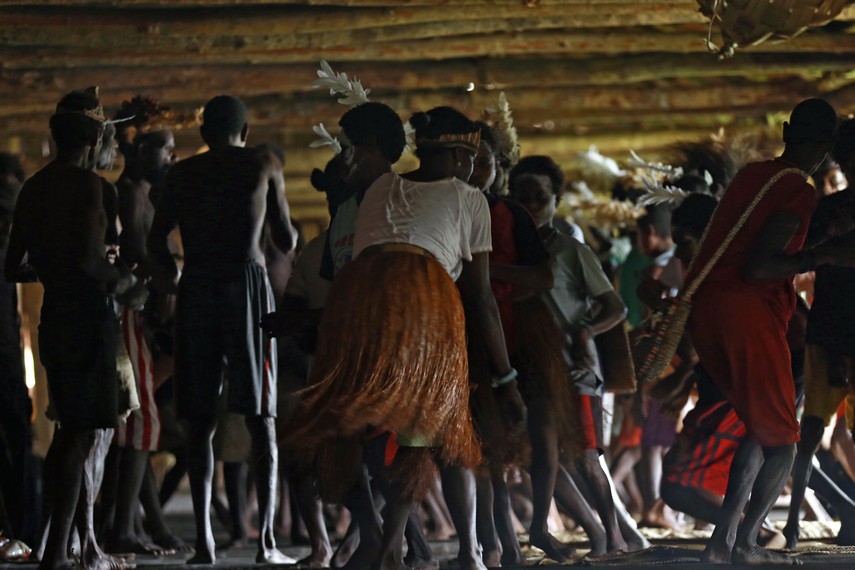
    Foto : indonesiakaya.com

    The rhythm quickens. The women begin to move — hips swaying from side to side in perfect unison, knees bent in a semi-squat. Their movements are deliberate, powerful, and hypnotic.

    Two large groups of dancers face each other. Slowly, they advance, swaying, chanting, and keeping their eyes fixed on the group opposite them. When they meet in the middle, they pass through each other’s ranks, swapping places before the tifa abruptly falls silent.

    One of the drummers then recites a verse of gratitude, a kind of spoken prayer, to which the dancers respond with shouts. The drumming resumes, the dance continues, and this sequence repeats up to five times, depending on the decision of the dance leader — the woman who commands the ritual.

    SEE ALSO  8 Best Surf Spots in Indonesia You Need to Experience

    The Symbolism of the “Caterpillar”

    Why is it called the Sago Caterpillar Festival Dance? The name comes from one of Papua’s most prized delicacies: the fat, protein-rich larvae found in decaying sago trunks. Known locally as ulat sagu, these caterpillars are a seasonal food enjoyed roasted or eaten raw. They are an important protein source in a land where hunting is unpredictable.

    In this dance, the caterpillar is a symbol of abundance — not only of sago itself but of the many other life-giving foods that come from the sago palm. It is a reminder that nature, when respected, provides more than enough for all.


    The Atmosphere: A Sacred Celebration

    While outsiders might see just an energetic performance, for the Asmat, the atmosphere during this dance is charged with sacred energy. The air feels thick with meaning. The pounding drums echo like a heartbeat; the chants swirl like wind through the forest.

    Every sway of the hips, every painted face, every call-and-response chant is an act of reverence. This is gratitude made physical. It is a prayer, not in whispered words, but in movement and song.


    More Than Just a Dance: Cultural Preservation

    In a rapidly globalizing world, traditional practices like the Sago Caterpillar Festival Dance face the risk of fading away. Younger generations often migrate to cities, where the pull of modern life can overshadow tribal customs.

    Yet in the Asmat heartland, elders ensure this dance survives. Girls are taught its steps from a young age, absorbing not only the choreography but also the values it represents: unity, hard work, and respect for the land.

    This is more than cultural preservation — it is the passing down of philosophy. The idea that life is sustained by gratitude, that abundance must be shared, and that humans are part of a greater natural cycle.


    The Global Significance

    Although rooted in the local context of Papua, the values embedded in the Sago Caterpillar Festival Dance resonate far beyond the Asmat world. In an age where food often comes shrink-wrapped in supermarkets and few know the origins of their meals, this dance serves as a reminder of our dependence on nature.

    For travelers and cultural enthusiasts, witnessing this ceremony is not simply “watching a performance.” It is participating in a living tradition, one that has survived countless generations and still speaks powerfully to the human spirit.

    SEE ALSO  The Silent Threat to Indonesia’s Leopard Cats: Illegal Trade and Vanishing Habitats

    Tourism and Cultural Respect

    In recent years, cultural tourism in Papua has grown. Visitors are increasingly drawn to festivals like this, seeking an “authentic” experience. While tourism can bring income and global attention, it must be approached with sensitivity.

    The Sago Caterpillar Festival Dance is not a show for profit — it is a sacred act. Any efforts to include outsiders must respect the wishes of the Asmat people and maintain the ceremony’s original purpose.

    Photographs, for example, should be taken only with permission, and visitors should be prepared to observe quietly, refraining from interrupting the flow of the ritual.


    Lessons from the Dance
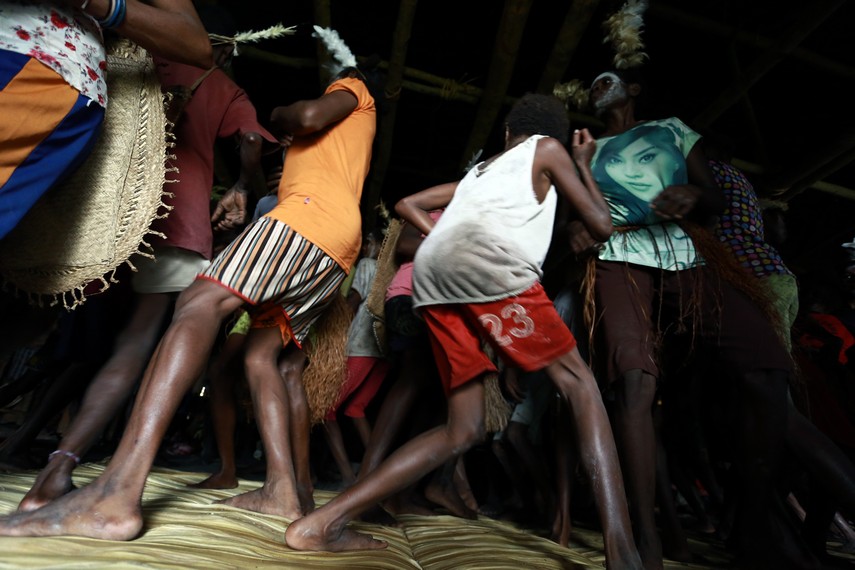
    Foto : indonesiakaya.com

    Beyond its captivating visuals and hypnotic rhythms, the Sago Caterpillar Festival Dance carries timeless lessons:

    1. Gratitude as a Daily Practice
      The Asmat don’t wait for abundance to celebrate; they give thanks before and after each harvest.
    2. The Power of Women in Sustaining Life
      By placing women at the center of the ritual, the community acknowledges their indispensable role in providing food and nurturing life.
    3. Harmony with Nature
      The dance is a living testament to the idea that humans thrive when they respect and work with the natural world.
    4. Community over Individualism
      Every movement, every beat of the drum, is done collectively — no one stands out; all are part of the whole.

    Conclusion: A Legacy Worth Protecting

    The Sago Caterpillar Festival Dance is more than a relic of the past. It is a living, breathing tradition that continues to bind the Asmat people together. It’s a dance of gratitude, of unity, of reverence for the land that sustains them.

    In a world moving faster than ever, perhaps we all could learn from the Asmat — to slow down, to honor the sources of our sustenance, and to remember that life’s simplest gifts are often its most profound.

    The next time you see a dance, think about what stories it tells, what values it carries, and what connections it weaves between past, present, and future. For the Asmat, the Sago Caterpillar Festival Dance is not just performance — it is their history, their prayer, and their promise to the generations yet to come.

    Asmat traditions Asmat tribe cultural preservation Indonesian traditional dance Papua culture Papua tourism Sago Caterpillar Festival Dance sago harvest ritual ulat sagu Papua women-led tribal dance
    Share. Facebook Twitter Pinterest LinkedIn Tumblr Email
    Previous ArticleMerah Putih: One For All Sparks Buzz — 5 Indonesian Animated Films You Shouldn’t Miss
    Next Article Exploring the Beauty of Ora Beach: The Hidden Jewel of Maluku That Rivals the Maldives
    Editor Desk
    • Website

    Related Posts

    Economy

    Indonesia’s National Nutrition Agency Leadership Change Draws International Attention

    By Editor DeskJune 3, 2026
    Don't Miss

    Indonesia’s Biodiesel Shift: B50 Plan Put on Hold, Raising Questions for Global Palm Oil Markets

    By Editor DeskJanuary 14, 2026
    Disaster & Environment

    Elephants Help Clear Wooden Debris After Aceh Disaster

    By Editor DeskDecember 27, 2025
    Don't Miss

    Know the Types of Snakes in the Wild & What to Do If You Get Bitten

    By Editor DeskDecember 27, 2025
    Digital Life

    Gen Z in Indonesia and the Global “Escape Culture”: Why Many Are Saying #KaburAjaDulu

    By Editor DeskOctober 20, 2025
    Agriculture

    The Export of Indonesian Specialty Products: How Local Ingredients Are Becoming Global Brands

    By Editor DeskOctober 20, 2025
    Add A Comment
    Leave A Reply Cancel Reply

    Don't Miss

    Indonesia’s National Nutrition Agency Leadership Change Draws International Attention

    By Editor DeskJune 3, 2026

    Indonesia has attracted international attention following a recent leadership change at the National Nutrition Agency,…

    Indonesia’s Biodiesel Shift: B50 Plan Put on Hold, Raising Questions for Global Palm Oil Markets

    January 14, 2026

    Elephants Help Clear Wooden Debris After Aceh Disaster

    December 27, 2025

    Know the Types of Snakes in the Wild & What to Do If You Get Bitten

    December 27, 2025
    Top Posts

    Indonesia’s National Nutrition Agency Leadership Change Draws International Attention

    June 3, 2026

    Experience the Charm of Labuan Bajo’s Pinisi Boat Right Here in Lampung: Discover the Legendary Maritime Heritage of Indonesia

    June 30, 2025

    Must-Know: 5 Traditional Dances from Lampung You’ll Often Encounter

    June 30, 2025

    What to Do When You See a Snake: A Practical Guide for Everyday Life in Sumatra

    June 30, 2025
    Stay In Touch
    • Facebook
    • Twitter
    • Instagram
    • YouTube
    About Us
    About Us

    Saibumi International brings authentic stories, cultural depth, and off-the-radar destinations from Indonesia and the wider Asian region — crafted for readers who want more than surface-level travel and headlines.

    Facebook X (Twitter) YouTube Reddit
    Our Picks

    Indonesia’s National Nutrition Agency Leadership Change Draws International Attention

    June 3, 2026

    Indonesia’s Biodiesel Shift: B50 Plan Put on Hold, Raising Questions for Global Palm Oil Markets

    January 14, 2026

    Elephants Help Clear Wooden Debris After Aceh Disaster

    December 27, 2025
    Most Popular

    Indonesia’s National Nutrition Agency Leadership Change Draws International Attention

    June 3, 2026

    Experience the Charm of Labuan Bajo’s Pinisi Boat Right Here in Lampung: Discover the Legendary Maritime Heritage of Indonesia

    June 30, 2025

    Must-Know: 5 Traditional Dances from Lampung You’ll Often Encounter

    June 30, 2025
    • Home
    • About Us
    • Advertise
    • Contact Us
    © 2026 Saibumi International. SEO & Web by Dkonten Studio

    Type above and press Enter to search. Press Esc to cancel.