
Close Menu
Saibumi | Uncovering Asia, One Story at a Time
    What's Hot

    Indonesia’s National Nutrition Agency Leadership Change Draws International Attention

    June 3, 2026

    Indonesia’s Biodiesel Shift: B50 Plan Put on Hold, Raising Questions for Global Palm Oil Markets

    January 14, 2026

    Elephants Help Clear Wooden Debris After Aceh Disaster

    December 27, 2025
    Facebook X (Twitter) Instagram
    Saibumi | Uncovering Asia, One Story at a TimeSaibumi | Uncovering Asia, One Story at a Time
    • About Us
    • Contact Us
    • Advertise
    Facebook X (Twitter) Instagram YouTube LinkedIn Reddit
    • Home
    • Stories

      The Global Plastic Treaty Fails Again – What Does It Mean for the Planet?

      August 27, 2025

      Puru Kambera Savanna: Tracing the Wild Horses of East Sumba

      August 25, 2025

      West Sumatra Emerges as a Leading Muslim-Friendly Travel Destination

      August 24, 2025

      Tabola Bale Song: The Viral Music Blend From Eastern Indonesia

      August 20, 2025

      Tanjung Karang Beach: An Underwater Paradise in Donggala

      August 20, 2025
    • Travel

      Know the Types of Snakes in the Wild & What to Do If You Get Bitten

      December 27, 2025

      Thailand Named the Best Food Country in the World 2025 — Beating Italy and Japan

      October 14, 2025

      Dieng Plateau Officially Designated as Indonesia’s Newest National Geopark

      September 29, 2025

      The Culture of Souvenirs: How Indonesians Strengthen Workplace Relationships Through Oleh-oleh

      September 29, 2025

      6 Best Coffee Shops in Asia – And Yes, One of Them Is in Indonesia!

      September 28, 2025
    • Culture
    • Lifestyle
      1. Food & Culture
      2. Green Living
      3. Local Life
      4. Modern Living
      5. People & Inspiration
      6. View All

      Gen Z in Indonesia and the Global “Escape Culture”: Why Many Are Saying #KaburAjaDulu

      October 20, 2025

      The Export of Indonesian Specialty Products: How Local Ingredients Are Becoming Global Brands

      October 20, 2025

      From Training to Takeoff: MKP’s Approach to Responsible Worker Preparation

      October 18, 2025

      Thailand Named the Best Food Country in the World 2025 — Beating Italy and Japan

      October 14, 2025

      List of Plants That Attract and Repel Snakes Around the House

      October 20, 2025

      Bird-Friendly Coffee in Lampung: Wild Birds Help Farmers Control Pests Naturally

      September 23, 2025

      Standing Still Like a Stick: How Tree Snakes Outsmart Predators with Vertical Sleep

      July 17, 2025

      Not a Cat, Not a Snake — Meet the Plant That Can Eat Rats

      July 12, 2025

      #KaburAjaDulu: When Young Indonesians Feel Like Escaping Is the Only Way to Survive

      October 9, 2025

      The Culture of Souvenirs: How Indonesians Strengthen Workplace Relationships Through Oleh-oleh

      September 29, 2025

      How Remote Work and Digitalization Are Transforming Indonesian Work Culture

      September 28, 2025

      Staying Healthy in Unpredictable Weather: Indonesian Habits the World Can Learn From

      September 21, 2025

      Gen Z in Indonesia and the Global “Escape Culture”: Why Many Are Saying #KaburAjaDulu

      October 20, 2025

      Indonesia’s Beauty Industry Is Having a Major Glow-Up

      July 1, 2025

      Why Indonesian Coffee Is the Next Big Thing Among Global Freelancers

      June 30, 2025

      The Culture of Souvenirs: How Indonesians Strengthen Workplace Relationships Through Oleh-oleh

      September 29, 2025

      The Indonesian Work Culture: Harmony and Gotong Royong in Action

      September 16, 2025

      Southeast Asian Solidarity: Citizens Rally Behind Indonesian Protesters Amid Police Violence

      September 6, 2025

      What Germans Can Learn from the Philosophy of Gotong Royong

      July 16, 2025

      Gen Z in Indonesia and the Global “Escape Culture”: Why Many Are Saying #KaburAjaDulu

      October 20, 2025

      #KaburAjaDulu: When Young Indonesians Feel Like Escaping Is the Only Way to Survive

      October 9, 2025

      The Indonesian Work Ethic: Why Global Teams Trust Indonesian Professionals

      October 2, 2025

      Why Indonesian Talents Are the Best Choice for Global Companies

      October 2, 2025
    • Local Business
    Subscribe
    Saibumi | Uncovering Asia, One Story at a Time
    Home » Discovering Lummense: The Sacred Dance Against Disaster
    Culture

    Discovering Lummense: The Sacred Dance Against Disaster

    Editor DeskBy Editor DeskJuly 29, 2025No Comments6 Mins Read
    Facebook Twitter Pinterest LinkedIn Tumblr Email
    Foto : indonesiakaya.com
    Share
    Facebook Twitter LinkedIn Pinterest Email Copy Link

    In the quiet corners of Southeast Sulawesi, where the breeze carries stories of spirits and ancestors, there’s a dance passed down through generations that continues to resonate with deep spiritual meaning. It’s called Tari Lummense—a traditional dance rooted in the soil of Tokotua Village, Kabaena District, Bombana Regency. But this is not just a performance; it is a ritual, a plea, and a celebration all at once. It’s a dance born of necessity, survival, and sacred reverence.

    A Name with Meaning

    The term “Lummense” itself is a linguistic artifact of the region’s ancient dialects. It merges two words: “lumee,” meaning cleansing, and “eense,” which can be translated as leaping or jumping. Combined, Lummense is more than choreography—it’s a spiritual purging, an attempt to leap away from calamity and leap into renewed hope.

    Imagine a vessel, cleaned and purified, yet still subject to a second cleansing for assurance—this is the ethos behind the dance. The movement, like dancing barefoot on burning coals, reflects a state of heightened awareness, almost as if the dancers are suspended between the human and spiritual worlds.

    From Vanishing to Revival
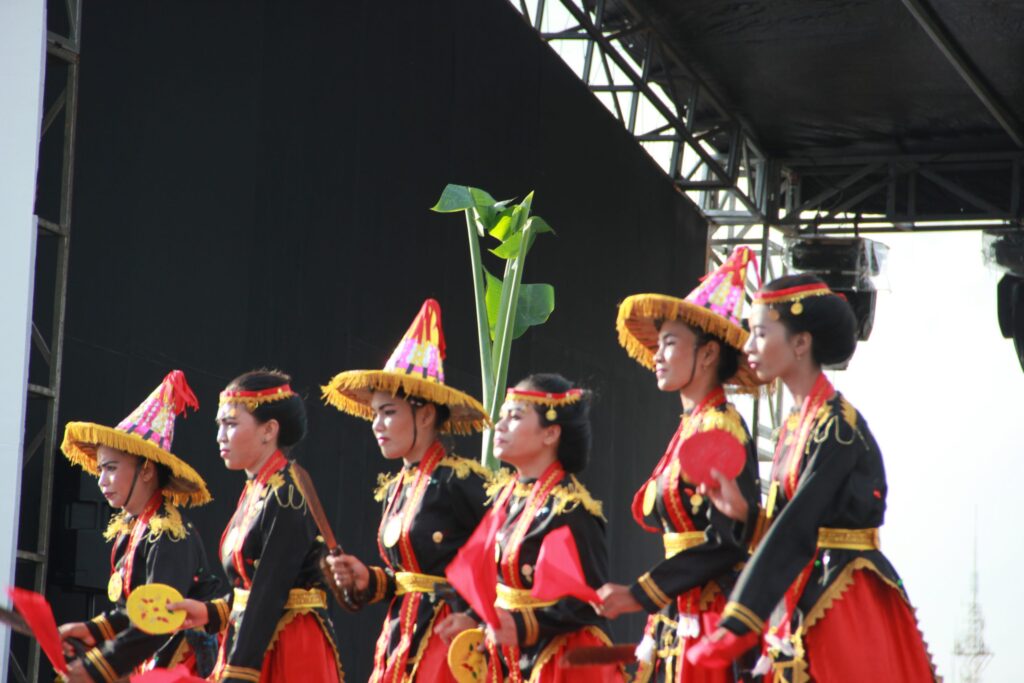
    Foto : indonesiakaya.com

    Tari Lummense has a long history, reportedly evolving more than two centuries ago. Its presence dwindled after 1946 and faded into obscurity for about 14 years. But in 1962, thanks to the elders and cultural keepers of Kabaena, the dance returned to its community. By 1973, Lummense had become a cultural staple once more, and it continues to survive—resilient and relevant—in the Buton region of Southeast Sulawesi.

    The dance wasn’t always a public performance. Long before Islam became the dominant religion in the region, Lummense was a sacred rite. It was a way for the people to commune with their ancestral spirits, asking for blessings and protection from the metaphysical beings believed to inhabit the land.

    SEE ALSO  Indonesia’s Beauty Industry Is Having a Major Glow-Up

    The Ritual of Appeasement

    Foto : indonesiakaya.com

    Traditional Kabaena communities believed in the presence of spiritual entities known as “kowonuano,” roughly translated as the guardians or owners of the land. When sickness, natural disasters, or societal unrest loomed, the villagers would offer food and dances to these unseen forces in hopes of appeasement.

    This wasn’t merely superstition—it was a survival strategy deeply woven into the societal fabric. The dance acted as a bridge between the material world and the spiritual, a ritual of negotiation. The participants didn’t just perform for each other; they danced for something bigger, unseen, and powerful.

    A Symbol of Agricultural Hope

    As centuries turned and Islamic culture shaped local customs, Lummense adapted without losing its core identity. During the Buton Sultanate era, the dance evolved into a ceremonial act to accompany agricultural activities, particularly the opening of new farmland.

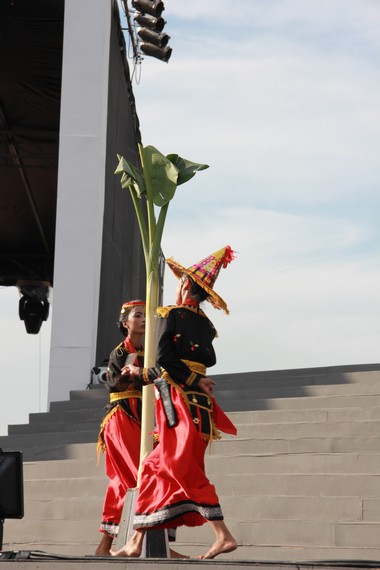
    This agricultural reinterpretation still retained strong symbolic undertones. Men participating in the dance would wield wooden machetes (parang), portraying farmers, while banana trees would stand in as metaphors for impending threats—be they drought, pestilence, or bad harvests. When the dancer cuts down the banana tree, it marks the defeat of adversity, a gesture of triumph.

    Costumes as Cultural Narratives

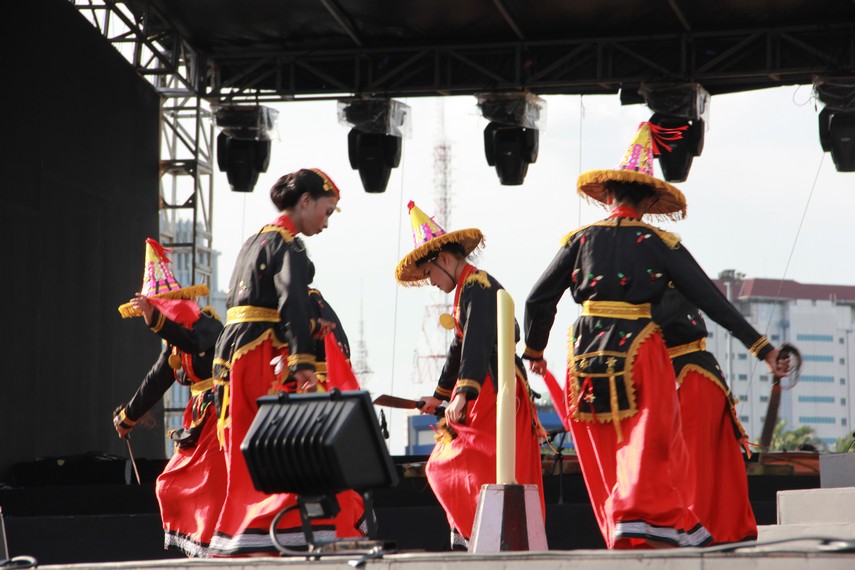
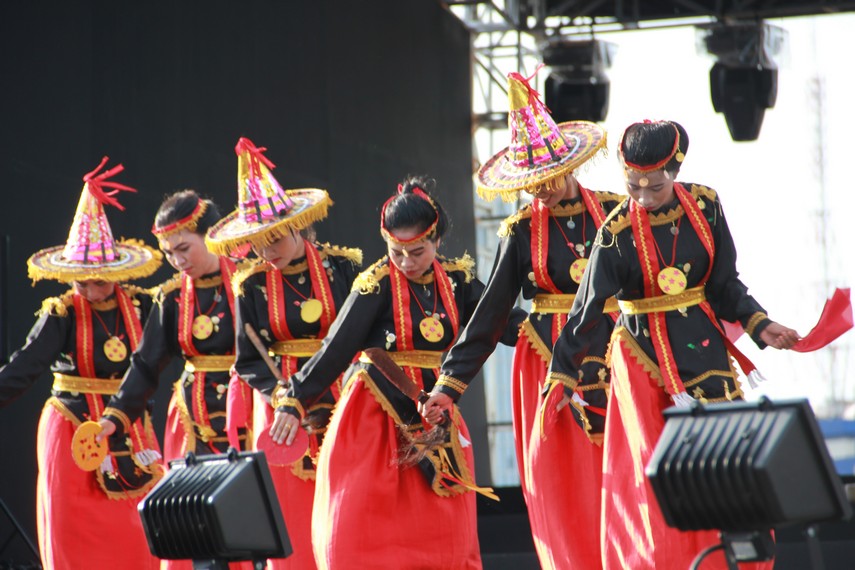
    The costumes worn during Tari Lummense aren’t just for show—they tell a story. Female dancers dress in black tops and maroon-red skirts that flare like the tail of a mermaid. This outfit, called “taincombo,” is graceful yet grounded, allowing freedom of movement without sacrificing the visual poetry of the dance.

    SEE ALSO  Cool Indonesian Treats to Beat the Heat

    Male dancers also wear taincombo, but they pair it with a red scarf and a “korobi,” a wooden sheath for their machete, strapped proudly at the waist. The garments reflect status, gender, and intention, playing a vital role in communicating the dance’s message to the audience, both mortal and divine.

    Choreography with Hidden Messages

    The choreography of Lummense is deceptively simple at first glance. The dance begins with forward and backward steps, gradually escalating into complex formations that trace the shape of a ‘Z’ and then morph into an ‘S’. This part of the dance is called “momaani,” or the dynamic movement section.

    As the dance unfolds, there’s a moment of climax—male dancers raise their machetes and slash down banana saplings in unison. This act is both literal and symbolic, signaling the banishment of looming threats. It’s theatrical yet rooted in centuries-old tradition.

    The finale is quieter but equally potent. Dancers form a semi-circle, holding hands, moving up and down rhythmically while stepping forward and back. This represents unity, resilience, and the cyclic nature of protection and gratitude.

    The Power of Traditional Music

    No sacred ritual is complete without its own soundscape, and Lummense is no exception. The music that accompanies the dance consists mainly of percussive instruments: the large gong (tawa-tawa), the smaller gong (ndengu-ndengu), and a traditional drum.

    Only three musicians are needed to set the spiritual tone. Their rhythms aren’t just musical—they act as timekeepers for the dancers, as well as energetic links to the ancestors. Each beat and reverberation is meant to awaken the spiritual realm.

    SEE ALSO  Why We Celebrate World Snake Day on July 16: History, Myths, and Conservation

    From Sacred to Ceremonial

    While Tari Lummense originated as a sacred rite, it has since found a place in contemporary public life. Today, you might witness a performance at a wedding, during the arrival of dignitaries, or as part of a regional cultural celebration.

    Though its mystical roots remain, Lummense has grown beyond its original purpose. It now serves as a symbol of cultural resilience and identity. The fact that it’s still performed, learned, and loved is a testament to the strength of the community that upholds it.

    Cultural Legacy and Modern Relevance

    In an age where many indigenous traditions are at risk of fading into history, the story of Lummense is one of hope. It shows that cultural heritage can evolve and adapt, yet remain profoundly meaningful.

    For the people of Southeast Sulawesi, Tari Lummense isn’t just about remembering the past—it’s about dancing with the present while keeping one eye on the future. It’s about community, memory, and the sacred belief that movement can heal, protect, and unify.

    So the next time you find yourself in the heart of Sulawesi, and you hear the distant rhythm of a gong and the shuffle of feet across the earth, follow the sound. You might just witness Lummense in motion—an ancient language of movement still speaking in a modern world.

    ancestral rituals sulawesi buton dance heritage indonesia cultural performance kabaena culture lummense dance sacred dance indonesia sacred rituals indonesia sulawesi traditional dance tari lummense story traditional dance symbolism
    Share. Facebook Twitter Pinterest LinkedIn Tumblr Email
    Previous ArticleWhen Giants Fall: The Untold Struggle of Indonesia’s Dying Elephants
    Next Article Discover Malaysia: A Hidden Gem in Southeast Asia You Shouldn’t Miss
    Editor Desk
    • Website

    Related Posts

    Economy

    Indonesia’s National Nutrition Agency Leadership Change Draws International Attention

    By Editor DeskJune 3, 2026
    Don't Miss

    Indonesia’s Biodiesel Shift: B50 Plan Put on Hold, Raising Questions for Global Palm Oil Markets

    By Editor DeskJanuary 14, 2026
    Disaster & Environment

    Elephants Help Clear Wooden Debris After Aceh Disaster

    By Editor DeskDecember 27, 2025
    Don't Miss

    Know the Types of Snakes in the Wild & What to Do If You Get Bitten

    By Editor DeskDecember 27, 2025
    Digital Life

    Gen Z in Indonesia and the Global “Escape Culture”: Why Many Are Saying #KaburAjaDulu

    By Editor DeskOctober 20, 2025
    Agriculture

    The Export of Indonesian Specialty Products: How Local Ingredients Are Becoming Global Brands

    By Editor DeskOctober 20, 2025
    Add A Comment
    Leave A Reply Cancel Reply

    Don't Miss

    Indonesia’s National Nutrition Agency Leadership Change Draws International Attention

    By Editor DeskJune 3, 2026

    Indonesia has attracted international attention following a recent leadership change at the National Nutrition Agency,…

    Indonesia’s Biodiesel Shift: B50 Plan Put on Hold, Raising Questions for Global Palm Oil Markets

    January 14, 2026

    Elephants Help Clear Wooden Debris After Aceh Disaster

    December 27, 2025

    Know the Types of Snakes in the Wild & What to Do If You Get Bitten

    December 27, 2025
    Top Posts

    Indonesia’s National Nutrition Agency Leadership Change Draws International Attention

    June 3, 2026

    Experience the Charm of Labuan Bajo’s Pinisi Boat Right Here in Lampung: Discover the Legendary Maritime Heritage of Indonesia

    June 30, 2025

    Must-Know: 5 Traditional Dances from Lampung You’ll Often Encounter

    June 30, 2025

    What to Do When You See a Snake: A Practical Guide for Everyday Life in Sumatra

    June 30, 2025
    Stay In Touch
    • Facebook
    • Twitter
    • Instagram
    • YouTube
    About Us
    About Us

    Saibumi International brings authentic stories, cultural depth, and off-the-radar destinations from Indonesia and the wider Asian region — crafted for readers who want more than surface-level travel and headlines.

    Facebook X (Twitter) YouTube Reddit
    Our Picks

    Indonesia’s National Nutrition Agency Leadership Change Draws International Attention

    June 3, 2026

    Indonesia’s Biodiesel Shift: B50 Plan Put on Hold, Raising Questions for Global Palm Oil Markets

    January 14, 2026

    Elephants Help Clear Wooden Debris After Aceh Disaster

    December 27, 2025
    Most Popular

    Indonesia’s National Nutrition Agency Leadership Change Draws International Attention

    June 3, 2026

    Experience the Charm of Labuan Bajo’s Pinisi Boat Right Here in Lampung: Discover the Legendary Maritime Heritage of Indonesia

    June 30, 2025

    Must-Know: 5 Traditional Dances from Lampung You’ll Often Encounter

    June 30, 2025
    • Home
    • About Us
    • Advertise
    • Contact Us
    © 2026 Saibumi International. SEO & Web by Dkonten Studio

    Type above and press Enter to search. Press Esc to cancel.