


When you think of Chinese New Year festivals in Asia, places like Hong Kong, Beijing, or Singapore might come to mind. But tucked away on the western coast of Kalimantan, Indonesia, there’s a city that lights up in its own spectacular way: Singkawang.
Every year, the small city of Singkawang becomes a vibrant hub of color, tradition, and mysticism during Cap Go Meh, a celebration marking the 15th day of the Lunar New Year. Unlike anywhere else in Indonesia—or even the world—Cap Go Meh in Singkawang blends Chinese spiritual rituals, Dayak traditions, and local Malay flavor into one unforgettable cultural experience.
This is not your average New Year celebration. This is where Chinese-Indonesian culture shines its brightest.
What is Cap Go Meh?
Cap Go Meh (literally meaning “the 15th night” in Hokkien) marks the end of Chinese New Year festivities. It’s traditionally seen as a time for reunion, prayer, and welcoming prosperity for the year ahead.
In many places, this day is celebrated with lanterns, rice balls, or quiet family dinners.
But in Singkawang, it’s anything but quiet.
Here, Cap Go Meh becomes a massive cultural showcase filled with parades, firecrackers, lion dances, and most notably—the Tatung ritual.
Why Singkawang?
You might be wondering: why does a relatively small city like Singkawang host one of the largest Cap Go Meh celebrations in Southeast Asia?
Singkawang is often referred to as “The City of a Thousand Temples” and has one of the largest Chinese-descent populations in Indonesia, most of whom are of Hakka origin. Many of their ancestors came to Borneo as tin miners and traders during the 18th and 19th centuries.
Over generations, Chinese, Dayak, and Malay communities in Singkawang have intermingled, giving rise to a uniquely syncretic culture—and Cap Go Meh is the crown jewel of that cultural blend.
The Tatung Parade: Spirit, Pain, and Power
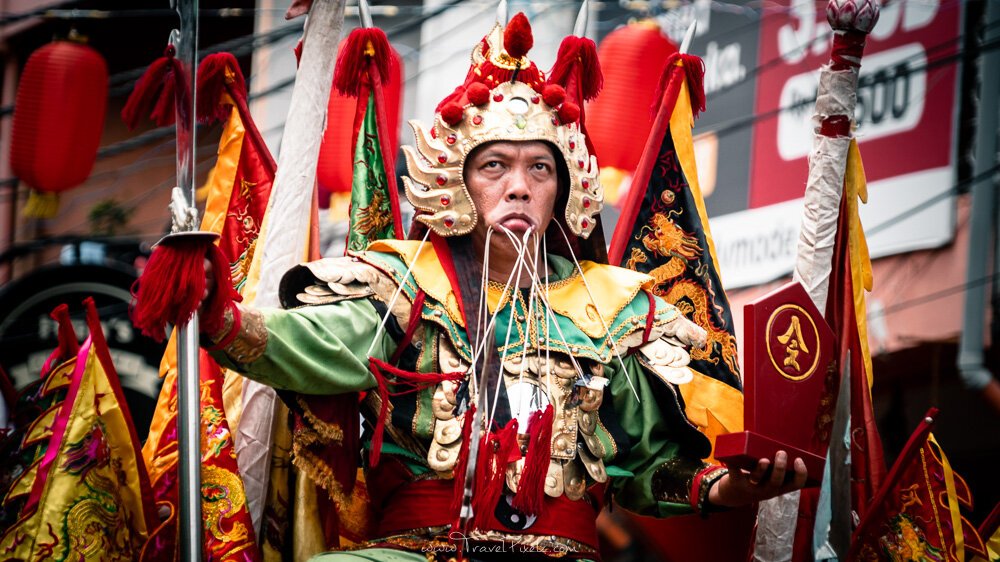
At the heart of the Singkawang Cap Go Meh celebration is the Tatung Parade—a spiritual procession unlike any other.
“Tatung” refers to spiritual mediums, people believed to be possessed by protective deities or ancestors during the celebration. These mediums enter a trance-like state and perform mind-bending feats of self-mortification, such as:
- Piercing their cheeks with metal rods or skewers
- Walking barefoot over fire
- Standing on swords or sharp objects
- Riding floats in a trance, seemingly unaffected by pain
To outsiders, it might look extreme or even terrifying. But to locals, it’s deeply spiritual—a form of cleansing the city of evil spirits and inviting good fortune.
The Tatungs come from different ethnic groups—Hakka, Dayak, and even Javanese—and wear elaborate costumes, often representing gods, warriors, or historical heroes.
What makes it even more special? Many of these participants are regular people the rest of the year: farmers, shop owners, teachers. But during Cap Go Meh, they become living bridges between the human and spiritual worlds.
More Than Just a Parade
While the Tatung procession steals the spotlight, the Cap Go Meh festival is a full-blown cultural explosion:
- Lion and dragon dances fill the streets with drumbeats and acrobatic energy
- Red lanterns and temple decorations create a glowing, festive ambiance at night
- Culinary festivals serve everything from traditional Hakka dishes to spicy Kalimantan delights
- Barongsai (lion dance) competitions, art exhibitions, and fashion shows spotlighting Chinese-Indonesian culture
- Community prayers at centuries-old temples like Tri Dharma Bumi Raya and Toa Pek Kong
The atmosphere is both spiritual and social. It’s not just about spectacle—it’s about community, identity, and shared belief.
A Harmonious Blend of Beliefs
One of the most beautiful aspects of Cap Go Meh in Singkawang is how it embodies religious and cultural tolerance.
In a predominantly Muslim country, a Chinese festival filled with spiritual rituals and Taoist symbolism is not just allowed—it’s celebrated.
Muslim Dayak families often help decorate streets. Local police ensure the safety of the Tatung parades. Malay vendors serve food beside Chinese herbal shops. It’s a living example of Indonesia’s motto: “Bhinneka Tunggal Ika” (Unity in Diversity).
Don’t Miss the Food!
If you’re a foodie, Cap Go Meh in Singkawang is basically heaven on earth. This is the perfect time to indulge in:
- Choipan – steamed dumplings filled with jicama and dried shrimp
- Kwe Kia Theng – pork offal soup (for adventurous eaters)
- Ngo Hiang – five-spice pork rolls
- Tahu Kuning – yellow tofu with spicy sambal
- And of course, sweet tang yuan (glutinous rice balls) for good fortune
The blend of Hakka techniques, Dayak ingredients, and Malay spices makes the culinary scene here one of the most unique in Indonesia.
A Festival Made for the Camera
Cap Go Meh in Singkawang is a visual feast. From colorful costumes and dramatic rituals to festive lanterns and roaring crowds, it’s a photographer’s dream.
Travel influencers, culture vloggers, and international media outlets now cover the event regularly. But beyond the Instagrammable moments lies a deep cultural story—one that can’t be captured in a single post.
If you’re planning to attend, make sure to:
- Arrive early (the streets fill up fast!)
- Respect local customs—some areas are sacred
- Be mindful when photographing Tatung participants
- Stay hydrated (West Kalimantan can get hot!)
Getting There
Singkawang doesn’t have its own airport, but it’s easily reachable:
- Fly to Supadio International Airport (Pontianak)
- From Pontianak, it’s a 4–5 hour drive to Singkawang
- Many locals and tourists also take shared taxis or travel buses
Accommodations fill up quickly during Cap Go Meh, so book ahead!
Final Thoughts: A Cultural Treasure Worth Witnessing
Cap Go Meh in Singkawang isn’t just a Chinese festival—it’s a celebration of Indonesian multiculturalism at its finest.
It’s where ancient traditions meet the modern world. Where spiritual belief coexists with community joy. And where the Chinese-Indonesian identity is expressed, embraced, and elevated on a national—and now international—stage.
So, if you ever find yourself in Indonesia during Lunar New Year, skip the big cities and head to Singkawang. Because here, culture doesn’t just survive—it shines.
