



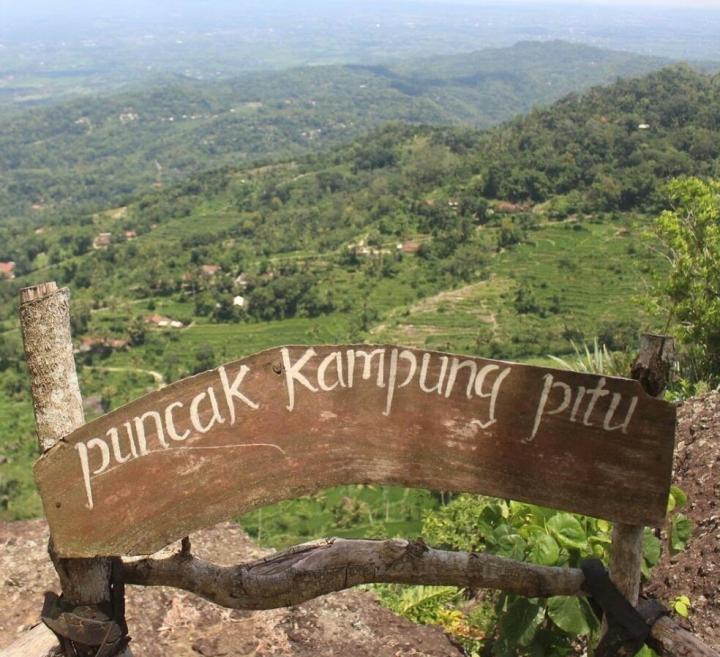
Imagine a village where the number of families never changes — not due to population control or migration, but because of an ancient belief passed down through generations. Tucked away in the misty hills of Gunungkidul, Yogyakarta, there’s a small yet enchanting place called Kampung Pitu, or “The Village of Seven.”
No, it’s not a myth or a fantasy novel setting. It’s a real village, located in Dusun Nglanggeran Wetan, Kalurahan Nglanggeran, Kapanewon Patuk, perched near the majestic Ancient Volcano of Nglanggeran. But unlike your average rural settlement, this village has an unshakable rule: only seven families may live there at a time.
Off the Beaten Path — Literally
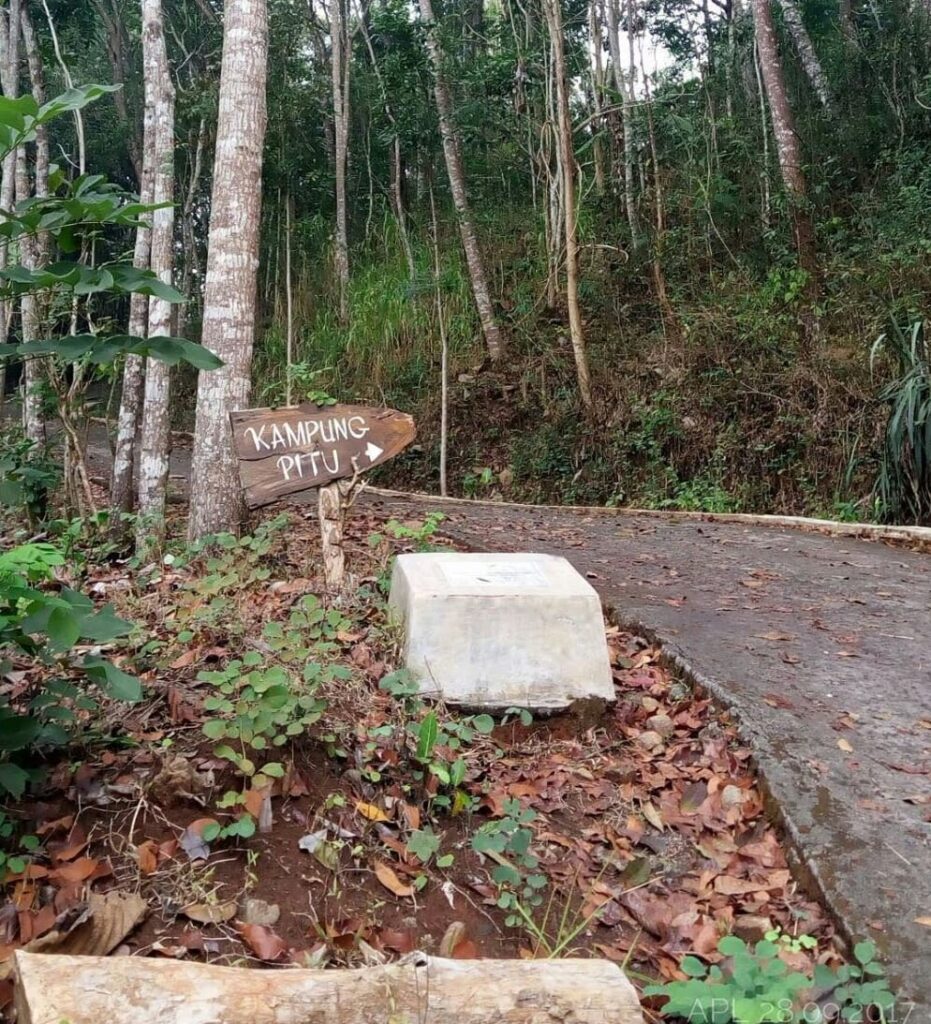
Reaching Kampung Pitu is a mini adventure in itself. The roads, particularly near the final stretch, are rugged and uneven. Don’t expect smooth asphalt — expect bumpy trails and steep inclines. If you’re not used to off-road driving, you’ll need to be extra cautious.
But once you get there, the views are worth every bump. Picture this: rolling hills, the golden glow of sunrise and sunset stretching across the horizon, and a serene man-made lake nearby that reflects the changing sky. It’s the kind of peaceful escape that makes you forget the chaos of city life. A place where nature whispers stories and silence feels like a warm embrace.
Why Only Seven Families?
So why the name “Kampung Pitu”? In Javanese, “pitu” means seven, and it reflects the village’s most sacred tradition: only seven families may live there, no more, no less. This belief is not just a quirky rule — it’s deeply tied to the village’s spiritual identity.
According to local elders, especially Yatnorejo, one of the village’s respected adat (customary) leaders, this rule has been followed for generations. It’s not enforced by law, but by collective cultural memory and spiritual respect. Whenever a new family wants to move in, one existing family must move out. It’s a delicate balance rooted in Javanese cosmology and ancestral traditions.
The Legend Behind Kampung Pitu
The story of Kampung Pitu begins long ago — not just with people, but with a magical lake and a mythical horse.
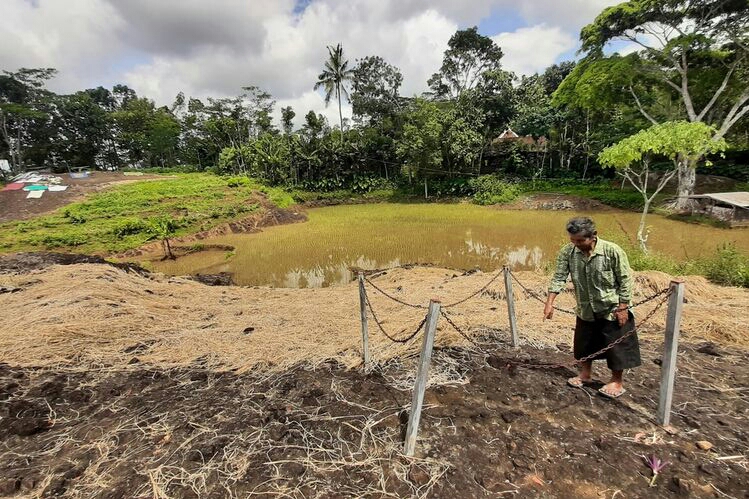
It’s believed that the village was once home to a sacred spring called Telaga Guyangan. This lake, now just a rice field with a small water source, was said to be where a winged horse, known locally as “Kuda Sembrani,” once bathed. The villagers even claim that the hoof prints of the mythical creature can still be seen in the surrounding rocks.
But the story doesn’t stop there.
During the days of the Mataram Sultanate, the royal palace (Keraton) announced a spiritual challenge — a sacred contest. Whoever could guard the mystical tree Kinah Gadung Wulung would be granted the right to settle and own the land.
Out of all the contenders, only two siblings — Iro Dikromo and Tirtosari — were successful. They protected the sacred tree and proved their loyalty. In return, they and their descendants were allowed to live on the land, forming the first residents of Kampung Pitu. The “seven families only” rule was believed to have begun as part of this sacred agreement.
A Living Legacy of Sacred Balance
Today, the descendants of those two siblings still honor the pact. Though the modern world has changed dramatically, Kampung Pitu remains faithful to its roots. It’s not about superstition or fear — it’s about balance, harmony, and respect for ancestral teachings.
In fact, if more than seven families try to live in the village, locals believe it could bring misfortune — either to the newcomers, the village itself, or nature surrounding it. Whether or not you believe in this, what’s undeniable is the village’s commitment to preserving its heritage against the tide of modernization.
Life in Kampung Pitu Today
So, what’s it like living in a village of only seven families?
Well, for one, community bonds are incredibly strong. Everyone knows everyone — deeply. Decisions are made collectively. Rituals and ceremonies are still performed the old-fashioned way, from harvest festivals to ancestral offerings.
Despite its tiny size, Kampung Pitu isn’t frozen in time. Electricity, motorbikes, smartphones — they’ve all made their way in. But the village maintains a balance between embracing useful technology and honoring timeless tradition.
And tourism? It’s growing slowly. The nearby Embung Nglanggeran (Nglanggeran Reservoir) has become a hit among travelers looking for a scenic highland retreat. Some visitors even hike to Kampung Pitu to catch a glimpse of this mysterious place where legends still breathe.
Hidden Treasure in Gunungkidul
Gunungkidul itself is often overshadowed by its more famous neighbors like Yogyakarta city or Mount Merapi. But it’s home to some of the most surreal landscapes in Central Java — underground caves, rock cliffs, lush forests, and sacred springs.
Kampung Pitu is one of its hidden gems — not flashy, not crowded, but deeply spiritual and culturally rich. It’s a reminder that some of the most meaningful places don’t come with ticket booths or Instagrammable signs. Sometimes, they’re hidden along bumpy roads, whispered about in legends, and protected by the wisdom of those who came before.
Why Kampung Pitu Deserves a Spot on Your Travel List
If you’re the type of traveler who seeks authentic cultural experiences, Kampung Pitu should be on your radar. It’s not your usual tourist destination — and that’s exactly the point. It offers something increasingly rare in our fast-paced, hyperconnected world: stillness, tradition, and a sense of sacred belonging.
You won’t find souvenir shops or tour guides in uniform. What you will find is a living story, unfolding among people who still believe in balance — not just with nature, but with the unseen, the ancestral, and the spiritual.
And sometimes, the quietest places leave the loudest echoes.
