



If you’ve ever seen a traditional Lampung wedding or passed by a landmark in the region, chances are you’ve come across the majestic Siger crown—a gleaming golden headpiece that’s far more than just a cultural accessory. It’s a sacred symbol of identity, honor, and heritage for the people of Lampung, Indonesia.
But what exactly is the Siger? Why is it so important? And did you know there are different types of Siger depending on the Lampung tribe?
Let’s dive into the rich symbolism behind this beautiful crown, and discover the cultural wisdom it carries.
What Is the Siger?

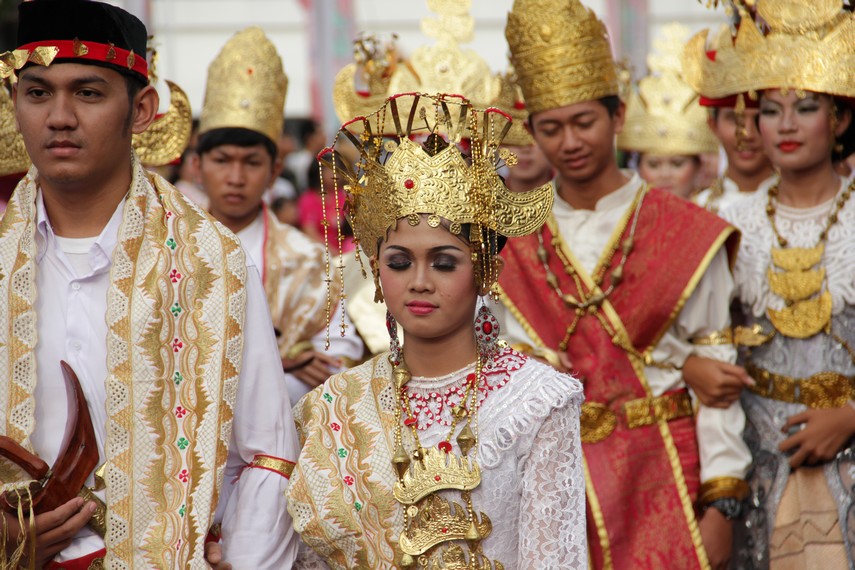
The Siger crown is a traditional head ornament made of gold-toned metal, worn by Lampung women during important ceremonies and rituals. But it’s not just about aesthetics—this crown holds deep philosophical and cultural meaning for the Lampung people.
The Siger’s shape, typically adorned with seven or nine sharp curves, reflects values from the Piil Pesenggiri philosophy, which emphasizes personal dignity, respect for others, and upholding family honor.
Siger as a Sacred Symbol
For the indigenous people of Lampung, the Siger is more than just an accessory—it’s sacred. It symbolizes nobility, strength, and identity. Each curve of the Siger has a specific meaning and is rooted in centuries-old traditions passed down through generations.
This is why you’ll often see the Siger represented not only in ceremonies but also in architectural designs such as monuments, gates, towers, and even fences and souvenirs across Lampung.
Types of Siger and Their Meanings
The design of a Siger crown can vary depending on the Lampung ethnic group and their regional traditions. Here are three of the most well-known types:
1. Saibatin Siger
The Saibatin Siger has seven distinctive curves, each decorated with motifs inspired by the sekala tree, a symbolic tree in Lampung culture.
These seven curves represent seven noble titles within coastal Lampung communities:
- Minak
- Kimas
- Mas Inton
- Suttan Dalom
- Raja Jukuan Dipati
- Batin
- Radin
These titles are exclusive to descendants of the royal bloodline. If you’re not a direct descendant, you’re not allowed to use these titles—it’s that sacred.
2. Pepadun Siger
The Pepadun version of the Siger features nine sharp curves, resembling the sekala fruit, a reference to the ancient kingdom of Sekala Bekhak, considered the cradle of Lampung civilization.
Each curve represents one of the nine clans that make up the historic Abung Siwo Megou confederation:
- Buai Nunyai
- Buai Kunang
- Buai Selagai
- Buai Anak Tuha
- Buai Unyi
- Buai Nuban
- Buai Subing
- Buai Beliuk
- Buai Nyerupa
Together, they represent unity and strength among the highland Lampung people.
3. Siger Tuha (The Ancient Siger)
The Siger Tuha is one of the oldest forms of the Siger, dating back to pre-Islamic times, including Hindu-Buddhist and even animistic eras.
This version often comes with sekala tree ornamentation and does not follow any strict curve-count rule. It is mainly preserved by the Pak Sekala Bekhak Sultanate, and traditionally only worn by those of Saibatin (aristocratic) descent.
Despite its ancient origins, the Siger Tuha is still occasionally seen today in cultural exhibitions and historical ceremonies.
Keeping Tradition Alive in the Modern Age
In today’s fast-paced, digital world, traditional values often risk being forgotten. That’s why preserving cultural heritage like the Siger is more important than ever.
Fortunately, the Siger continues to be embraced not just through ceremonies, but also in modern art, public landmarks, branding, and education. It has become a regional icon of pride—gracing everything from provincial buildings to tourism campaigns.
Final Thoughts
The Siger crown is more than just a piece of cultural jewelry—it’s a living symbol of Lampung’s noble values, identity, and traditions.
Whether it’s the seven-curve Saibatin, the nine-curve Pepadun, or the ancient Siger Tuha, each version tells a unique story of lineage, unity, and honor.
By continuing to celebrate and educate others about symbols like the Siger, the people of Lampung can ensure their rich traditions remain strong for generations to come.
