




Imagine eating eggs that are not only delicious but also free from chemicals and allergy triggers. That’s exactly what Kusno Waluyo, the 47-year-old director of Sekuntum Herbals in Toto Projo Village, East Lampung, Indonesia, has been working on since 2005.
At Sekuntum Herbals, chickens are raised with extra care. Instead of using antibiotics or artificial yolk colorants, Kusno uses herbal mixtures added directly to their drinking water and feed. Think bay leaves, cinnamon, and noni fruit – herbs traditionally used for human health, now formulated for chickens.
“We started trials on 100 chickens without antibiotics, and the eggs produced caused no allergic reactions,” Kusno said confidently.
His farm spans over 14 hectares and follows strict biosecurity protocols. There’s a clear zoning system – red for gathering areas, yellow as the transitional zone for kitchens and storage, and green as the highly restricted poultry area. Workers pass through these zones daily, ensuring hygiene standards remain top-notch.
Why Herbal Eggs?
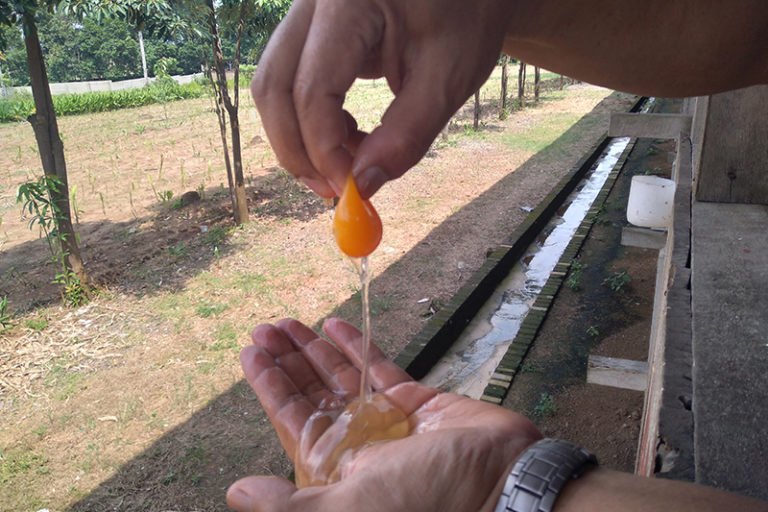
The idea behind herbal eggs is simple: keep chickens healthy naturally so the eggs they produce are healthier too. Research conducted in 2019 at Sekuntum Herbals showed that herbal feed improves chicken gut health. It also binds to bioactive proteins in egg yolks and whites, such as apoprotein, apolipoprotein, avidin, and ovalbumin.
This unique process results in eggs that are:
- Free from antibiotic residues, reducing risks of antimicrobial resistance (AMR) in humans
- Naturally vibrant in yolk color without synthetic additives
- Richer in antioxidants, flavonoids, phospholipids, and carotenoids
Facing Challenges with Innovation
When Kusno first introduced herbal eggs, many called him “weird.” But three years into his trials, he remained optimistic. Today, his farm produces three tons of eggs daily. Pricing is slightly higher than regular eggs, about 3,000-4,000 Rupiah more per kilogram, depending on shell thickness – an indicator of freshness and shelf life.
More than 70 local villagers are employed at Sekuntum Herbals, handling everything from feeding and egg packing to preparing herbal mixtures. This not only supports the local economy but also empowers communities with sustainable farming practices.
Scientific Backing for Herbal Eggs
Several academic papers and theses have examined the benefits of herbal eggs. Research from Hasanuddin University found that eggs from chickens fed with herbal mixtures had:
- Shell thickness of 0.364 mm vs. 0.294 mm in non-herbal-fed chickens
- Yolk color scores of 9.5 vs. 8.4
Such findings underline the significant impact of herbal feed on egg quality.
Towards Safer and Sustainable Farming
The farm has received a Level 1 Veterinary Control Number (NKV) certificate – Indonesia’s highest hygiene and sanitation standard for animal products, qualifying it for export. According to Anwar Fuadi from Lampung’s Livestock and Animal Health Department, “Level 1 means excellent standards, fit for international trade.”
For Kusno, producing herbal eggs isn’t just about healthy food. It’s about rethinking farming practices to be safer for humans and the environment. No antibiotics, no synthetic additives, and definitely no compromise on quality.
The Future of Herbal Eggs

Consumers like Purnama Edy Santosa hope herbal eggs will become mainstream. “They’re so much better for our health,” he said. And with Kusno Waluyo leading the way, herbal eggs from Lampung may soon find their place on breakfast tables across the globe.
