



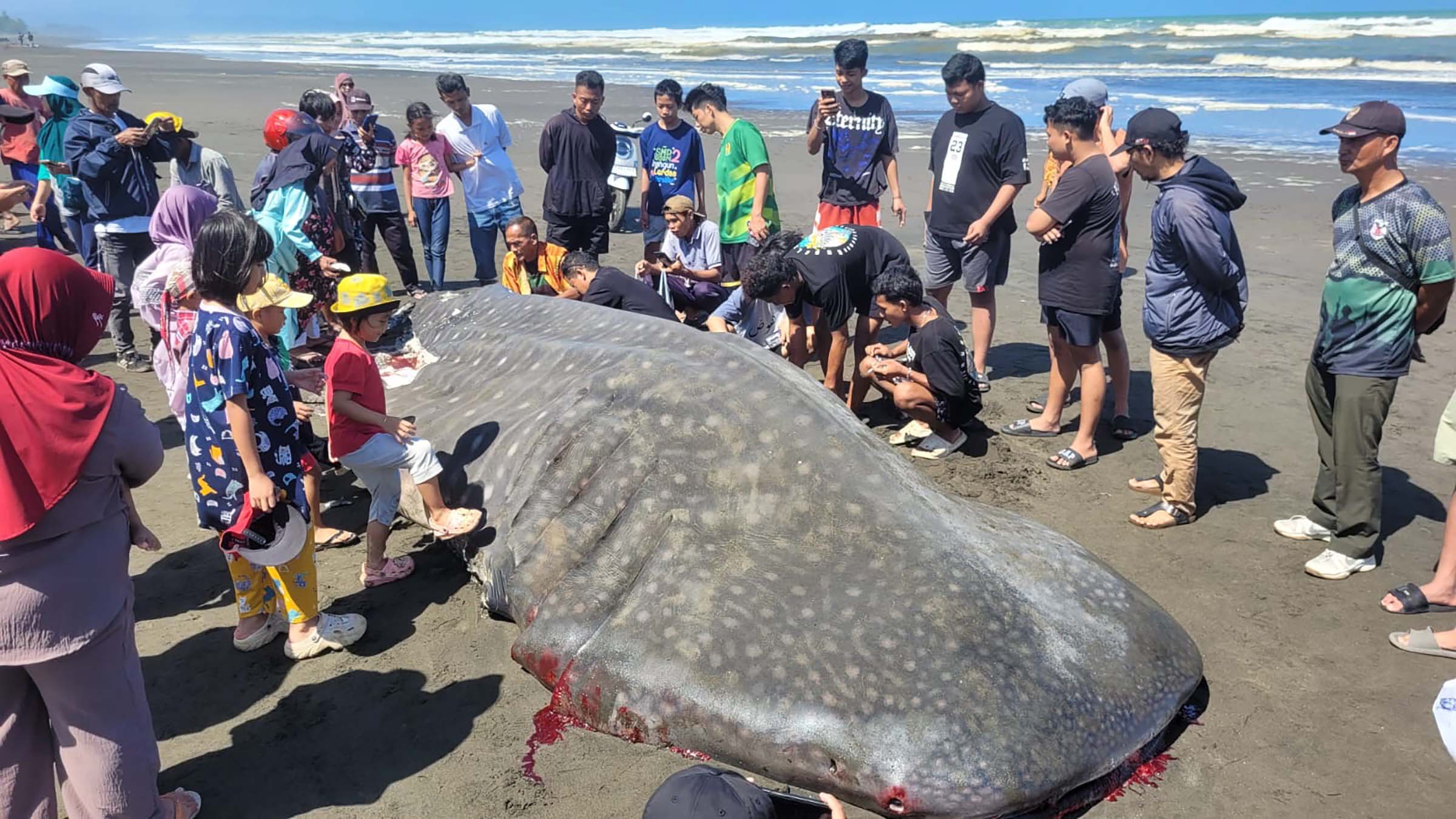
Cilacap, Central Java — Residents of Welahan Wetan village were startled Thursday morning (June 26, 2025) when a massive whale shark (Rhincodon typus) was found dead on the shores of Wagir Indah Beach. The female shark, measuring about 5.3 meters long and 1.45 meters wide, drew a crowd of curious onlookers—and unfortunately, a few who decided to take chunks of meat home.
According to marine conservationist Jumawan, who heads the Nagaraja Sea Turtle Conservation Group, the shark likely washed ashore around 3 a.m. “During our patrol at 2 a.m., everything was normal,” he said. “But by 5:30 a.m., she was already lifeless.”
Whale sharks are known to inhabit deep waters, but during the dry season, their prey—tiny fish and plankton—tends to migrate closer to shore. These seasonal shifts sometimes lure the gentle giants into shallow zones, where they can get disoriented or even stranded.
Curiosity Turned Into Casualty
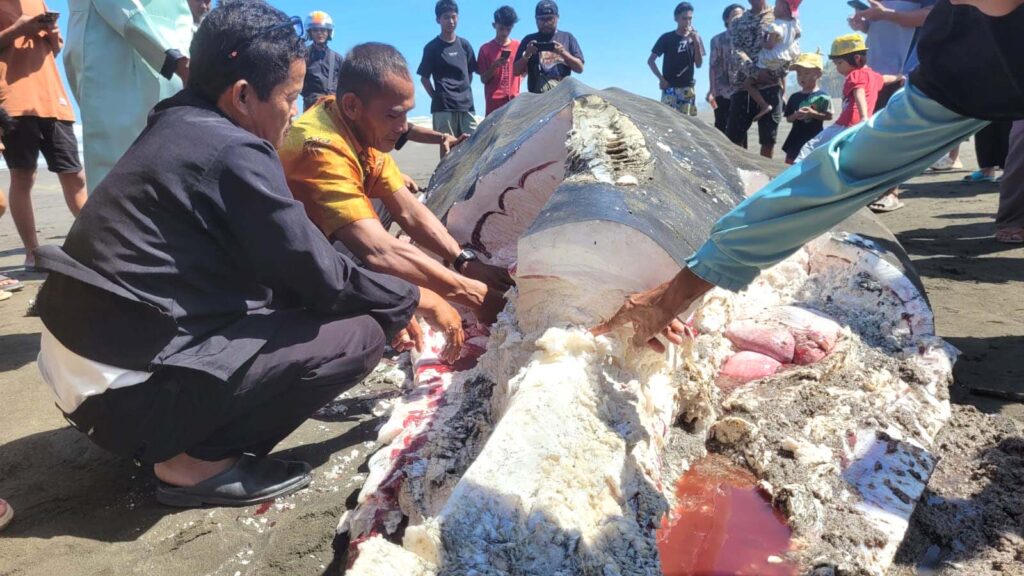
Some locals, unaware or dismissive of the animal’s protected status, began slicing the carcass for food. One man said he wanted to try cooking it as soup, while another planned to use parts as fishing bait or feed for ducks.
Authorities from the Cilacap Marine and Fisheries Resource Surveillance Station (PSDKP) arrived by early afternoon and cordoned off the site. “This species is fully protected. It cannot be utilized, whether dead or alive,” stressed Dwi Santoso Widodo, head of the station.
Indonesia’s Ministry of Marine Affairs and Fisheries designated whale sharks as fully protected marine wildlife under Decree No. 18/2013. Meaning: touching, taking, or consuming any part of them is strictly illegal.
Why Did It Wash Ashore?
The exact reason behind the whale shark’s stranding remains unclear. However, marine biologist Sekar Mira from Indonesia’s National Research and Innovation Agency (BRIN) outlined several possible causes.
“There are typically two categories: natural and human-related,” she explained. Natural reasons could include illness, underwater earthquakes, or extreme weather changes like tides and tropical storms. Sudden shifts in ocean temperature or current can also throw off a whale shark’s internal GPS.
Then, there’s the human impact—far more concerning.
“Food scarcity due to polluted waters, coral reef damage, or industrial waste can lead them astray from migration paths,” said Sekar. Boat strikes in busy shipping lanes are another danger. So are ghost nets—lost or discarded fishing nets that float silently, trapping marine life without warning.
Other threats include noise pollution from military sonar, underwater drilling, or seismic exploration. These loud, unnatural sounds can interfere with a whale shark’s ability to navigate using sound and vibration.
Entanglement in ropes, accidental bycatch, or even plastic ingestion are additional hazards they face in increasingly crowded oceans.
The Need for Further Study
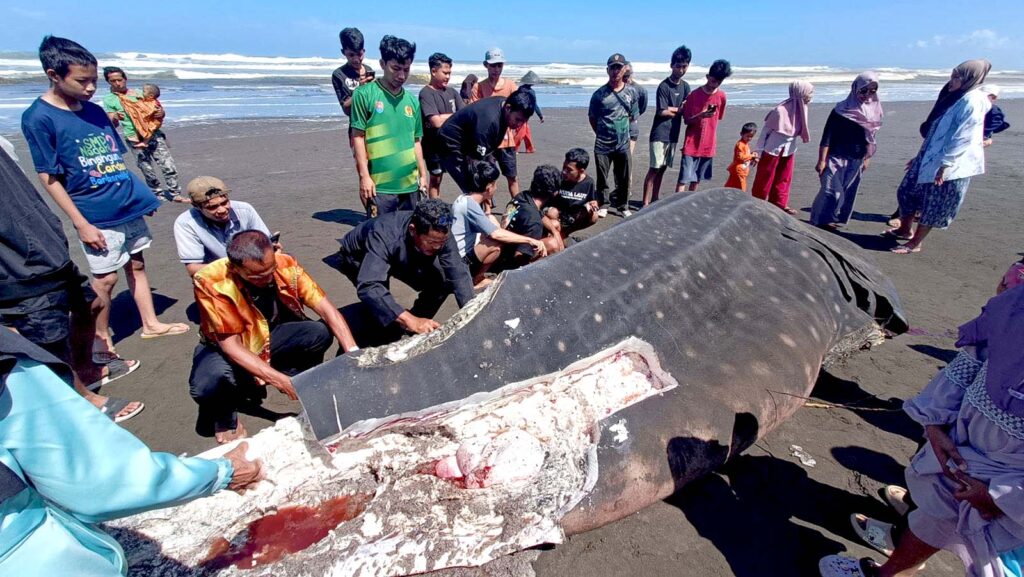
Sekar emphasized the importance of conducting a necropsy (an animal autopsy) to confirm the exact cause of death. “Without it, any assumption is just speculation,” she said.
If such strandings occur repeatedly in the same area, it could signal a larger problem, such as shifting currents or environmental anomalies. In that case, detailed oceanographic research would be necessary.
For now, the incident serves as a stark reminder of the fragile balance between marine wildlife and human activity. As coastal communities continue to grow and the oceans grow louder and more polluted, the biggest fish in the sea may also be the most vulnerable.
Source: Adapted from Mongabay Indonesia, June 29, 2025
