



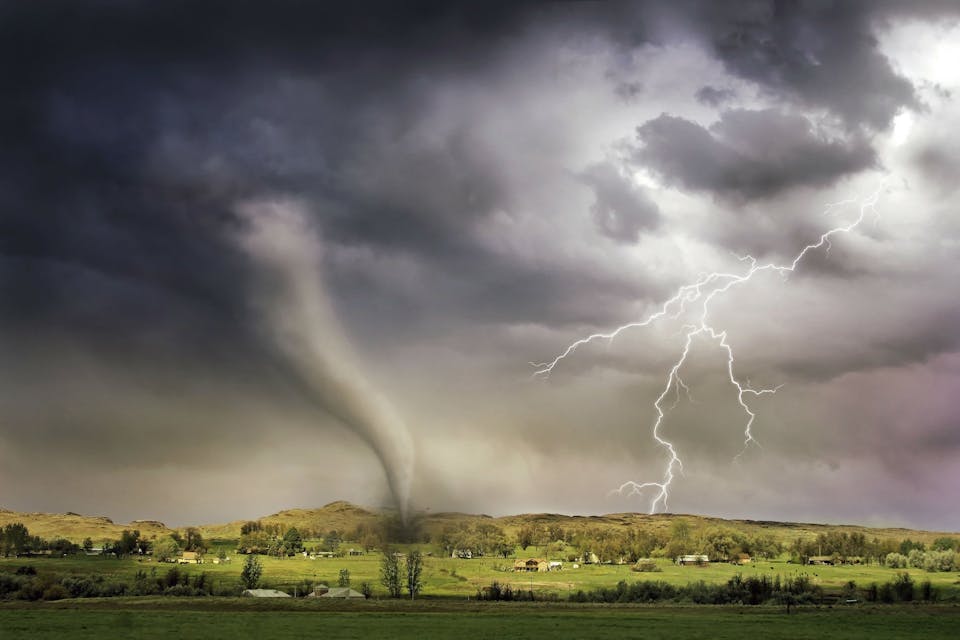
A Stormy Night in Saskatchewan
On the night of August 20, 2025, residents of Saskatchewan, Canada, found themselves glued to weather alerts. Severe thunderstorms had rolled across the prairie province, bringing with them the terrifying potential of tornadoes. Environment Canada issued multiple warnings, urging people to stay indoors as the skies lit up with lightning.
The forecast was intense: the possibility of funnel clouds, winds gusting up to 100 km/h, hailstones as large as golf balls, and rainfall heavy enough to flood roads. While some of the tornado alerts were quickly cancelled in places like the Battlefords and Hafford, the system remained dangerous as it tracked eastward. By late evening, meteorologists reported that the storm was hovering over Cudworth, moving steadily across the province.
For Saskatchewan, this wasn’t entirely unusual. The Canadian prairies are part of the northern extension of what meteorologists call “Tornado Alley,” a belt stretching through the central United States into southern Canada. Warm, moist air collides with cooler air masses here, creating conditions ripe for supercell thunderstorms—the kind that can spawn tornadoes. For many in Saskatchewan, this is the price of living in wide-open prairie country: breathtaking sunsets and endless skies, but also the lurking threat of extreme weather.
How Indonesia Relates to Tornado Warnings
At first glance, Canada’s tornado scare might feel worlds apart from Indonesia’s daily weather realities. Tornadoes of the kind seen in North America are almost unheard of in the tropics. Yet, when Canadians talk about a tornado, Indonesians might think of puting beliung—a sudden, violent whirlwind that can tear through villages, uproot trees, and rip roofs off houses.
Puting beliung usually lasts only a few minutes and is smaller in scale than a North American tornado. But for the people caught in its path, the destruction feels just as catastrophic. It’s the Indonesian equivalent of seeing the sky darken unexpectedly and hearing the wind roar louder than anything you’ve heard before.
Then there’s the hail. Canadians on that stormy night in Saskatchewan reported ice chunks as big as ping pong balls. In Indonesia, hailstorms are less frequent, but they do happen. Residents in cities like Bandung or Bogor occasionally report ice pellets falling from the sky during violent thunderstorms. The phenomenon is met with surprise—often trending on social media—but scientifically, it’s part of the same convective storm processes that Canadians take in stride.
In other words, while the geography and scale may differ, the sense of vulnerability to sudden, destructive weather is something Indonesians can easily relate to.
The Shared Threat of Lightning and Fire
One of the most striking parts of Saskatchewan’s weather advisory was not just the storm itself, but its relationship to wildfire. Meteorologists noted that while the heavy rain might help ease the extreme wildfires that had burned through northern Saskatchewan earlier that summer, the sheer volume of lightning strikes also risked igniting new blazes.
This paradox—where rain is both a relief and a risk—is not foreign to Indonesia. Every year, particularly in Sumatra and Kalimantan, wildfires rage through peatlands and forests during the long dry season. Thick haze drifts across borders, affecting not only Indonesia but neighboring countries like Malaysia and Singapore.
And just like in Canada, lightning can play a destructive role. While many fires are caused by human activity—land clearing, careless burning—some are sparked naturally by thunderstorms. A single bolt of lightning striking a dry forest floor can undo weeks of firefighting efforts.
So, when Canadians worry about storms both extinguishing and igniting fires, Indonesians nod in recognition. The context is different—prairie grasslands versus tropical peat forests—but the tension between fire, rain, and lightning is a shared global story.
Lessons from Early Warning Systems
One area where the Canadian experience offers a valuable lesson is in the use of early warning systems. In Saskatchewan, tornado alerts are issued quickly, often with precise timestamps and geographic coordinates. Residents are accustomed to listening for sirens or checking government alerts on their phones. While not everyone takes shelter immediately, the infrastructure for rapid communication is in place.
Indonesia has its own version through the BMKG (Meteorology, Climatology, and Geophysics Agency), which issues warnings for heavy rain, high waves, or potential landslides. However, the challenge lies in public awareness and trust. Many Indonesians receive these warnings but don’t act on them, either because they underestimate the risk or because the alerts feel too frequent and vague.
The comparison shows a clear takeaway: technology is only as effective as the community’s response. In a country as disaster-prone as Indonesia, strengthening the culture of preparedness is just as important as improving the accuracy of forecasts. Canada’s tornado sirens and text alerts work not just because they exist, but because people have been taught over generations to take them seriously.
Different Countries, Different Dangers
Weather disasters have a way of reflecting the landscapes where they unfold. Saskatchewan’s wide plains create the perfect laboratory for tornadoes. Indonesia’s mountainous terrain and tropical climate make it more prone to flash floods, landslides, and typhoons (or what locals simply call badai). Both regions deal with the raw power of nature, but in different forms.
For Canadians, the sound of a siren warning of a tornado is a reminder of the vast, unpredictable skies above them. For Indonesians, the rumble of thunder and sudden gust of wind in the rainy season is enough to set off memories of flooded streets, fallen trees, and, in some cases, roofs ripped away by puting beliung.
The cultural responses differ too. In Indonesia, heavy rain often triggers a collective flurry of WhatsApp messages: “Be careful on the road,” “Flooding near the train station,” “Don’t forget to unplug your electronics.” In Canada, the reflex might be to head to the basement, grab emergency supplies, and wait for the storm to pass.
A Global Conversation on Climate Extremes
Zooming out, both stories—Saskatchewan’s tornado warnings and Indonesia’s bouts of extreme rain—fit into a larger global conversation about climate. Meteorologists have long warned that climate change is likely to increase the intensity of extreme weather events. Warmer air holds more moisture, fueling heavier downpours. Shifting wind patterns can make tornadoes appear in places they were once rare. And prolonged dry seasons set the stage for devastating wildfires.
For Saskatchewan, this could mean more nights when tornado alerts light up smartphones across the province. For Indonesia, it could mean longer dry seasons punctuated by more violent storms, worsening both drought and flooding.
In both cases, communities will need to adapt, not just by relying on meteorologists but also by building resilience at the local level. Stronger infrastructure, better disaster education, and international cooperation are all part of the toolkit.
Finding Common Ground in Extreme Weather
So what does a tornado in Saskatchewan really have to do with a flash flood in Jakarta or a wildfire in Kalimantan? More than we might think. The details may differ—the shape of the storm, the size of the hail, the color of the soil—but the human experience of facing forces beyond our control is universal.
Extreme weather has a way of humbling us, reminding us that no matter how far technology advances, we remain deeply tied to the natural world. When Canadians hunker down in basements and Indonesians rush to sweep water out of their front doors, both are participating in the same ancient ritual: resilience in the face of nature’s fury.
And perhaps that’s the most important connection of all. From Saskatchewan to Sumatra, from prairie thunderstorms to tropical downpours, the message is clear. Extreme weather is no longer a distant phenomenon happening to someone else, somewhere else. It’s a shared challenge, one that binds us together across continents.
