

Close Menu
Saibumi | Uncovering Asia, One Story at a Time
    What's Hot

    Indonesia’s National Nutrition Agency Leadership Change Draws International Attention

    June 3, 2026

    Indonesia’s Biodiesel Shift: B50 Plan Put on Hold, Raising Questions for Global Palm Oil Markets

    January 14, 2026

    Elephants Help Clear Wooden Debris After Aceh Disaster

    December 27, 2025
    Facebook X (Twitter) Instagram
    Saibumi | Uncovering Asia, One Story at a TimeSaibumi | Uncovering Asia, One Story at a Time
    • About Us
    • Contact Us
    • Advertise
    Facebook X (Twitter) Instagram YouTube LinkedIn Reddit
    • Home
    • Stories

      The Global Plastic Treaty Fails Again – What Does It Mean for the Planet?

      August 27, 2025

      Puru Kambera Savanna: Tracing the Wild Horses of East Sumba

      August 25, 2025

      West Sumatra Emerges as a Leading Muslim-Friendly Travel Destination

      August 24, 2025

      Tabola Bale Song: The Viral Music Blend From Eastern Indonesia

      August 20, 2025

      Tanjung Karang Beach: An Underwater Paradise in Donggala

      August 20, 2025
    • Travel

      Know the Types of Snakes in the Wild & What to Do If You Get Bitten

      December 27, 2025

      Thailand Named the Best Food Country in the World 2025 — Beating Italy and Japan

      October 14, 2025

      Dieng Plateau Officially Designated as Indonesia’s Newest National Geopark

      September 29, 2025

      The Culture of Souvenirs: How Indonesians Strengthen Workplace Relationships Through Oleh-oleh

      September 29, 2025

      6 Best Coffee Shops in Asia – And Yes, One of Them Is in Indonesia!

      September 28, 2025
    • Culture
    • Lifestyle
      1. Food & Culture
      2. Green Living
      3. Local Life
      4. Modern Living
      5. People & Inspiration
      6. View All

      Gen Z in Indonesia and the Global “Escape Culture”: Why Many Are Saying #KaburAjaDulu

      October 20, 2025

      The Export of Indonesian Specialty Products: How Local Ingredients Are Becoming Global Brands

      October 20, 2025

      From Training to Takeoff: MKP’s Approach to Responsible Worker Preparation

      October 18, 2025

      Thailand Named the Best Food Country in the World 2025 — Beating Italy and Japan

      October 14, 2025

      List of Plants That Attract and Repel Snakes Around the House

      October 20, 2025

      Bird-Friendly Coffee in Lampung: Wild Birds Help Farmers Control Pests Naturally

      September 23, 2025

      Standing Still Like a Stick: How Tree Snakes Outsmart Predators with Vertical Sleep

      July 17, 2025

      Not a Cat, Not a Snake — Meet the Plant That Can Eat Rats

      July 12, 2025

      #KaburAjaDulu: When Young Indonesians Feel Like Escaping Is the Only Way to Survive

      October 9, 2025

      The Culture of Souvenirs: How Indonesians Strengthen Workplace Relationships Through Oleh-oleh

      September 29, 2025

      How Remote Work and Digitalization Are Transforming Indonesian Work Culture

      September 28, 2025

      Staying Healthy in Unpredictable Weather: Indonesian Habits the World Can Learn From

      September 21, 2025

      Gen Z in Indonesia and the Global “Escape Culture”: Why Many Are Saying #KaburAjaDulu

      October 20, 2025

      Indonesia’s Beauty Industry Is Having a Major Glow-Up

      July 1, 2025

      Why Indonesian Coffee Is the Next Big Thing Among Global Freelancers

      June 30, 2025

      The Culture of Souvenirs: How Indonesians Strengthen Workplace Relationships Through Oleh-oleh

      September 29, 2025

      The Indonesian Work Culture: Harmony and Gotong Royong in Action

      September 16, 2025

      Southeast Asian Solidarity: Citizens Rally Behind Indonesian Protesters Amid Police Violence

      September 6, 2025

      What Germans Can Learn from the Philosophy of Gotong Royong

      July 16, 2025

      Gen Z in Indonesia and the Global “Escape Culture”: Why Many Are Saying #KaburAjaDulu

      October 20, 2025

      #KaburAjaDulu: When Young Indonesians Feel Like Escaping Is the Only Way to Survive

      October 9, 2025

      The Indonesian Work Ethic: Why Global Teams Trust Indonesian Professionals

      October 2, 2025

      Why Indonesian Talents Are the Best Choice for Global Companies

      October 2, 2025
    • Local Business
    Subscribe
    Saibumi | Uncovering Asia, One Story at a Time
    Home » Uncovering the Hidden Soul of Traditional Markets: A Cultural and Artistic Legacy
    Culture

    Uncovering the Hidden Soul of Traditional Markets: A Cultural and Artistic Legacy

    Editor DeskBy Editor DeskJuly 13, 2025Updated:July 13, 2025No Comments6 Mins Read
    Facebook Twitter Pinterest LinkedIn Tumblr Email
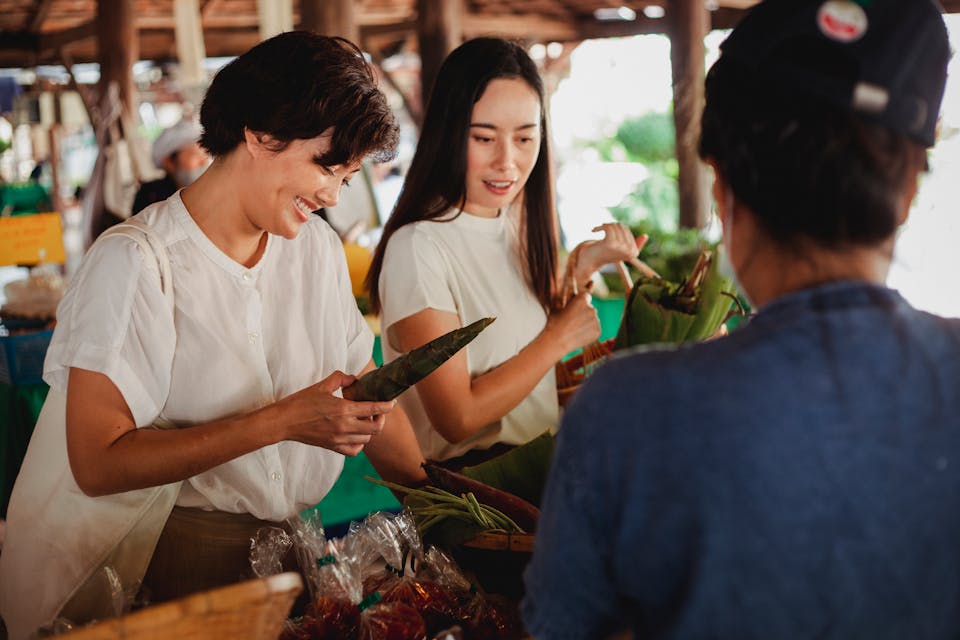
    Foto oleh Sam Lion: https://www.pexels.com/id-id/foto/pembeli-etnis-yang-tersenyum-memilih-sayuran-di-dekat-penjual-yang-tidak-dikenal-di-pasar-5709281/
    Share
    Facebook Twitter LinkedIn Pinterest Email Copy Link

    Step into any traditional market, anywhere in the world, and the feeling is unmistakable. It’s not just about the buzz of transactions or the smells wafting from street food stalls. It’s the atmosphere — a kind of chaotic poetry where culture, tradition, and artistry unfold in real time.

    In a world increasingly shaped by algorithms and efficiency, traditional markets stand as living relics of human warmth, creativity, and community. They are not frozen in time; rather, they breathe the essence of their people, adapting gently with the times while keeping their soul intact. These markets are not merely places of trade — they are stages for life, storytelling, and shared memory.
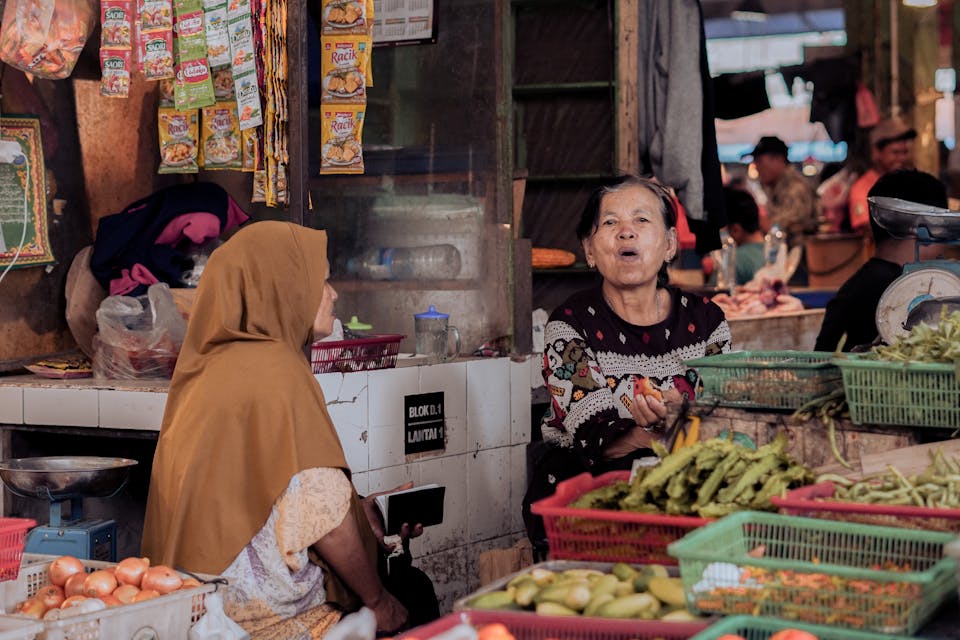
    Foto oleh Rizky Rianto: https://www.pexels.com/id-id/foto/makanan-perempuan-wanita-istri-27109736/

    A traditional market often emerges not by design but by need, woven naturally into the daily rhythm of a community. Its origins can usually be traced back hundreds of years, long before urban zoning or glossy branding took over the landscape. From the grand bazaars of Istanbul to the narrow alleys of an Indonesian pasar, these markets evolve as extensions of the people who inhabit them. They are shaped by geography, shaped by weather, shaped by culture. Each one is uniquely itself — a mirror reflecting local character and collective history.

    Walking through one, you’re immediately struck by the richness of detail. There are no uniform shelves or sterile aisles. Instead, you’ll find a stall selling vibrant spices beside a weaver working with ancient tools. You might pass a butcher who still sharpens his knife with a stone his grandfather used, or a flower vendor arranging petals into ritual offerings. Everything feels personal. Everything has a story.

    That’s the essence of traditional markets — the storytelling. It’s in the way a seller explains how long it took to make that hand-carved bowl, or how a particular spice mix has been passed down through generations. In modern shopping centers, you purchase a product. In a traditional market, you engage with its journey. You learn that the woman selling fabric isn’t just a vendor, she’s a guardian of textile heritage. The man selling herbs isn’t just offering flavor, he’s passing along ancestral knowledge.

    SEE ALSO  Tsunami Strikes Northern Japan: What We Know So Far About the Waves Hitting Hokkaido

    These markets thrive on human connection. The faces you see behind the stalls are often the same day after day, year after year. They remember you — your preferences, your stories. Conversations go beyond the transactional. A question about the freshness of fish can evolve into a conversation about the tides, the fishing village, even family recipes. Buyers and sellers become co-authors of the market’s ever-changing narrative.

    It is in these interactions that the cultural heartbeat of a community pulses. Markets are where languages and dialects are kept alive, where idioms are spoken freely, and where traditions are practiced without fanfare. They are not created to impress tourists, although many tourists are naturally drawn to their charm. These spaces exist because they are needed — for buying, yes, but also for belonging.
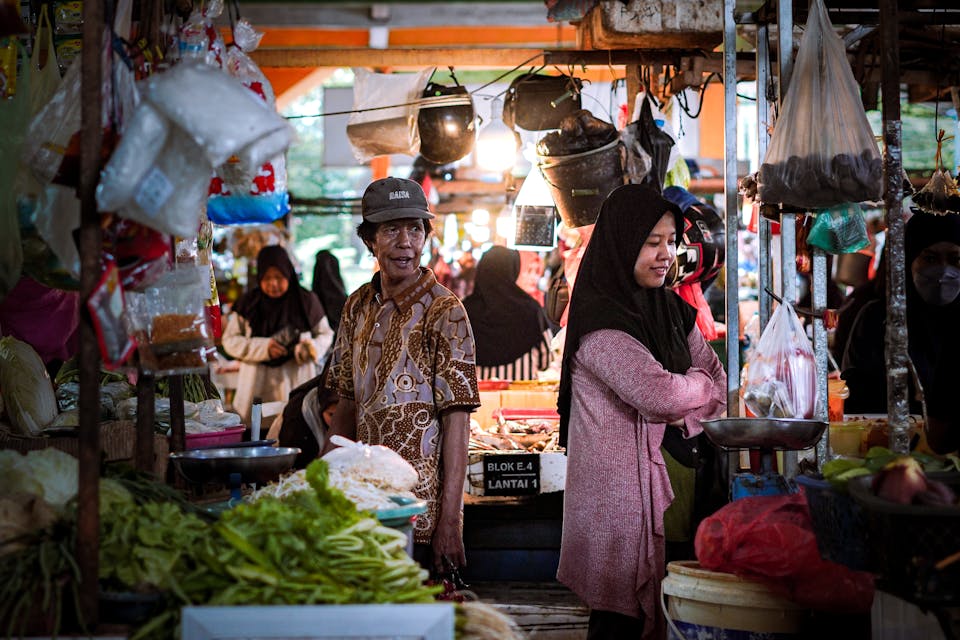
    Foto oleh Rizky Rianto: https://www.pexels.com/id-id/foto/perbelanjaan-berbelanja-pasar-jujur-27109734/

    The physical space of a traditional market often carries heritage, too. The wooden beams holding up the roof, the layout of stalls, the handmade signs — all of it tells a story. In many parts of the world, markets are held in buildings with historical significance, often located at the town center or near sacred sites. Their architecture may be unassuming, but it is purposeful and meaningful.

    Then there’s the art — sometimes subtle, sometimes proudly on display. The artistry of traditional markets isn’t confined to galleries or pedestals. It lives in the things made and sold. The colorful batik cloth dyed in small batches, the jewelry shaped by hand, the baskets woven from local reeds — every item reflects a process, a person, a place. Art in traditional markets is functional, intimate, and deeply tied to daily life.

    SEE ALSO  Kampung Pitu: The Mysterious Village of Seven Families Hidden in Yogyakarta’s Highlands

    Music often accompanies this creative energy. You might hear a lone flute player, a street performer with handmade drums, or a traditional chant being sung as part of a vendor’s ritual. Art and commerce intertwine effortlessly in these spaces, creating a kind of everyday performance that reminds us of the beauty in routine.

    One cannot talk about traditional markets without touching on the sensory experience they offer. These places are an overload — in the best way possible. There’s the scent of cloves and cinnamon from a spice stall, the sizzle of frying snacks, the earthy aroma of fresh vegetables just pulled from the ground. Your hands brush against textured fabrics, cool metal trinkets, or the warm skin of tropical fruits. Every moment in a traditional market is rich in texture, inviting you to slow down and savor.

    Even the act of bargaining becomes part of the narrative. In many cultures, to haggle is not to be cheap — it is to participate. Negotiating prices is both an economic necessity and a form of social bonding. It’s a dance, a conversation, a game. There’s wit, laughter, sometimes even theatrics. Sellers may feign shock at your counteroffer, only to reward you with a wink and a better price. These exchanges are woven with mutual understanding and respect, reinforcing relationships that might span years.

    But perhaps one of the most vital roles traditional markets play today is in preserving sustainability — both economic and environmental. These markets support small-scale farmers, local artisans, and family-run businesses. By buying here, you’re often putting money directly into the hands of producers rather than large corporations. You’re helping a farmer feed their children, a craftsman buy new tools, a widow keep her stall.

    SEE ALSO  Bali Hit by Worst Floods in a Decade, Nine Dead and Hundreds Evacuated

    Environmentally, traditional markets tend to have a much lighter footprint. Products are often sold without packaging. Shoppers bring their own bags, containers, and baskets. There’s minimal waste, and what does remain is often biodegradable or repurposed. It’s a quiet, unbranded form of eco-consciousness — one that has existed long before “zero waste” became a trend.

    In some parts of the world, markets are under threat. Gentrification, modernization, and large commercial chains have edged into the territories once held by these humble spaces. But despite the pressure, traditional markets endure. They adapt without losing themselves. Many now incorporate digital tools or offer delivery services, blending old values with new technologies.

    What remains consistent is their role as guardians of culture. In an era where so much feels disposable, traditional markets remind us of what lasts: connection, community, craftsmanship. They are places where value is not determined solely by profit, but by meaning.

    Visiting a traditional market is, in essence, an act of cultural appreciation. It is a chance to witness heritage not from behind a glass case, but in motion — in the banter of sellers, the flick of a knife, the steam rising from a pot. Every market has its own music, its own tempo, its own soul.

    And that soul deserves to be seen, preserved, and celebrated — not just as a relic of the past, but as a vital, ongoing expression of who we are.

    artistic heritage community markets cultural heritage cultural identity cultural storytelling handmade products heritage preservation immersive travel local crafts local economy local traditions market culture market history sustainable shopping traditional art traditional craftsmanship traditional market tourism traditional markets traditional shopping experience
    Share. Facebook Twitter Pinterest LinkedIn Tumblr Email
    Previous ArticleDisconnected by Choice: Inside Indonesia’s Remote Tribes Who Live Without the Internet
    Next Article Culture Clash or Culture Class? Understanding the Differences Between Indonesia and America
    Editor Desk
    • Website

    Related Posts

    Economy

    Indonesia’s National Nutrition Agency Leadership Change Draws International Attention

    By Editor DeskJune 3, 2026
    Don't Miss

    Indonesia’s Biodiesel Shift: B50 Plan Put on Hold, Raising Questions for Global Palm Oil Markets

    By Editor DeskJanuary 14, 2026
    Disaster & Environment

    Elephants Help Clear Wooden Debris After Aceh Disaster

    By Editor DeskDecember 27, 2025
    Don't Miss

    Know the Types of Snakes in the Wild & What to Do If You Get Bitten

    By Editor DeskDecember 27, 2025
    Digital Life

    Gen Z in Indonesia and the Global “Escape Culture”: Why Many Are Saying #KaburAjaDulu

    By Editor DeskOctober 20, 2025
    Agriculture

    The Export of Indonesian Specialty Products: How Local Ingredients Are Becoming Global Brands

    By Editor DeskOctober 20, 2025
    Add A Comment
    Leave A Reply Cancel Reply

    Don't Miss

    Indonesia’s National Nutrition Agency Leadership Change Draws International Attention

    By Editor DeskJune 3, 2026

    Indonesia has attracted international attention following a recent leadership change at the National Nutrition Agency,…

    Indonesia’s Biodiesel Shift: B50 Plan Put on Hold, Raising Questions for Global Palm Oil Markets

    January 14, 2026

    Elephants Help Clear Wooden Debris After Aceh Disaster

    December 27, 2025

    Know the Types of Snakes in the Wild & What to Do If You Get Bitten

    December 27, 2025
    Top Posts

    Indonesia’s National Nutrition Agency Leadership Change Draws International Attention

    June 3, 2026

    Experience the Charm of Labuan Bajo’s Pinisi Boat Right Here in Lampung: Discover the Legendary Maritime Heritage of Indonesia

    June 30, 2025

    Must-Know: 5 Traditional Dances from Lampung You’ll Often Encounter

    June 30, 2025

    What to Do When You See a Snake: A Practical Guide for Everyday Life in Sumatra

    June 30, 2025
    Stay In Touch
    • Facebook
    • Twitter
    • Instagram
    • YouTube
    About Us
    About Us

    Saibumi International brings authentic stories, cultural depth, and off-the-radar destinations from Indonesia and the wider Asian region — crafted for readers who want more than surface-level travel and headlines.

    Facebook X (Twitter) YouTube Reddit
    Our Picks

    Indonesia’s National Nutrition Agency Leadership Change Draws International Attention

    June 3, 2026

    Indonesia’s Biodiesel Shift: B50 Plan Put on Hold, Raising Questions for Global Palm Oil Markets

    January 14, 2026

    Elephants Help Clear Wooden Debris After Aceh Disaster

    December 27, 2025
    Most Popular

    Indonesia’s National Nutrition Agency Leadership Change Draws International Attention

    June 3, 2026

    Experience the Charm of Labuan Bajo’s Pinisi Boat Right Here in Lampung: Discover the Legendary Maritime Heritage of Indonesia

    June 30, 2025

    Must-Know: 5 Traditional Dances from Lampung You’ll Often Encounter

    June 30, 2025
    • Home
    • About Us
    • Advertise
    • Contact Us
    © 2026 Saibumi International. SEO & Web by Dkonten Studio

    Type above and press Enter to search. Press Esc to cancel.